
As a mental health practitioner, I increasingly encounter eating disorders among Palestinians caused by socio-political trauma.
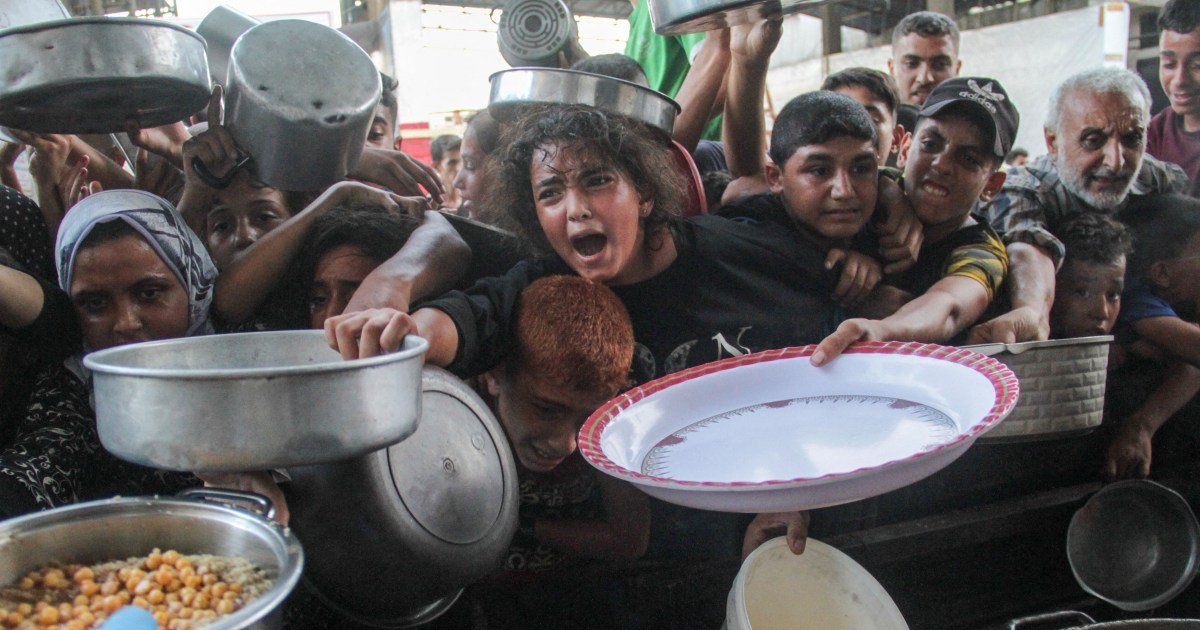
The Israeli war on Gaza has manifested in a variety of brutal forms and the most insidious and devastating one of them has been the weaponisation of starvation. On October 9, 2023, Israeli Defense Minister Yoav Gallant announced that “there will be no electricity, no food, no fuel” allowed into Gaza. The justification was that Israel “is fighting human animals”.
Two weeks later, Member of Knesset Tally Gotliv declared: “Without hunger and thirst among the Gaza population… we won’t be able to bribe people with food, drink, medicine to obtain intelligence.”
Over the next few months, Israel not only obstructed the delivery of aid to Palestinians in Gaza, but also targeted and destroyed food production infrastructure, including cultivated fields, bakeries, mills, and food stores.
This deliberate strategy, aimed at subjugating and breaking the spirit of the Palestinian people, has taken countless victims in Gaza – many of them babies and young children. But it has also had profound consequences for Palestinians elsewhere.
As a mental health professional, I have witnessed firsthand the psychological and physical toll this collective punishment has had on individuals in occupied East Jerusalem and the occupied West Bank. I have observed Palestinian youth who are developing complicated relationships with food, their bodies and their social and national identity in response to the horrors they witness and hear about daily.
Healing would take a much more complex intervention that addresses not only individual but also society-wide political and historical trauma.
To understand the effect of weaponised starvation, it is essential to consider the broader social and psychological framework within which it occurs. Ignacio Martín-Baró, a prominent figure in liberation psychology, posited that trauma is produced socially. This means that trauma is not merely an individual experience but is embedded within and exacerbated by the social conditions and structures surrounding the individual.
In Gaza, traumatogenic structures include the ongoing siege, the genocidal aggression, and the deliberate deprivation of essential resources such as food, water, and medicine. The trauma they result in is compounded by the collective memory of suffering during the Nakba (the mass ethnic cleansing of Palestinians in 1947-8) and the continuous displacement and systemic oppression of the occupation. In this environment, trauma is not just a personal experience but a collective, socially and politically ingrained reality.
By March, UNICEF was reporting that 1 in 3 children under the age of 2 were acutely malnourished in northern Gaza. By April, Oxfam was estimating that the average food intake for Palestinians in northern Gaza was no more than 245 calories a day or just 12 percent of the daily requirement. At about that time, the Palestinian Ministry of Health announced that 32 Palestinians, including 28 children, had been killed by hunger, although the true death toll was likely much higher.
Stories were also circulating of Palestinians being shot dead waiting for food aid to be distributed, or drowning in the sea while running after airdrops of food by governments that have backed the Israeli war on Gaza.
In a letter published in the medical journal The Lancet on April 22, Dr Abdullah al-Jamal, the only psychiatrist remaining in northern Gaza, wrote that mental healthcare had been completely devastated. He added: “The biggest of problems now in Gaza, especially in the north, are famine and lack of security. Police are unable to operate because they are immediately targeted by spy drones and aircraft in their attempt to establish order. Armed gangs that cooperate in some way with the Israeli forces control the distribution and prices of food and pharmaceutical commodities that enter Gaza as aid, including what is dropped by parachutes. Some foodstuffs, such as flour, have doubled in price many times, which exacerbates the crisis of the population here.”
The Israeli starvation of Gaza has had psychological and physical ripple effects across Palestinian communities. In my clinical practice, I have encountered several cases in occupied East Jerusalem and the occupied West Bank that illustrate how the trauma of starvation in Gaza is mirrored in the lives of young Palestinians far from the conflict zone. Here are a few of them.
Ali, a 17-year-old from the West Bank, experienced changes in eating behaviour and lost 8kg (17lbs) over two months following the detention of his friend by Israeli forces. Despite the significant weight loss, he denied feeling sad, insisting that “prison makes men.” However, he could express more openly his anger about the conditions in Gaza, and his disrupted sleep patterns suggested a deep psychological impact. “I can’t stop watching the bombardment and starvation in Gaza, I feel so helpless.” Ali’s loss of appetite is a manifestation of his internalised anger and grief, reflecting the broader social trauma that has enveloped him.
Politically and socially produced trauma
Salma, at just 11 years old, has been hoarding food cans, water bottles, and dry beans in her bedroom. She has said she is “preparing for genocide” in the West Bank. Salma’s father reported that she becomes “hysterical” when he brings home expensive food items like meat or fruit. Her gradual decrease in food intake and refusal to eat, which exacerbated during the month of Ramadan, reveal a deep sense of anxiety and guilt about the starvation of children in Gaza. Salma’s case illustrates how the trauma of starvation, even when experienced indirectly, can profoundly alter a child’s relationship with food and their sense of safety in the world.
Layla, a 13-year-old girl, presents with a mysterious inability to eat, describing a sensation that “something in my throat prevents me from eating; there is a thorn blocking my gorge.” Despite extensive medical examinations, no physical cause has been found. Further discussion revealed that Layla’s father was arrested by Israeli forces and she has heard nothing about him since. Layla’s inability to eat is a psychosomatic response to the trauma of her father’s detention and her awareness of the starvation, torture and sexual violence inflicted on Palestinian political prisoners. She was also deeply affected by the reports of starvation and violence in Gaza, drawing parallels between the suffering in Gaza and her father’s uncertain fate, which amplified her psychosomatic symptoms.
These children are not just patients with unique psychological issues. They suffer the effects of a traumatogenic environment created by the ongoing colonial violence, the weaponisation of starvation, and the political structures that perpetuate these conditions.
As mental health professionals, it is our responsibility not only to treat the symptoms presented by these patients but also to address the political roots of their trauma. This requires a holistic approach that considers the broader sociopolitical context in which these individuals live.
Psychosocial support should empower survivors, restore dignity and address basic needs, so they understand the interplay of oppressive conditions and their vulnerability and feel that they are not alone. Community-based interventions should be carried out by fostering safe spaces for people to process their emotions, engage in collective storytelling, and rebuild a sense of control.
Mental health professionals in Palestine must adopt a liberation psychology framework, integrating therapeutic work with community support, public advocacy, and structural interventions. This includes addressing injustices, challenging narratives that normalise violence, and participating in efforts to end the siege and occupation. Advocacy by mental health practitioners provides patients with validation, reduces isolation, and fosters hope by demonstrating solidarity.
Only through such a comprehensive approach can we hope to heal the wounds of individuals and the community.
The views expressed in this article are the author’s own and do not necessarily reflect media’s editorial stance.


 United Arab Emirates Dirham Exchange Rate