
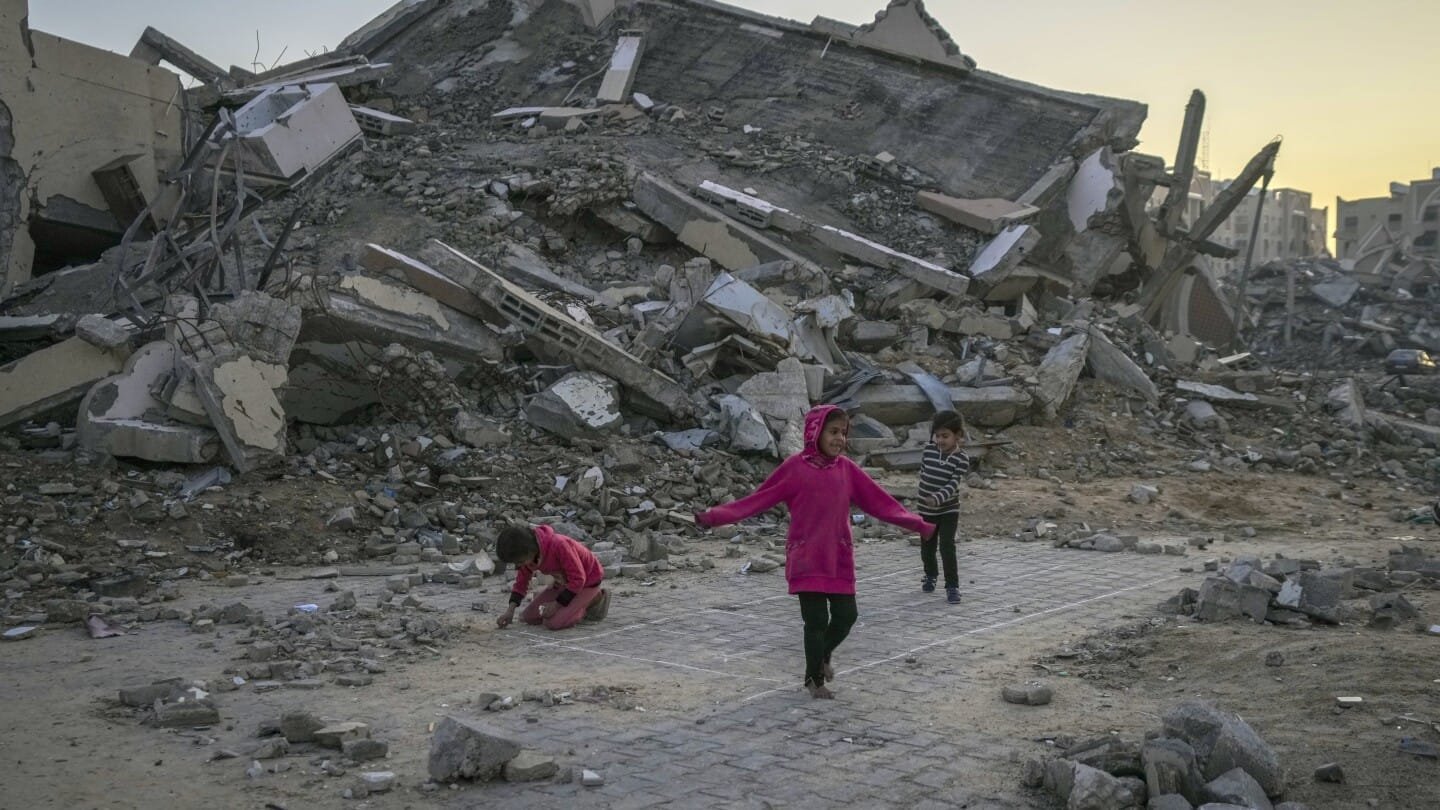
Mediators said Israel and Hamas have agreed to pause the fighting in Gaza starting Sunday after 15 months of war and to begin exchanging dozens of hostages held there for Palestinians imprisoned by Israel.
Israeli Prime Minister Benjamin Netanyahu had yet to confirm on Tuesday that the deal had been finalized. But the ceasefire could eventually bring an end to the bloodiest and most destructive war ever fought between Israel and Hamas, one that transformed the wider region and leaves the decades-old Israeli-Palestinian conflict at the heart of the turmoil unresolved.
Israel can point to countless tactical victories in the war, from the assassination of top Hamas leaders to the blows it rained on Lebanon’s Hezbollah and Iran itself, which backs both groups.
But Israel fell short on two central aims: Hamas to date has survived, even if greatly weakened, and several hostages taken captive during Hamas’ Oct. 7, 2023, attack died in captivity. Some were accidentally killed by Israeli forces, others by their Hamas captors as troops closed in.
Israelis see the return of captives as a sacred obligation, worth the agonizing price of releasing large numbers of imprisoned militants in lopsided deals. The inability to reach a deal through months of negotiations tore the country apart.
Netanyahu, who promised “total victory” and the return of all the captives, faced mass protests as critics, including some hostage families, accused him of putting his political interests ahead of quickly getting them back, allegations he vehemently denied.
The military campaign meanwhile sparked a global outcry, with the International Court of Justice considering allegations of genocide and the International Criminal Court issuing arrest warrants for Netanyahu, his former defense minister and a top Hamas commander, accusing them of war crimes and crimes against humanity.
Israel adamantly denies such allegations, saying it takes every measure to spare civilians and blaming Hamas for their deaths because militants fight in dense residential areas.
Hamas said the Oct. 7 attack that triggered the war was aimed at returning the Palestinian cause to the forefront of the international agenda, punishing Israel for its actions in the occupied territories and freeing Palestinian prisoners.
It succeeded in drawing the world’s attention, but at a catastrophic cost to Palestinians themselves, with entire families wiped out, cities in ruins and dreams of statehood more distant than ever.
Over 46,000 Palestinians have been killed in Gaza, mostly women and children, according to local health authorities, who do not say how many of the dead were combatants. The Israeli military says it killed over 17,000 fighters, without providing evidence.
Much of Gaza now appears uninhabitable, with bombed-out buildings and mounds of rubble stretching as far as the eye can see. Around 90% of Gaza’s population of 2.3 million people has been displaced, and hundreds of thousands are struggling with hunger and disease in squalid tent camps on the coast, according to United Nations officials.
Most of Hamas’ top leaders in Gaza and scores of mid-level commanders have been killed. Its arsenal of rockets appears to have been vastly depleted, and several of its tunnel networks have been demolished.
But it remains the dominant force on the ground and is still carrying out deadly attacks on Israeli troops. U.S. Secretary of State Antony Blinken said this week Hamas has recruited nearly as many fighters as it has lost.
Israel’s ultimate political survivor managed to stay in office and stave off public inquiries after presiding over the worst security and intelligence failure in the country’s history.
That’s because Netanyahu’s narrow coalition stuck by him, insisting that politics take a back seat to crushing Hamas.
But his far-right allies have threatened to bring down the government over the release of Palestinian prisoners convicted in deadly attacks on Israelis. Even if they don’t bolt immediately, his position will be less secure than it was when bombs were falling on Gaza.
Netanyahu also would be unable to cite the ongoing war as a reason to postpone a public inquiry into the Oct. 7 attack that could fault his leadership.
But no one is yet writing off Israel’s longest-serving leader.
That’s because Donald Trump is returning to the White House surrounded by aides who support Netanyahu’s aim of expanding settlements in the occupied West Bank and potentially annexing it. That could help Netanyahu rally Israel’s dominant nationalist right to his side, keeping him in power at least until elections scheduled for 2026.







 United Arab Emirates Dirham Exchange Rate