
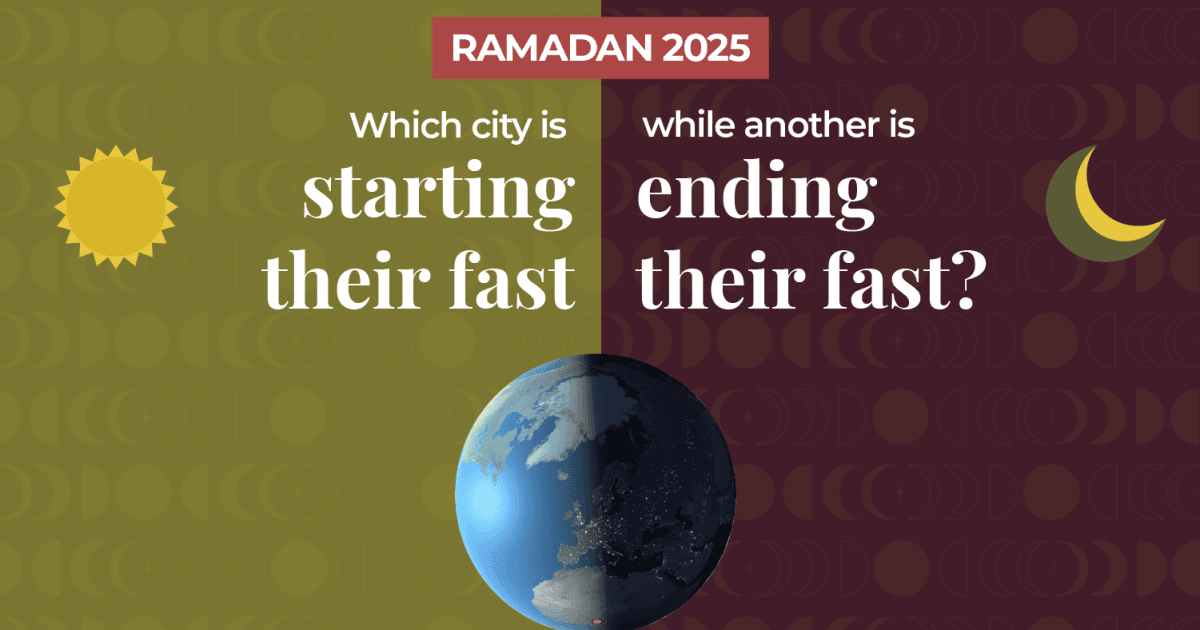
As the first light of dawn breaks over Rajshahi in Bangladesh, a muezzin’s call echoes through the city of one million people, signalling the end of suhoor as families finish their egg parathas – flaky flatbreads stuffed with spiced scrambled eggs – before preparing for the Fajr prayer.
At that very moment, on the opposite side of the world in New York City, the sun sets behind the skyline, and families gather around tables, awaiting the call to Maghrib prayer to break their 13-hour fast.
This contrast, where one city begins fasting as another ends, serves as a striking reminder of Ramadan’s global nature, shaped by geography and time zones. As the world spins, there is always a city having suhoor or iftar, with millions of Muslims experiencing these meals at different times.
For those living in the Northern Hemisphere, each day actually gets a bit longer, with suhoor starting earlier and iftar happening later. For those in the Southern Hemisphere, the opposite happens, with the days getting shorter.
Ramadan is one of the five pillars of Islam and is prescribed for Muslims as an act of worship and a form of spiritual purification through charity and good deeds.
Fasting is meant to develop a person’s taqwa, which means being conscious of God, being pious and self-restrained.
The graphics below illustrate which cities are beginning their fasts and which are ending them, moving from east to west.
As people in Recife, Brazil begin their fast, those in Sydney, Australia are ending theirs.
As people in Winnipeg, Canada begin their fast, those in Jakarta, Indonesia are ending theirs.






 United Arab Emirates Dirham Exchange Rate