
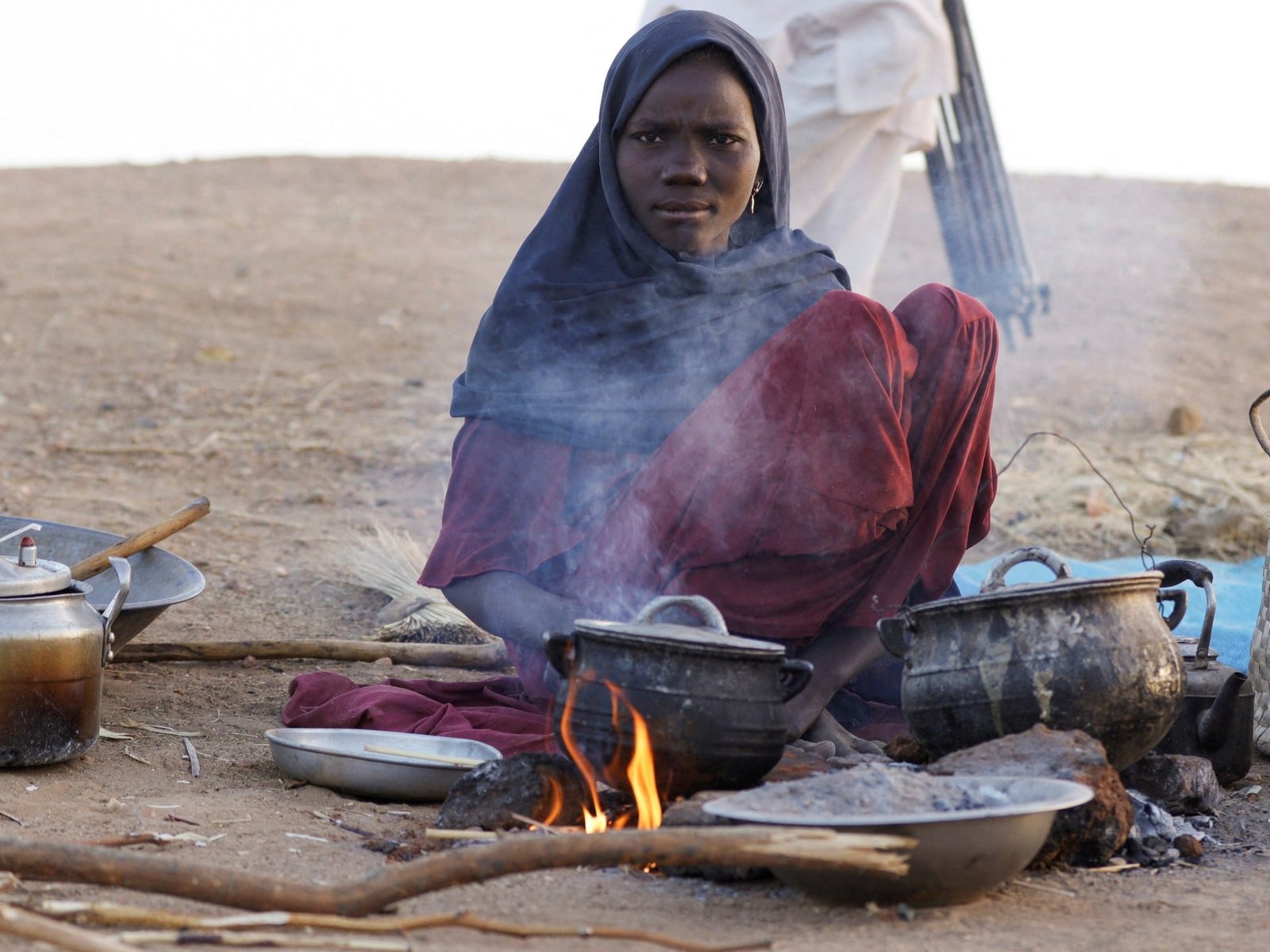
Aid organisations are struggling to respond to the deepening humanitarian crisis in Sudan’s North Darfur, being driven by attacks by the paramilitary Rapid Support Forces (RSF), the United Nations has warned.
The UN humanitarian coordinator for Sudan, Clementine Nkweta-Salami, said in a statement released late on Sunday that access for humanitarian aid remains “dangerously restricted” in the capital city of el-Fasher and surrounding areas, where the RSF has launched multiple attacks over recent weeks.
Those attacks have triggered a mass exodus from Zamzam, Abu Shouk and other refugee camps, a situation which is “increasingly fluid” and “unpredictable” amid fears that the RSF is preparing a broader offensive.
Two years into its conflict with Sudan’s military government, the RSF attacked Zamzam – said to have sheltered up to 1 million people – and Abu Shouk camps just more than a week ago, killing at least 300 people and forcing up to 400,000 residents to flee 60km (37 miles) across the desert to the town of Tawila.
In her statement, Nkweta-Salami said that up to 450,000 displaced people are being “increasingly cut off from supply chains and assistance, placing them at heightened risk of epidemic outbreaks, malnutrition and famine”.
She called for UN and NGO actors to be granted “immediate and sustained access to these areas to ensure life-saving support can be delivered safely and at scale”.
Late last week, the Doctors Without Borders (MSF) medical charity said that displaced people in Tawila were “facing an absolutely catastrophic situation”.




 United Arab Emirates Dirham Exchange Rate