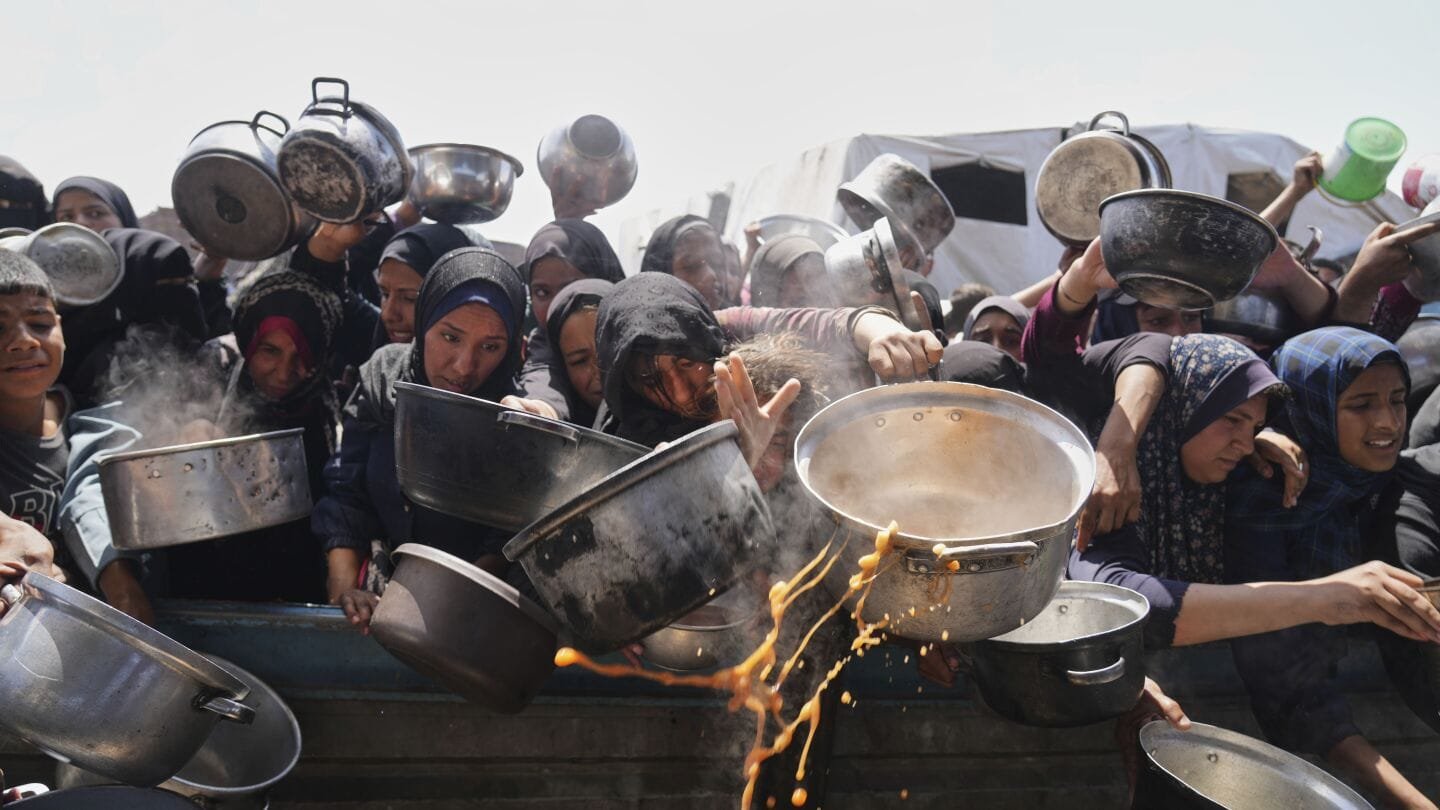
TEL AVIV, Israel (news agencies) — The war in Gaza may be on the cusp of a new phase after Israel approved plans over the weekend to intensify its operations. Which raises the question: After 19 months of bloodshed and destruction, why is there still no end in sight?
Israel and Hamas appear to only be growing further apart. Israel unleashed fierce strikes in March, shattering a truce that had freed hostages and sent in badly needed aid. Israel’s new plans include seizing the strip, forcibly displacing hundreds of thousands of Palestinians and asserting greater control over the distribution of aid in the territory, according to Israeli officials.
Mounting Israeli public support for an end to the war has not swayed Prime Minister Benjamin Netanyahu from his stance that Hamas must be destroyed first. The military pressure, vast destruction in Gaza and rising death toll have so far not budged Hamas from its position demanding an end to the war and a full Israeli withdrawal from Gaza.
Here is a deeper look at why an end to the war has been so elusive.
The war began on Oct. 7, 2023, when Hamas militants attacked southern Israel, killing 1,200 and taking 251 hostages. Israel’s massive retaliation has killed over 52,000 people in Gaza, according to local health authorities, whose count does not differentiate between militants and civilians.
The Hamas attack upended Israel’s longstanding security doctrine. For years, Israel weathered threats along its borders, launching periodic operations to contain them. Hamas’ surprise assault broke that cycle.
Israel says it is no longer willing to accept a reality where such an attack can reoccur. It has gone to great lengths to reshape the region according to that new doctrine.
Israeli forces have seized areas in Lebanon and Syria and cracked down in the West Bank, displacing tens of thousands. In Gaza, they intend to remain in the territory in a bid to eliminate Hamas’ ability to regroup.
Israel shows no sign of relenting, despite war crimes accusations at international courts.
Experts say Hamas no longer has the capacity to stage an Oct 7.-style attack — yet it cannot be easily stamped out, either.
The drive to dismantle Hamas’ military and governing capabilities by force has so far proven incompatible with Israel’s other war aim: freeing hostages. The captives’ relatives fear any escalation in fighting endangers them.
Netanyahu has said he is prepared to end the war if Hamas gives up power, disarms and leaves Gaza. But even after that, Israel appears poised to keep troops in corridors carving up Gaza — effectively a new form of occupation.
Hamas has offered to release all hostages in return for a full Israeli withdrawal from Gaza and an end to the war. It says it’s willing to cede power in Gaza to other Palestinians but has refused to disarm, offering instead a long-term truce with Israel.
Netanyahu has rejected the notion of Gaza being run by the more moderate Palestinian Authority, but has offered no concrete alternative. He opposes statehood for Palestinians in Gaza or the West Bank.
Opinion polls consistently show that only a minority of Palestinians support Hamas, and there have been some protests inside Gaza against Hamas and the war. Still, many Palestinians see armed resistance as the only path to statehood because negotiations and forms of nonviolent resistance have largely failed.


 United Arab Emirates Dirham Exchange Rate