
7 books to read as South Asia boils over
For too long, the literary gaze on South Asia’s summers, especially through diaspora pens writing for white audiences, has leaned on sepia tropes: mangoes and melas, the year-long appeal of chai, ceiling fans whirring above midday siestas, and monsoon promises murmured by young lovers over sticks of kulfi. That version of summer still lives in memory, but on the ground today, the season has turned brutal.
Now, summer in South Asia means WhatsApp warnings of 50 degree heat waves, rivers rising like beasts, mudslides swallowing homes, and air so thick with smog it feels like inhaling soup. The climate is morphing itself into something unrecognisable, barging into our homes like a burglar with a crowbar. And the worst part is that this region, among the most climate-vulnerable on the planet, barely caused the crisis, but is left choking on its consequences.
Still, literature can help us breathe through the smoke; not with neat answers, but with a kind of imaginative truth-telling sharper than any policy paper. From speculative fiction to sharp reportage, here are six scorching, sweeping, and surprising books to read (preferably under a fan) as we confront the climate crisis head-on and ask, “Now what?”
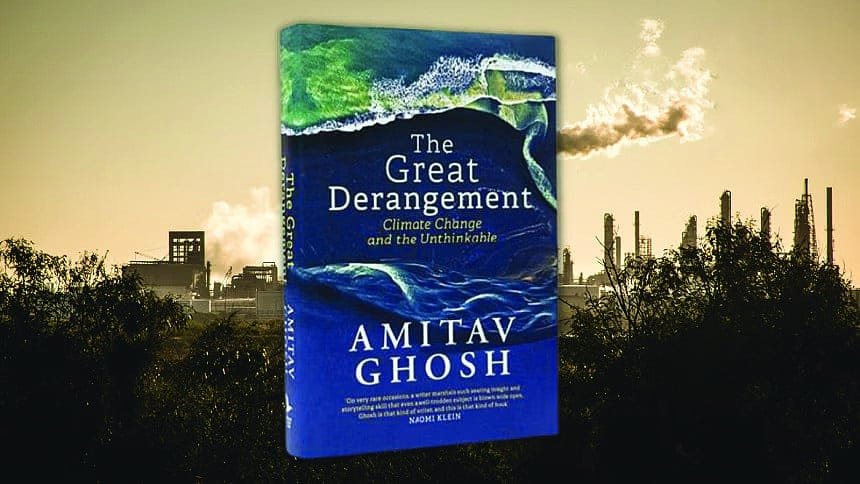
‘The Great Derangement’
If you’ve ever asked, “Why doesn’t literature talk about climate change more?”, Amitav Ghosh beat you to it. In this fiery and frustrated polemic, he calls out the literary world for its complicity in ignoring the planetary crisis, while weaving in cyclones, colonialism, and carbon in prose that’s part sermon, part TED Talk, part time machine.
He argues that the modern novel, with its tight individualism and preference for psychological over planetary drama, just isn’t built to accommodate climate horror. The real derangement is our failure to imagine the unimaginable. Ghosh writes, “The climate crisis is also a crisis of culture, and thus of the imagination,”, weaving from this simple argument a potent read that feels even more urgent as the temperature dial cranks up every year.
‘The Nutmeg’s Curse’
Don’t let the dainty spice in the title fool you; The Nutmeg’s Curse is Ghosh in full prophet-of-doom mode. A follow-up to his earlier manifesto, this book leaps from the nutmeg trade to fossil fuels, reframing colonialism as the original climate crime. If ypu think the East India Company was simply after flavour, Ghosh is here to tell you in 350 odd pages that the Company was laying the groundwork for extractive capitalism that treats land as loot.
Ghosh connects the dots from the Banda Islands to Standing Rock to Bhopal, building a case that the climate crisis is colonialism in camouflage. In an interesting turn of events, he also argues for listening to spirits, ancestors, and non-human voices, which means if you’re looking to delve into a séance with the planet, this one’s for you.
‘Tomb of Sand’
A postmodern, feminist epic about Partition and grief in a climate reading list? This is the first topper for the hear-me-out cake I’m about to assemble. Geetanjali Shree’s Tomb of Sand is a shape-shifting beast of a novel, and while it doesn’t speak climate, it breathes it: the porousness of borders, the circularity of life, the quiet endurance of the earth, all translated carefully and sensitively into English by Daisy Rockwell.
Set partly in the sweltering plains of Uttar Pradesh, the book captures heat not just as weather but as memory, backdrop, metaphor. It’s a story about a woman refusing to die, a journey into and out of exile, and in many ways, the perfect companion for our overheated age. Of its many memorable scenes, one that sticks with me as the heat approaches is a grandmother figure lying under a neem tree, contemplating a world that has forgotten how to listen to nature.
‘How to Avoid a Climate Disaster’
Let’s begin this with full disclosure; this book comes from Bill Gates’ pen. Hear me out, part two. Yes, yes, it’s a billionaire with a blueprint. But if you’ve ever found yourself frantically Googling “What can I do about climate change?” at 2AM, Gates’ book is your mechanical, methodical friend. No soaring metaphors, no poetic despair, just clear-eyed math, solutions, and frameworks.
South Asians often get left out of the centre-stage climate narratives (unless we’re dying), but the innovations, energy models, and urban planning discussed here offer actionable insights for a region rapidly urbanising and boiling. Read it, if only to argue with it. As for some additional motivation on the side, if you take a sip of water every time he says “net zero,” you’ll be hydrated for days of this cruel summer.






 United Arab Emirates Dirham Exchange Rate