
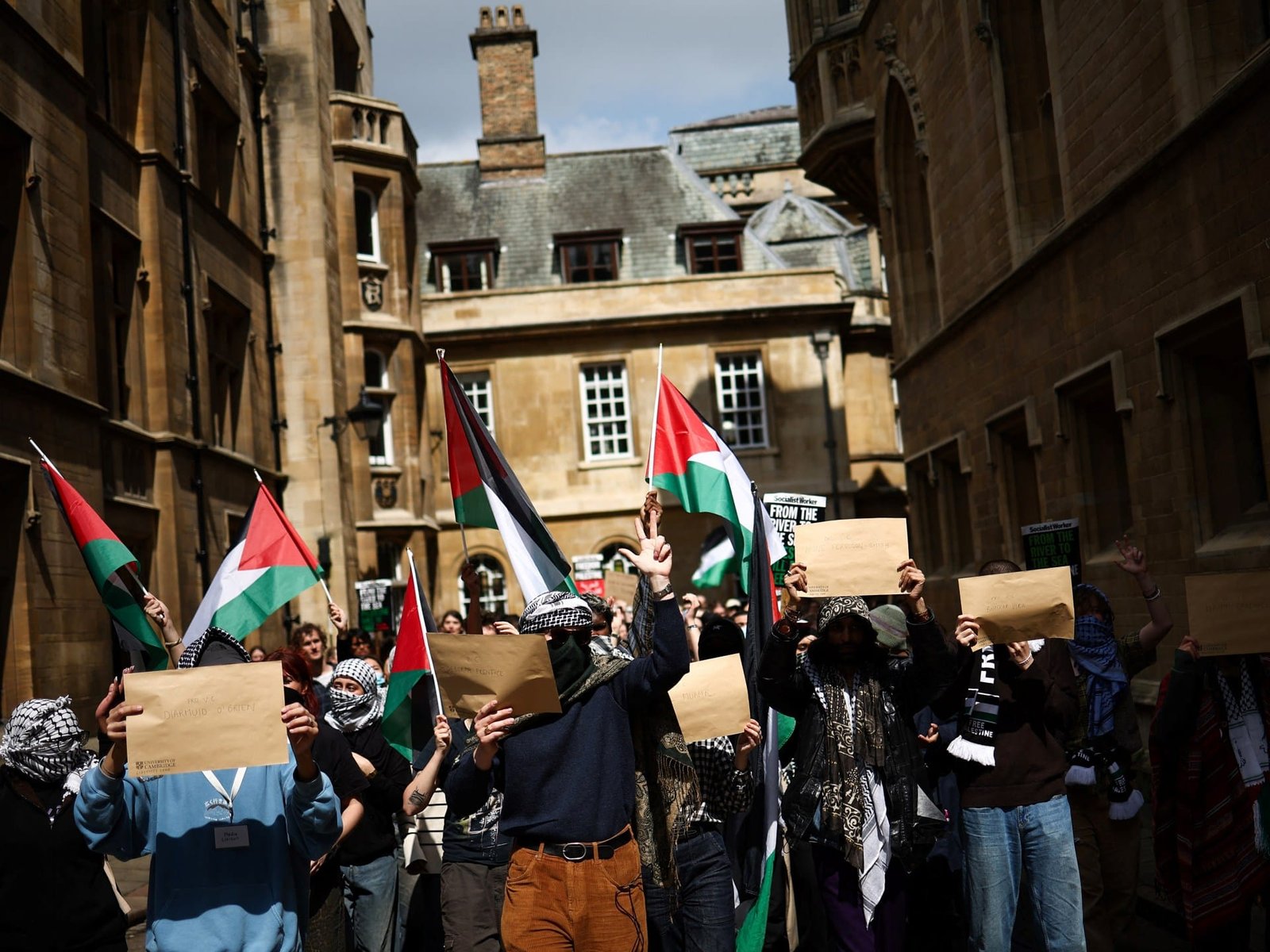
Across the UK, pro-Palestinian protests in reaction to the war in Gaza have placed universities’ response to human rights concerns under the spotlight. But concerns about links between Britain’s higher education institutions and human rights abuses are not limited to one area.
A new investigation by Freedom from Torture has found that UK universities are offering postgraduate security and counterterrorism education to members of foreign security forces, including those serving some of the world’s most repressive regimes. These institutions are offering training to state agents without scrutinising their human rights records, or pausing to consider how British expertise might end up being exploited to silence, surveil or torture.
The investigation reveals that British universities may not just be turning a blind eye to human rights abuses, but could also be at risk of training some of the abusers. Some universities have even partnered directly with overseas police forces known for widespread abuses to deliver in-country teaching. Others have welcomed individuals on to courses designed for serving security professionals from countries where torture is a standard tool of state control. All of this is happening with virtually no oversight of the risks to human rights.
These are not abstract concerns. They raise serious, immediate questions. What happens when the covert surveillance techniques taught in British classrooms are later used to hunt down dissidents? Why are universities not investigating the backgrounds of applicants from regimes where “counterterrorism” is a common pretext for torture and arbitrary detention?
Freedom from Torture’s investigation found that universities across the UK are accepting applicants for security education from some of the world’s most repressive states. Yet just one university in the study said they are screening out applicants who they believed have either engaged in human rights violations or “intend to”.
Torture survivors in the UK have spoken out about their shock that members of the security forces from countries they have fled can access UK security education without meaningful human rights checks. British universities, long considered beacons of liberal values and intellectual freedom, appear to be overlooking the fact that the knowledge they produce may be used to further oppression and state violence.
Meanwhile, student activists across the country are staunchly positioning themselves as stakeholders in their university’s human rights records. The recent Gaza protests indicate that that when students believe universities’ conduct does not align with their values, they won’t hesitate to hold them accountable.
Across the world, the global student body has a rich history of activism. From anti-apartheid solidarity campaigns to the student protests that sparked Myanmar’s 1988 uprising, young people have long stood at the front lines of struggles against repression. Today’s generation – often described as the most socially conscious and globally connected in history – is no different. It shouldn’t come as a surprise to universities that their human rights performance is a hot topic for the young people they serve.
In the corporate world, businesses are now routinely judged on their human rights records. Terms like “ethical sourcing,” “responsible investment,” and “human rights due diligence” are standard parts of doing business. Universities, which pride themselves on being forward-thinking and socially responsible, should be held to no lower standard. The fact that many have no policy at all on overseas human rights risks is indefensible.


 United Arab Emirates Dirham Exchange Rate