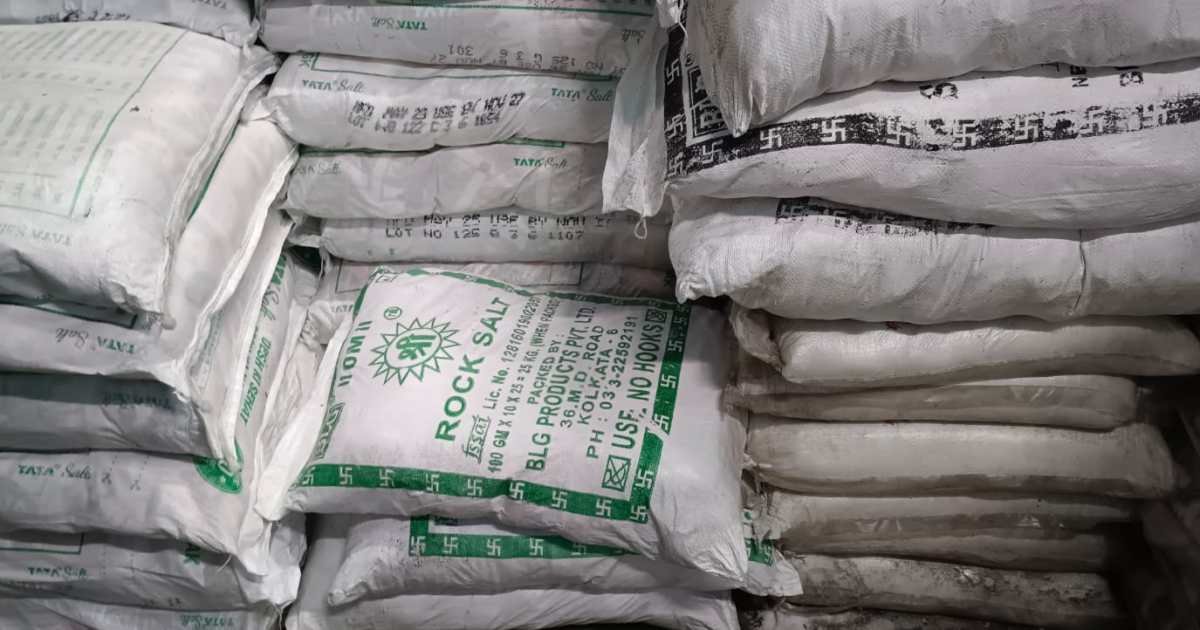
For the past three decades, Vipan Kumar has been importing Himalayan pink salt from Pakistan to sell in India.
However, New Delhi banned the import of all Pakistani goods, including those routed through third countries, after the killing of 26 people, mostly Indian tourists, in Pahalgam in Indian-administered Kashmir in April. Kumar, the 50-year-old trader based in Amritsar in Punjab, the spiritual hub of Sikhs in India, told media that the ban has brought his business to a screeching halt.
Kumar says he typically sold 2,000 to 2,500 tonnes of pink salt every quarter. “The profit margin is very thin, but still, the business is feasible because of the bulk sales. But the ban has completely halted the pink salt business. We don’t know when the situation would turn normal,” he told media.
Himalayan pink salt has a pinkish tint due to a trace of minerals, including iron, and is used in cooking, decorative lamps and spa treatments. Hindus also prefer to use this salt during their religious fasts as it is a non-marine salt.
The Himalayan pink salt is mined at the Khewra Salt Mine in the Punjab province of Pakistan, the second-largest salt mine in the world after the Sifto Salt Mine in Ontario, Canada. Khewra is located about 250km (155 miles) from the city of Lahore, which also at times lends its name to the pink salt – Lahori namak, which is Hindi for salt.
The salt mine contains about 82 million metric tonnes of salt, and 0.36 million metric tonnes are extracted every year. About 70 percent of the salt is used for industrial purposes, and the rest is for edible use.
“The mine is very scenic and attracts several thousand tourists every year,” Fahad Ali, a journalist who lives close to the mine, told media.
It has approximately 30 salt processing units, where the huge rock salt boulders are hand-mined and loaded on trucks before being dispatched, he said.
The salt is exported in a raw form to India, where importers process, grind and pack it for sale.





 United Arab Emirates Dirham Exchange Rate