• About
  • Advertise
  • Privacy & Policy
  • Contact Us
Thursday, April 2, 2026
Dubai News TV
  • UAE
    • Abu Dhabi
    • Dubai
    • Ajman
  • REGION
    • Middle East
    • GCC
    • MENA
      • Syria
    • Asia
      • Afghanistan
      • Bangladesh
      • India
      • Iran
      • Israel
      • Pakistan
      • Sri Lanka
    • Africa
    • Europe
  • REAL ESTATE
  • Opinion
    • EDITOR’S CHOICE
    • The Big Read
    • Viewpoint
    • EXCLUSIVE
  • World
  • Business
    • Local Business
    • Markets
  • TECH
  • HEALTH
  • Horoscope
  • PR
  • Sports
No Result
View All Result
  • UAE
    • Abu Dhabi
    • Dubai
    • Ajman
  • REGION
    • Middle East
    • GCC
    • MENA
      • Syria
    • Asia
      • Afghanistan
      • Bangladesh
      • India
      • Iran
      • Israel
      • Pakistan
      • Sri Lanka
    • Africa
    • Europe
  • REAL ESTATE
  • Opinion
    • EDITOR’S CHOICE
    • The Big Read
    • Viewpoint
    • EXCLUSIVE
  • World
  • Business
    • Local Business
    • Markets
  • TECH
  • HEALTH
  • Horoscope
  • PR
  • Sports
No Result
View All Result
Dubai News
No Result
View All Result
  • Top News
  • UAE
  • Dubai
  • World
  • Business
  • GOLD/FOREX
  • REGION
  • REAL ESTATE
  • FEATURED
  • EDITOR’S CHOICE
  • ENVIRONMENT
  • Road To Financial Freedom
  • Health
  • Sports

How do air conditioners work, and what is the effect on the environment?

by News Desk
8 months ago
in Middle East, REGION, Top News
How do air conditioners work, and what is the effect on the environment?
Share on FacebookShare on TwitterShare on Whatsapp

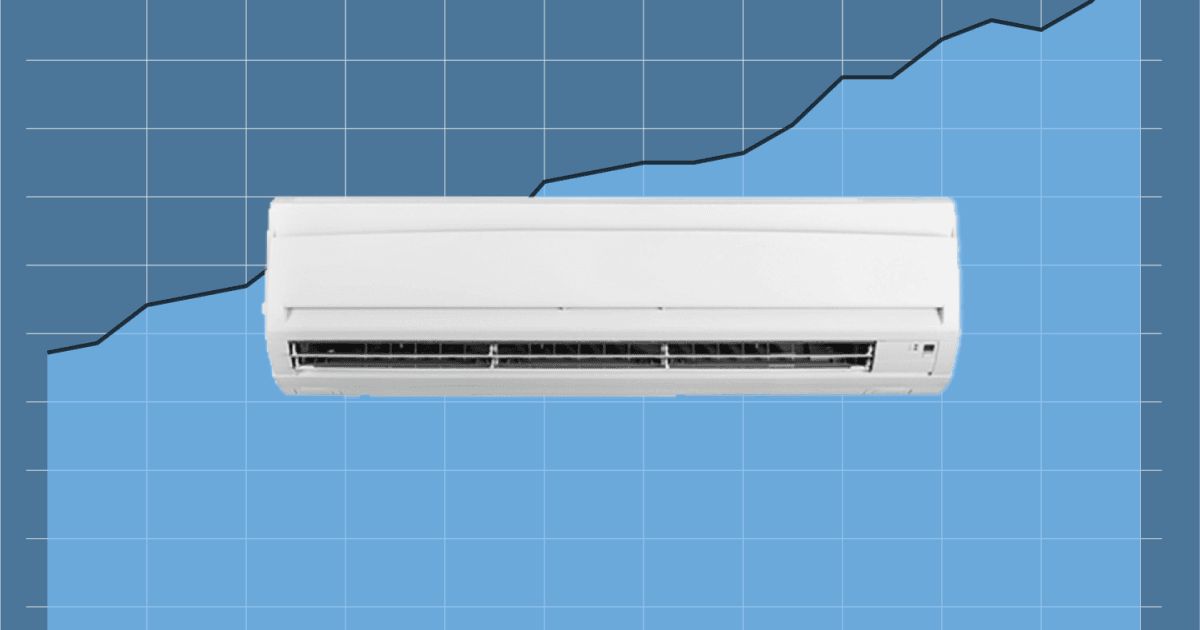
As record heatwaves boost demand for cooling, air conditioning becomes vital – but with a steep environmental cost.

Heatwaves all over the world are becoming longer and more intense and the need for cooling is rising fast, putting strain not just on power bills but on electricity grids and the planet. With 2024 the hottest year on record and 2025 not far behind, air conditioning is no longer a luxury for many – it’s a lifeline.

media breaks down how air conditioners work, traces the history of cooling, and offers practical tips on protecting your AC and reducing energy costs.

Air conditioners cool indoor spaces by moving heat from inside your home to the outside using a chemical fluid called a refrigerant. The process starts when the indoor unit draws in warm air from the room and passes it over evaporator coils filled with cold, low-pressure liquid refrigerant. As the air moves across the coils, the refrigerant absorbs the heat and evaporates into a gas, cooling the air in the process. A fan then blows the cooled air back into the room.

The now-warm refrigerant travels to the outdoor unit, where a compressor increases its pressure and temperature. In the condenser coils, the refrigerant releases heat to the outside air, turning back into a liquid. The cycle then repeats.

In 1820, British scientist Michael Faraday discovered that compressing and evaporating ammonia could chill air. It was an early breakthrough that laid the foundation for modern refrigeration and cooling systems.

In the 1830s, American physician John Gorrie took a practical approach to the idea. He built a machine in Florida which created ice and used it to cool hospital rooms, aiming to treat patients suffering from tropical diseases.

The modern era of air conditioning began in 1902, when Willis Carrier, an American engineer, designed a system to control humidity and temperature at a New York printing press. Though intended to remove humidity, which causes paper to expand and contract and can change ink colours, Carrier’s invention is considered the first true air conditioner.

By 1914, the first residential air conditioner was installed in a Minneapolis mansion. It was huge – roughly the size of an entire room – and far from affordable for the average household.

The mini-split system was first developed in Japan in the late 1950s as a more efficient alternative to bulky window units and centralised HVAC systems. Its key innovation was a ductless design, which delivers air directly from an outdoor compressor to an indoor air handler – minimising energy loss typically caused by ductwork.

By the 1970s and 1980s, mini-splits were being used across Asia and parts of Europe, and later expanded into North America. Their flexible installation and energy efficiency made them ideal for older buildings where retrofitting ducts was costly or impractical, as well as for homeowners seeking precise, room-by-room climate control. This is also when inverter technology, which adjusts the speed of the compressor to help save energy, was developed.

In the 1990s, rising energy costs and growing environmental concerns led governments to adopt energy efficiency standards for cooling systems. In response, manufacturers introduced more efficient compressors, thermostats and system designs to reduce electricity consumption. During this period, the United States’ Clean Air Act was amended to phase out ozone-depleting chlorofluorocarbons (CFCs). Their replacement, hydrofluorocarbons (HFCs), like R-134a, gained popularity. But while HFCs don’t harm the ozone layer, they are potent greenhouse gases which contribute significantly to global warming.

The 2000s brought a new wave of innovation, with air conditioners beginning to integrate digital controls, motion sensors and smart thermostats. Wi-Fi connectivity allowed users to adjust temperature settings remotely, while automation made systems more adaptive and efficient.

By the 2010s, concerns over global warming and the environmental effects of refrigerants triggered a transition away from hydrofluorocarbons (HFCs). Newer refrigerants like R-32 and R-290 (propane), already being used in parts of Asia and Europe, marked a shift towards low-emission, climate-friendly cooling.

How does air conditioning work?

Choosing the best-sized air conditioner is essential for keeping your home comfortable and your energy bills under control. Since an AC is a long-term investment, having the correct size can save you both money and hassle.

A unit that is too small will struggle to cool a large room effectively – or may not cool it at all. On the other hand, an oversized AC may cool the space too quickly without removing enough humidity, leaving the room uncomfortably cold and damp.

Air conditioners work hard during the hottest months, and proper care can prevent breakdowns, lower energy use and extend the life of the system.

Here’s how to keep yours running smoothly:

While air conditioners provide much-needed relief from extreme heat, they also contribute significantly to the very problem they’re trying to solve – global warming.

According to the International Energy Agency (IEA), space cooling technology – which includes air conditioners and electric fans – consumed about 2,100 terawatt-hours (TWh) of electricity globally in 2022. That’s about 7 percent of total global electricity use, which was roughly 29,000 TWh. When looking specifically at buildings, cooling accounts for nearly 20 percent of electricity consumption.

This enormous energy demand comes with a climate cost. The IEA estimates that space cooling was responsible for about 1 billion tonnes of CO₂ emissions in 2022 from electricity use alone – about 2.7 percent of global CO₂ emissions from fossil fuels and industry.

And that’s only part of the picture. These numbers don’t include the effect of refrigerants – powerful greenhouse gases used in many AC units – which further amplify the climate footprint of cooling.

While air conditioning helps us to be comfortable in a world of rising heat each year, it also risks deepening the climate crisis unless cleaner energy and climate-friendly technologies are adopted.

Global warming and rapid urbanisation are prompting a global surge in air conditioner use.

Demand for cooling is rising fastest in tropical and subtropical regions, particularly in urban areas.

Cities heat up faster than surrounding countryside areas because of the “urban heat island effect” caused by heat being trapped by asphalt and concrete.

According to the IEA, by 2018, air conditioning was nearly universal in countries like Japan, the US and South Korea. In contrast, ownership remained low in heat-exposed but lower-income nations such as India and South Africa, where access is limited despite intensifying heatwaves.


Share21Tweet13Send

Related Posts

Malayalam Filmmaker Ranjith Arrested in Kerala Over Sexual Assault Complaint
Entertainment

Malayalam Filmmaker Ranjith Arrested in Kerala Over Sexual Assault Complaint

April 1, 2026
Apple at 50: The Products That Redefined How We Use Technology
Tech

Apple at 50: The Products That Redefined How We Use Technology

April 1, 2026
UAE Bars Iranian Nationals from Entry and Transit, Emirates Confirms
Middle East

UAE Bars Iranian Nationals from Entry and Transit, Emirates Confirms

April 1, 2026
Iraq Make History, Qualify for FIFA World Cup After 40-Year Wait
Sports

Iraq Make History, Qualify for FIFA World Cup After 40-Year Wait

April 1, 2026
Trump Says US Could End Iran War in 2–3 Weeks, Prepares Address to Nation
Top News

Trump Says US Could End Iran War in 2–3 Weeks, Prepares Address to Nation

April 1, 2026
Bangladeshi Worker Killed in Fujairah by Debris from UAE Drone Interception
Top News

Bangladeshi Worker Killed in Fujairah by Debris from UAE Drone Interception

April 1, 2026
Load More
  • Israel Strikes Iranian Naval Missile Production Facility in Tehran, Military Says

    Israel Strikes Iranian Naval Missile Production Facility in Tehran, Military Says

    57 shares
    Share 23 Tweet 14
  • Sheikh Mohammed issues new law to enhance quality, safety of Dubai buildings

    60 shares
    Share 24 Tweet 15
  • UAE Needs to Know Who It Can Rely on During Hardship, Says Top Diplomat Amid Iranian Attacks

    56 shares
    Share 22 Tweet 14
  • Sara Duterte Snubs Impeachment Hearing Again, Questions Committee’s Jurisdiction

    56 shares
    Share 22 Tweet 14
  • UAE’s GCAA announces complete ban on all types of drones and light sports aircraft

    56 shares
    Share 22 Tweet 14
  • ADNOC CEO Sultan Al Jaber Labels Any Iranian Strait of Hormuz Curbs as ‘Economic Terrorism’

    54 shares
    Share 22 Tweet 14
  • Trump can declare victory in Iran – and he should

    54 shares
    Share 22 Tweet 14
  • Israel’s displacement of civilians in Lebanon is a possible war crime

    54 shares
    Share 22 Tweet 14
  • Managing personal liquidity in 7 easy steps

    329 shares
    Share 132 Tweet 82
  • Harshil Kalia, Actress and Model, Dies at 30 in Jaipur Road Accident

    54 shares
    Share 22 Tweet 14
United Arab Emirates Dirham Exchange Rate


About Dubai News TV

Dubai News is an English language news and current affairs digital TV channel established to provide round-the-clock news, information, and knowledge about local, regional, and international events. It covers a wide range of topics, including politics, business, technology, culture, and sports, ensuring viewers stay informed and engaged with the latest developments. The channel aims to deliver accurate, unbiased reporting and insightful analysis, catering to a diverse audience with a global perspective.

Categories

  • Abu Dhabi (43)
  • Afghanistan (32)
  • Africa (29)
  • Ajman (5)
  • Artificial Intelligence (5)
  • Asia (82)
  • Bangladesh (87)
  • Business and Economy (766)
  • Cricket (11)
  • Donald Trump (6)
  • Dubai (161)
  • EDITOR'S CHOICE (10)
  • Education (28)
  • Entertainment (1,943)
  • ENVIRONMENT (13)
  • Europe (91)
  • EXCLUSIVE (4)
  • FEATURED (41)
  • Featured Stories (38)
  • Global Business (2,253)
  • Gold & Forex (1)
  • Healthcare (9)
  • heath (10)
  • Horoscope (653)
  • Hospitality (1)
  • India (177)
  • International (8,597)
  • Iran (22)
  • Israel (16)
  • Israel-Palestine conflict (76)
  • Life Style (1)
  • Lifestyle (1,372)
    • Health (8)
  • Local Business (1,630)
  • Markets (12)
  • MENA (817)
  • Military & Defense (8)
  • News (11,443)
    • Business (2,162)
    • Politics (13)
    • World (8,662)
      • Foods (1)
      • Games (2)
      • Travel (6)
  • Opinion (26)
  • Outreach Initiatives (1)
  • Pakistan (286)
  • Personal Finance (7)
  • Philippine (11)
  • Philippines (7)
  • PR (157)
  • REAL ESTATE (170)
  • REGION (4,245)
    • GCC (209)
    • Middle East (3,314)
  • Road To Financial Freedom (7)
  • Russia (28)
  • Russia-Ukraine war (73)
  • Saudi Arabia (15)
  • Sharjah (12)
  • South Asia (91)
  • Sports (1,228)
  • Sri Lanka (45)
  • Startup (7)
  • Syria (7)
  • Tech (500)
  • Technology (491)
  • The Big Read (6)
  • Top News (24,769)
  • turkey (9)
  • TV Shows (7)
  • UAE (6,861)
  • Uncategorized (10)
  • Video Posts (11)
  • Viewpoint (8)

Latest News

Israel Strikes Iranian Naval Missile Production Facility in Tehran, Military Says
Middle East

Israel Strikes Iranian Naval Missile Production Facility in Tehran, Military Says

by Dubai News
March 25, 2026
0

The Israeli Air Force targeted two key sites used to develop long-range cruise missiles capable of striking targets at sea...

Read moreDetails
Sara Duterte Snubs Impeachment Hearing Again, Questions Committee’s Jurisdiction

Sara Duterte Snubs Impeachment Hearing Again, Questions Committee’s Jurisdiction

March 25, 2026
UAE Needs to Know Who It Can Rely on During Hardship, Says Top Diplomat Amid Iranian Attacks

UAE Needs to Know Who It Can Rely on During Hardship, Says Top Diplomat Amid Iranian Attacks

March 25, 2026
  • About
  • Advertise
  • Privacy & Policy
  • Contact Us

© 2024 Dubai News TV - Powerd by Global Biz International.

No Result
View All Result
  • Top News
  • UAE
  • Dubai
  • World
  • Business
  • GOLD/FOREX
  • REGION
    • South Asia
      • Pakistan
      • India
    • GCC
    • Middle East
  • REAL ESTATE
  • FEATURED
    • Featured Stories
  • EDITOR’S CHOICE
    • The Big Read
    • Viewpoint
  • ENVIRONMENT
  • Road To Financial Freedom
  • Health
  • Sports

© 2024 Dubai News TV - Powerd by Global Biz International.

This website uses cookies. By continuing to use this website you are giving consent to cookies being used. Visit our Privacy and Cookie Policy.