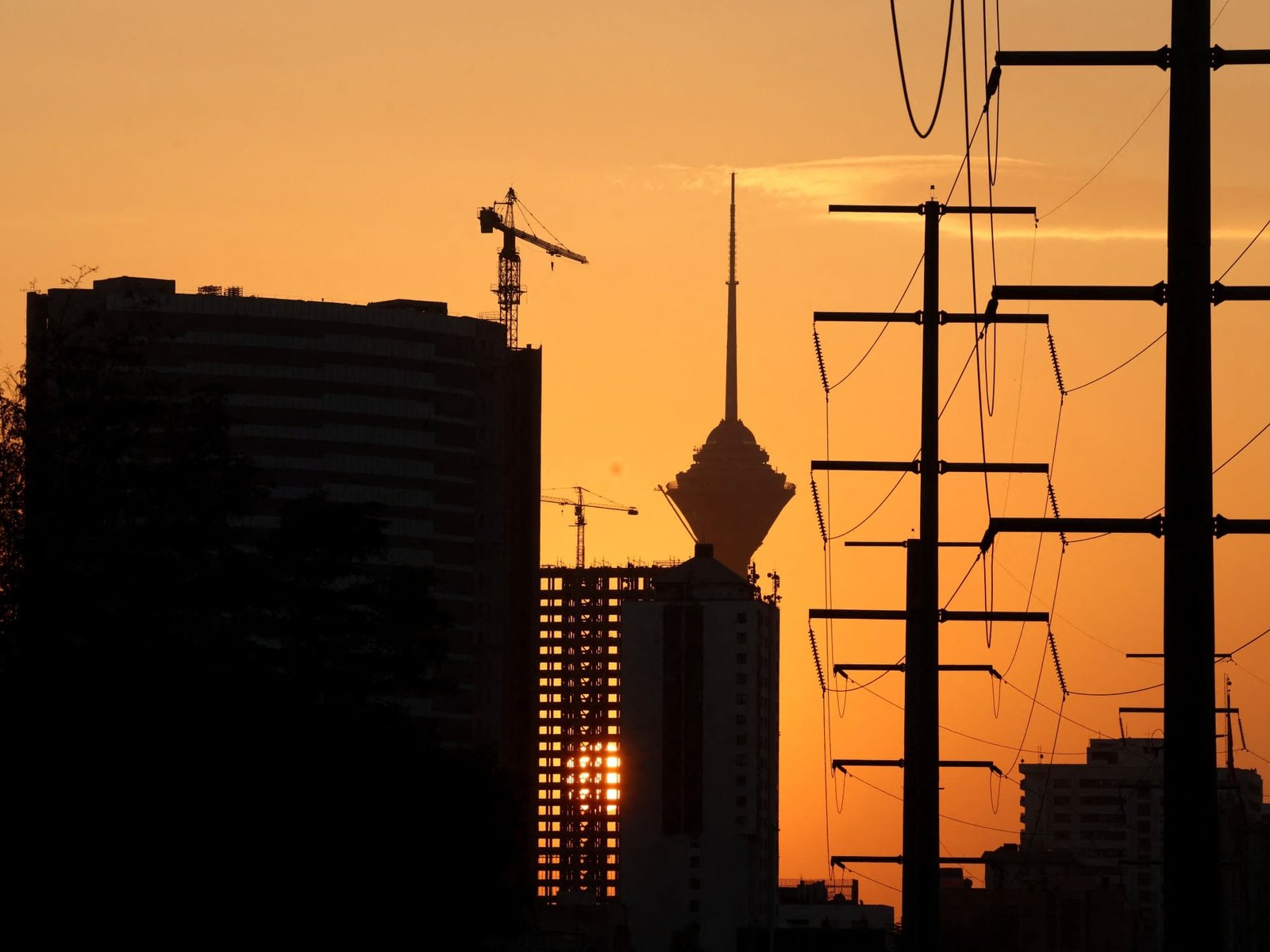
Political rivals blame each other as Iranians are further squeezed by sanctions that are unlikely to be lifted soon.
Tehran, Iran – As reinstated sanctions bite and the persistent chance of renewed war with Israel lingers, authorities in Iran are adopting a defiant posture, but one that masks a jockeying for influence within the ruling establishment.
United Nations sanctions were reimposed this month by European powers through the “snapback” mechanism of the 2015 nuclear deal with world powers. Negotiations between Iran and the E3 – France, Germany, and the United Kingdom – were not successful in preventing the reintroduction of the sanctions, and Iran has signalled that it is not willing to compromise on its stance.
Iran believes that agreeing to the current deal proposed by the West – including a demand that there be a total ban on Iranian nuclear enrichment – would amount to a capitulation.
But the sanctions are further weakening an Iranian economy that is already suffering, with inflation now at more than 40 percent.
And that, coupled with mounting public frustration, is forcing the government to find policies that will stave off criticism, while political infighting bubbles under the surface.
Supreme Leader Ayatollah Ali Khamenei has maintained a defiant posture towards the United States and its allies, saying in a televised speech earlier this week that Tehran would not “submit to impositions” by Washington.
He also shot back against Donald Trump personally, saying the US president used “a handful of empty words and buffoonery” during his trip this month to the Middle East for the Gaza ceasefire agreement. Trump said that the Gaza deal had come about partly because of Israel’s 12-day war with Iran, which began after surprise Israeli strikes in mid-June.
Iran’s top military commanders also maintain that they have recuperated from the losses sustained during the war, and remain ready to launch ballistic missiles and other projectiles at Israel and US interests again if the country is attacked.
In the capital and across the country, authorities continue to prop up statues and banners depicting Iranian kings and mythical figures dating back centuries before Islam in an attempt to show that Iranians have pushed back armed enemies for millennia.
This week, a giant statue was unveiled in Isfahan’s Shahinshahr, depicting Rostam, a legendary hero in Persian mythology, atop his famous horse, fighting an evil dragon.
In addition, a municipality-backed organisation put huge screens on the sides of a truck moving through Tehran, depicting a Roman emperor being captured by a Persian emperor, alongside more modern imagery, including Iranian missiles being fired.
[Translation: When the pulse of the city bursts with pride. The message of ‘kneel before the Iranians’ is displayed in the streets.]
Defiance
But even as Iran projects military readiness and nationalist pride, it faces worsening economic pain.
In addition to rising inflation, the local currency hovers close to an all-time low value against the US dollar, after Khamenei rejected direct talks with Washington.
Local restrictions remain in place, too, including on internet and GPS connectivity.
The Iranian government of moderate President Masoud Pezeshkian says it has not been able to lift the internet restrictions – despite a campaign promise that it would do so – because of the war with Israel. No timeline has been given as to when state blocks on almost all global social media, messaging services and thousands of websites may be lifted.
Major restrictions have existed for more than 15 years, and have only been intensified as part of a coordinated state effort over recent years.
There is infighting over the mandatory hijab, as well, with hardline factions calling for stricter enforcement of the dress code.
The beleaguered government, dealing with a budget deficit, an energy crisis and a slew of other woes, has said it is not spending money on enforcing hijab, but local reports suggest the so-called “morality police” vans are back in some cities in limited numbers.
The death in morality police custody of Mahsa Amini in September 2022 set off nationwide protests that lasted for months, during which hundreds of protesters and dozens of security forces were killed. Several people have since been executed by the state in relation to the protests.
Before that, an overnight tripling of petroleum prices in November 2019 had led to nationwide protests. Iranian authorities imposed their first near-total internet blackout during those protests, creating a precedent that led to an even stricter version during the war with Israel, which at one point left the country with 3 percent internet connectivity.
 United Arab Emirates Dirham Exchange Rate