
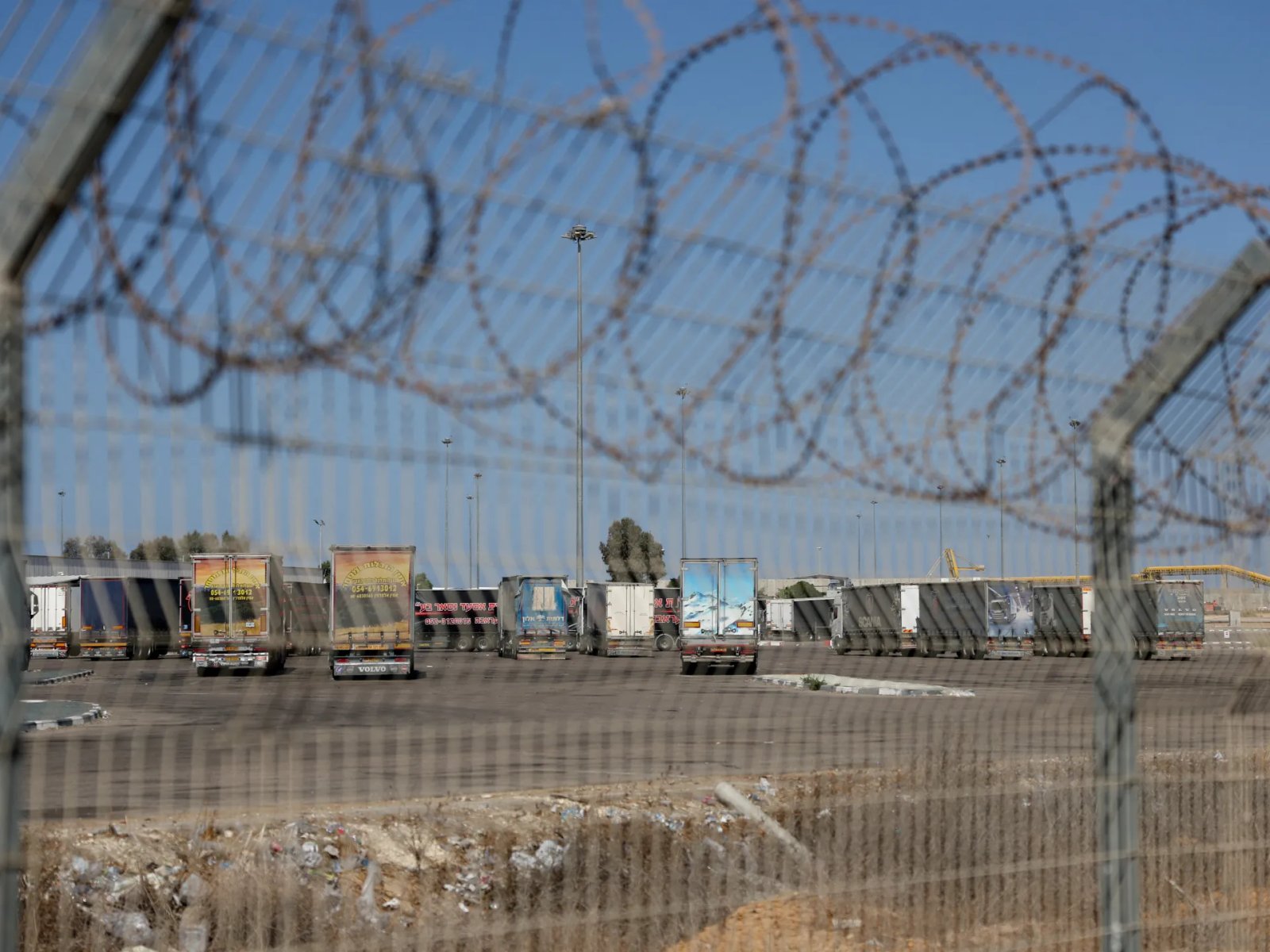
It has been more than a month and a half since a ceasefire was concluded in Gaza. As part of the deal, 600 trucks were supposed to cross daily into the Strip carrying food, medicine, tents, fuel and other basic necessities.
We have grown used to official statements talking about hundreds of trucks crossing the border every day. Photos are released, crossings are documented carefully, and announcements are made with celebration.
“4,200 trucks carrying humanitarian goods are entering Gaza weekly, since the start of the ceasefire. 70% of trucks that entered carried food … Over 16,600 trucks of food entered Gaza since the start of the ceasefire. Over 370,000 tons of food,” claims a November 26 update from the Israeli occupation authorities.
One would think the Palestinians in Gaza are the most well-fed people in the world.
To many of us, it is not clear how Israel counts the “trucks of food”, as there are indeed many commercial trucks allowed in that carry food of low nutritional value, like chocolate bars and biscuits, or food that is too expensive, like frozen chicken for $25 a kilo or a tray of eggs for $30.
Humanitarian organisations also seem to doubt the official count. According to the World Food Programme, only half of required food aid is entering Gaza. According to Palestinian relief agencies, only a quarter of necessary aid is actually allowed to go in.
And then only a fraction of that fraction actually reaches the displaced, the impoverished, the injured and the hungry. That is because much of the aid that does make it inside Gaza disappears into a “Bermuda triangle”.
The distance between the border and the displacement camps, where aid should be distributed, looks short on the map, but in reality, it is the longest distance politically and security-wise.
Yes, many trucks that go through never reach the families that need the supplies the most.







 United Arab Emirates Dirham Exchange Rate