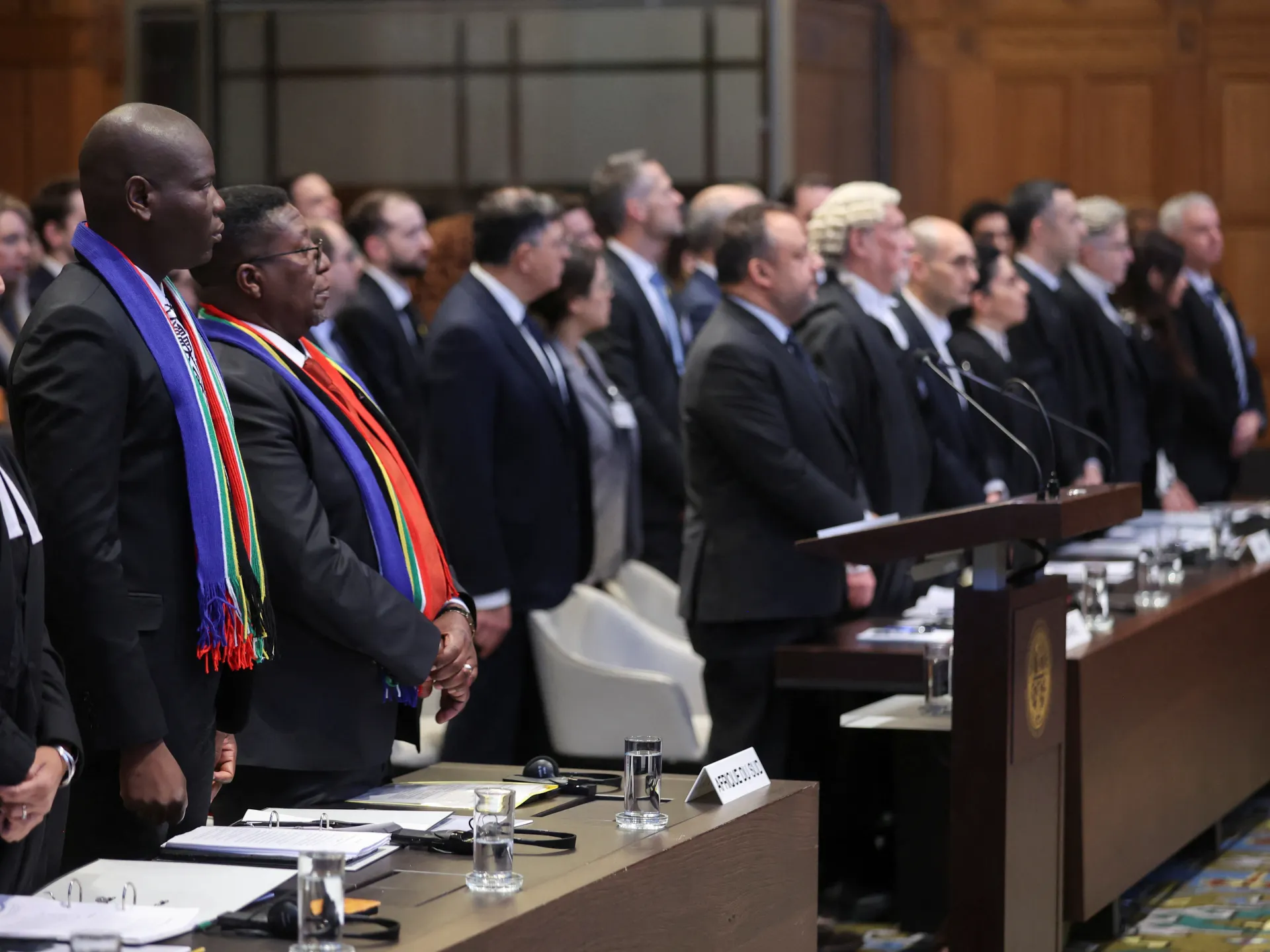
In Gaza, the world has seen the cost of a diplomacy that claims to uphold a rules-based order but applies it selectively. The United States intervened late, and only to defend an occupation the International Court of Justice (ICJ) has ruled illegal. Alongside other Western nations that built multilateral institutions, the US increasingly pursues nationalist agendas that undermine them. The hypocrisy is stark: one set of rules for Ukraine, another for Gaza.
This erosion of credibility marks the structural collapse of unipolar authority, symbolised by the US’s absence from the Group of 20 (G20) in South Africa this past week.
As thousands gather in Qatar over the coming days for this year’s Doha Forum under the theme “Justice in Action: Beyond Promises to Progress”, the failure to prevent genocide demands a reckoning. The imposed ceasefire in Gaza has delivered neither political resolution nor safety for Palestinians. Meanwhile, the future of Gaza continues to be discussed without Palestinians in the room.
This is not an unusual scene. Since the Cold War, international diplomacy has operated on what might be called the master-key model, where one powerful actor unlocks a conflict through political leverage, economic pressure, or conditional aid. Around it grew an entire ecosystem: humanitarian organisations, think tanks, mediators, and consulting firms, often funded by Western states, reinforcing the belief that a call to Washington could solve any crisis.
The ceasefire in Gaza shows that the master key can still turn the lock. The US exerted its influence, and the humanitarian community fell in line to deliver dividends on the deal. A Civil-Military Coordination Center has been set up by the US military to coordinate the delivery of aid and reconstruction.
States have hailed this flawed agreement as a breakthrough. Yet the fact that this master key was used only after two years of total destruction – despite extensive humanitarian diplomacy, and in a way that entrenches an illegal occupation – exposes the moral bankruptcy of real estate diplomacy, most clearly embodied by the transactional approach taken by the current US administration, which ultimately advances a settler-colonial logic.
We are living through what Antonio Gramsci, writing from his imprisonment by fascists in the 1930s, called an interregnum, when “the old world is dying and the new world struggles to be born”. In that void, the “morbid symptoms” of resurgent fascism and ethno-nationalism emerge.
So what remains when a superpower refuses to turn the lock? A world that is no longer unipolar but multipolar is messy and contested, requiring a new approach for those seeking to influence the outcomes of conflicts.
The age of singular leverage is fading, and institutions built for the 20th century cling to outdated maps. As Western power turns inward, those who built their credibility on proximity to it face a crisis of legitimacy.






 United Arab Emirates Dirham Exchange Rate