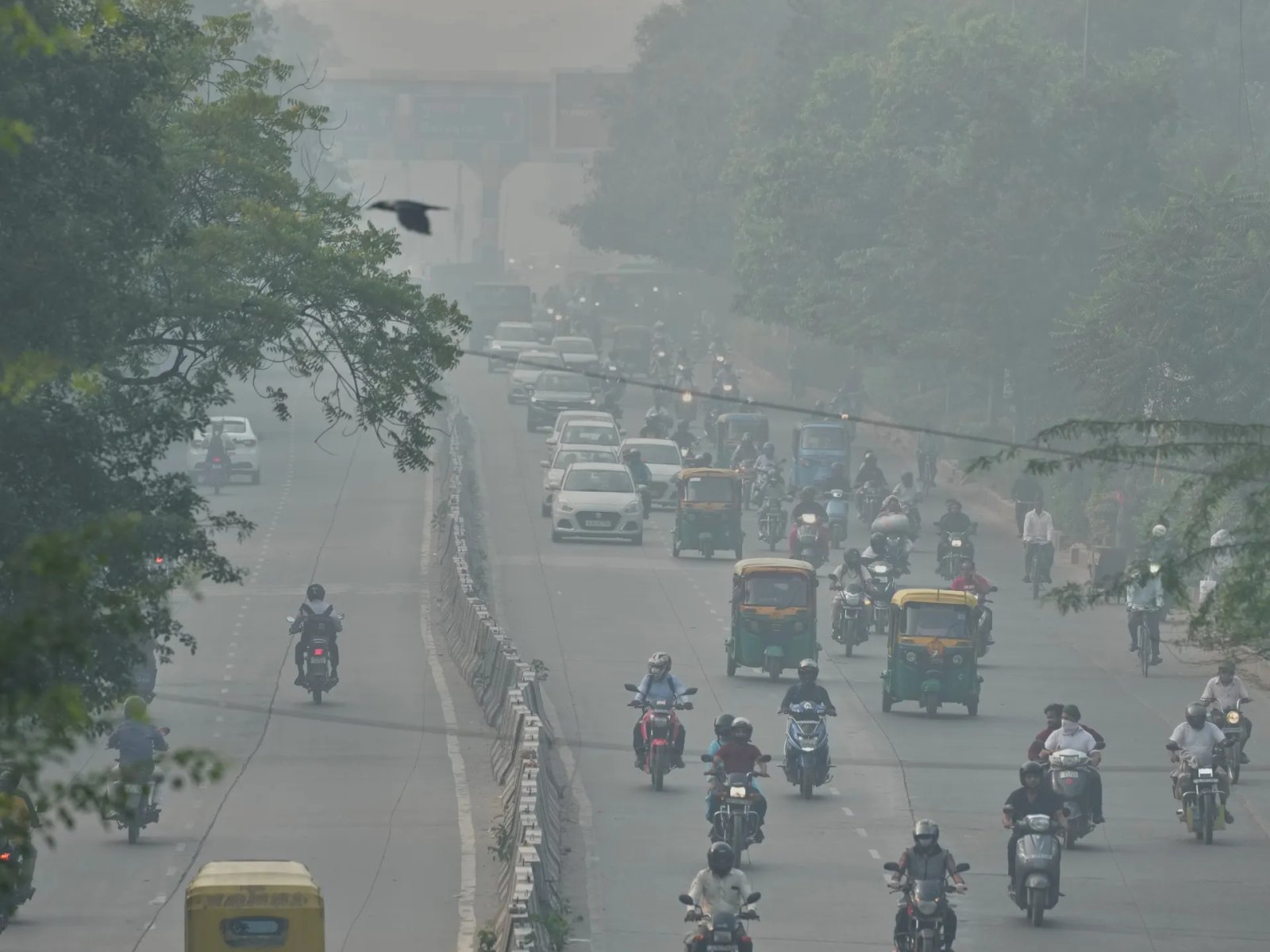
The air quality in New Delhi and its surrounding areas has turned hazardous as a dense layer of smog blanketed the Indian capital. Several parts of Delhi recorded an air quality index (AQI) of 400 and even 450 – a level considered as “severe” under international pollution standards.
Every winter, air pollution in Delhi spikes around this time when cold air traps smoke and fumes from fireworks, stubble burning and heavy traffic. The crisis is aggravated by vehicular and industrial emissions, massive road dust, construction activities and coal and biomass-fired residential heating.
As dozens of Indian cities grapple with “poor” or “very poor” air quality, per India’s pollution watchdog, China serves as a model for its neighbouring nation. Beijing, through stringent measures and effective air pollution control policies, has made a considerable effort to improve its air quality while also achieving impressive economic growth.
Twenty years ago, Beijing was crowned as the world’s smog capital. China’s temporary emission reduction regulations for the 2008 Beijing Olympics set the stage for its war on air pollution. With the launch of a five-year national action plan in 2013, the country introduced a raft of measures, including the closure of coal-fired boilers, promoting public transport and new energy vehicles, accelerating technological reform of enterprises and boosting innovation and green energy.
Special emphasis was given to slashing the “particulate matter (PM2.5)”. These inhalable particles, equal or less than 2.5 microns in diameter, are a major source of air pollution and pose the greatest danger to human health over their ability to penetrate deep into the lungs and enter the bloodstream.
Beijing’s efforts, coupled with the establishment of an early warning and emergency response system, better regulation of pollution activities, relocation of factories from populated areas and incentives for farmers to discourage agricultural burning, made a lasting impact, showing a dramatic 35 percent improvement in highly polluted areas by 2017.
In the following years, Beijing continued its campaign against air pollution. Average PM2.5 concentration dropped by a half, from 72 micrograms per cubic metre (μg/m³) in 2013 to 36μg/m³ in 2019, dropping further to 29.3μg/m³ in 2024. Although substantially higher than the World Health Organization’s guidelines – 5μg/m³ – it still marked a major breakthrough in China’s push against air pollution.
Despite the challenges posed by the pandemic, China sustained its battle for blue skies, rolling out targeted air pollution control policies such as limiting construction-related emissions, deploying clean industrial technologies, cutting steel production, retiring old cars and encouraging the adoption of electric energy vehicles. The measures paid dividends as China’s capital transformed from an environmental backwater into an emblematic case of urban air quality governance. Blue skies are indeed back in Beijing, given PM2.5 concentration averaged 24.9μg/m³ in the first three quarters of 2025, per the government.
The recent improvement builds on prior gains. In 2022, average annual PM2.5 concentration across China fell to 29μg/m³, according to Chinese media, and the number of days classified as having good air quality in 339 cities reached 316 – a progress not many regional countries could match. As many parts of the world experienced rising PM2.5 levels, China’s steep reductions were so substantial that they single-handedly drove a decline in global pollution, highlighting the country’s outsized contribution to improving air quality worldwide.





 United Arab Emirates Dirham Exchange Rate