Secretary of State Marco Rubio clarifies Trump’s earlier remarks, emphasizing anti-drug operation over regime change as Maduro faces trial in New York.
The United States does not seek to govern Venezuela and will work with its interim authorities following the dramatic capture of former President Nicolás Maduro, Secretary of State Marco Rubio said Sunday, in an effort to clarify Washington’s stance after a military raid brought the Venezuelan leader to the U.S. to face drug trafficking charges.
Rubio’s comments came a day after U.S. special forces seized Maduro from Caracas in a swift helicopter and naval operation, an action President Donald Trump initially suggested could lead to the U.S. helping to “run” the oil-rich nation.
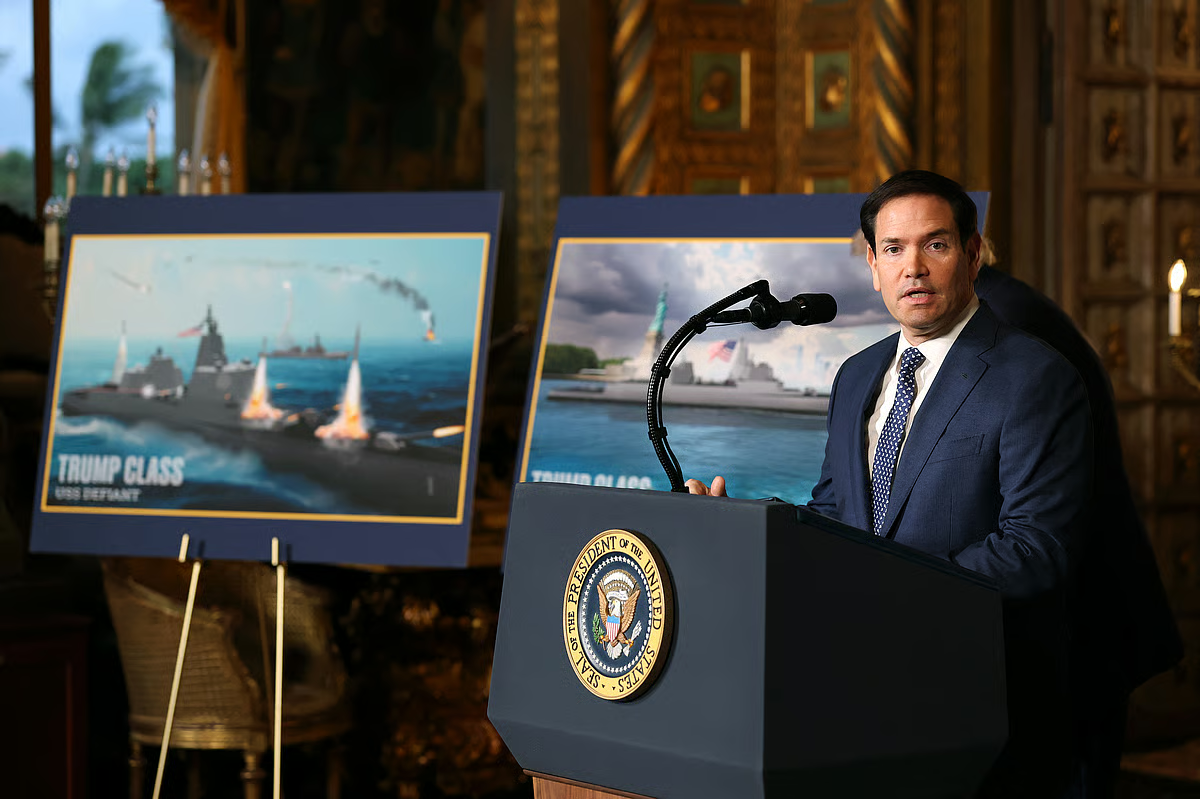
“We’re fighting drug traffickers, not a war against Venezuela,” Rubio told NBC’s Meet the Press, emphasizing that the administration’s focus remains on criminal justice, not prolonged occupation.
Despite Trump’s Saturday remarks that “we’re going to run the country” until a transition occurs—and that military “boots on the ground” remained possible—Rubio insisted the U.S. would recognize the authority of Maduro’s vice president, Delcy Rodríguez, as acting president, provided her government cooperates with American demands.
“We’re going to make an assessment on the basis of what they do, not what they say publicly in the interim,” Rubio told CBS News.
Calm in Caracas, Questions in Washington
Streets in Venezuela’s capital were calm Sunday, with residents lining up for food and police presence reduced. The country’s military publicly recognized Rodríguez as interim leader and urged a return to normalcy.
But in Washington, lawmakers expressed concern over the legal and strategic grounds for the operation. Senate Democratic leader Chuck Schumer said Americans were left “scratching their heads in wonderment and in fear,” while House Democratic leader Hakeem Jeffries called the raid an act of war that required Congressional approval.
Maduro in U.S. Custody, Awaiting Arraignment
Maduro, 63, was shown in a White House-released video handcuffed and escorted by federal agents in a New York detention facility, telling officers, “Good night, happy new year.” Earlier images depicted him blindfolded and restrained aboard a U.S. naval vessel.
He is expected to be arraigned in a Manhattan court Monday on longstanding narcotrafficking charges.
Oil and Geopolitics Loom Large
Beyond the legal narrative, the move secures U.S. access to Venezuela’s massive oil reserves—the largest in the world—and blocks rivals like Russia and China from deepening their influence.
Rubio noted that Venezuela’s crippled oil industry would require private investment, likely from Western companies. “Non-Russian, non-Chinese companies will be very interested,” he said.
Despite the shift in power, Rubio called talk of new elections “premature,” signaling that immediate U.S. priorities center on stability and energy security rather than a rapid democratic transition.
The U.S. will maintain pressure through a naval-enforced oil embargo, Rubio said, calling it “tremendous leverage over what happens next.”




 United Arab Emirates Dirham Exchange Rate