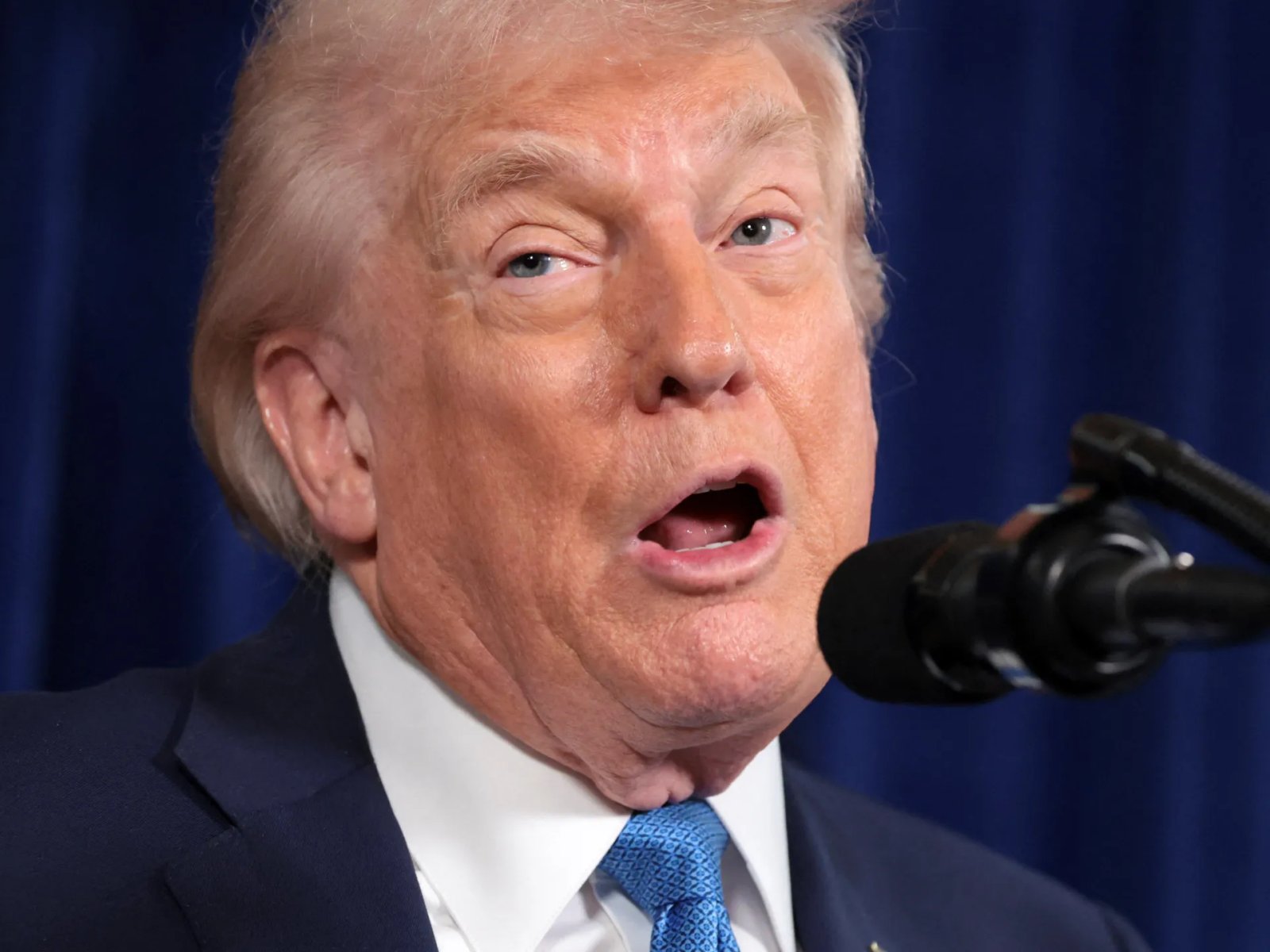
United States President Donald Trump has called on oil executives to rush back into Venezuela as the White House looks to quickly secure $100bn in investments to revive the country’s ability to fully tap into its expansive reserves of petroleum.
Trump, as he opened the meeting with oil industry executives on Friday, sought to assure them that they need not be sceptical of quickly investing in and, in some cases, returning to the South American country with a history of state asset seizures as well as ongoing US sanctions and the current political uncertainty.
“You have total safety,” Trump told the executives. “You’re dealing with us directly and not dealing with Venezuela at all. We don’t want you to deal with Venezuela.”
Trump added: “Our giant oil companies will be spending at least $100bn of their money, not the government’s money. They don’t need government money. But they need government protection.”
Trump welcomed the oil executives to the White House after US forces earlier on Friday seized their fifth tanker over the past month that has been linked to Venezuelan oil. The action reflected the determination of the US to fully control the exporting, refining and production of Venezuelan petroleum, a sign of the Trump administration’s plans for ongoing involvement in the sector as it seeks commitments from private companies.
“At least 100 Billion Dollars will be invested by BIG OIL, all of whom I will be meeting with today at The White House,” Trump said on Friday in a predawn social media post.
The White House said it invited oil executives from 17 companies, including Chevron, which still operates in Venezuela, as well as ExxonMobil and ConocoPhillips, which both had oil projects in the country that were lost as part of a 2007 nationalisation of private businesses under former President Nicolas Maduro’s predecessor, Hugo Chavez.
“If we look at the commercial constructs and frameworks in place today in Venezuela, today it’s un-investable,” said Darren Woods, ExxonMobil CEO. “And so significant changes have to be made to those commercial frameworks, the legal system, there has to be durable investment protections and there has to be change to the hydrocarbon laws in the country.”
Benjamin Radd, a senior fellow at the UCLA Burkle Center for International Relations, told media that he had “noted the hesitation and less-than-full-throated enthusiasm for re-entering the Venezuelan market”, citing Woods, who told the gathering that the company had its assets there seized twice already.




 United Arab Emirates Dirham Exchange Rate