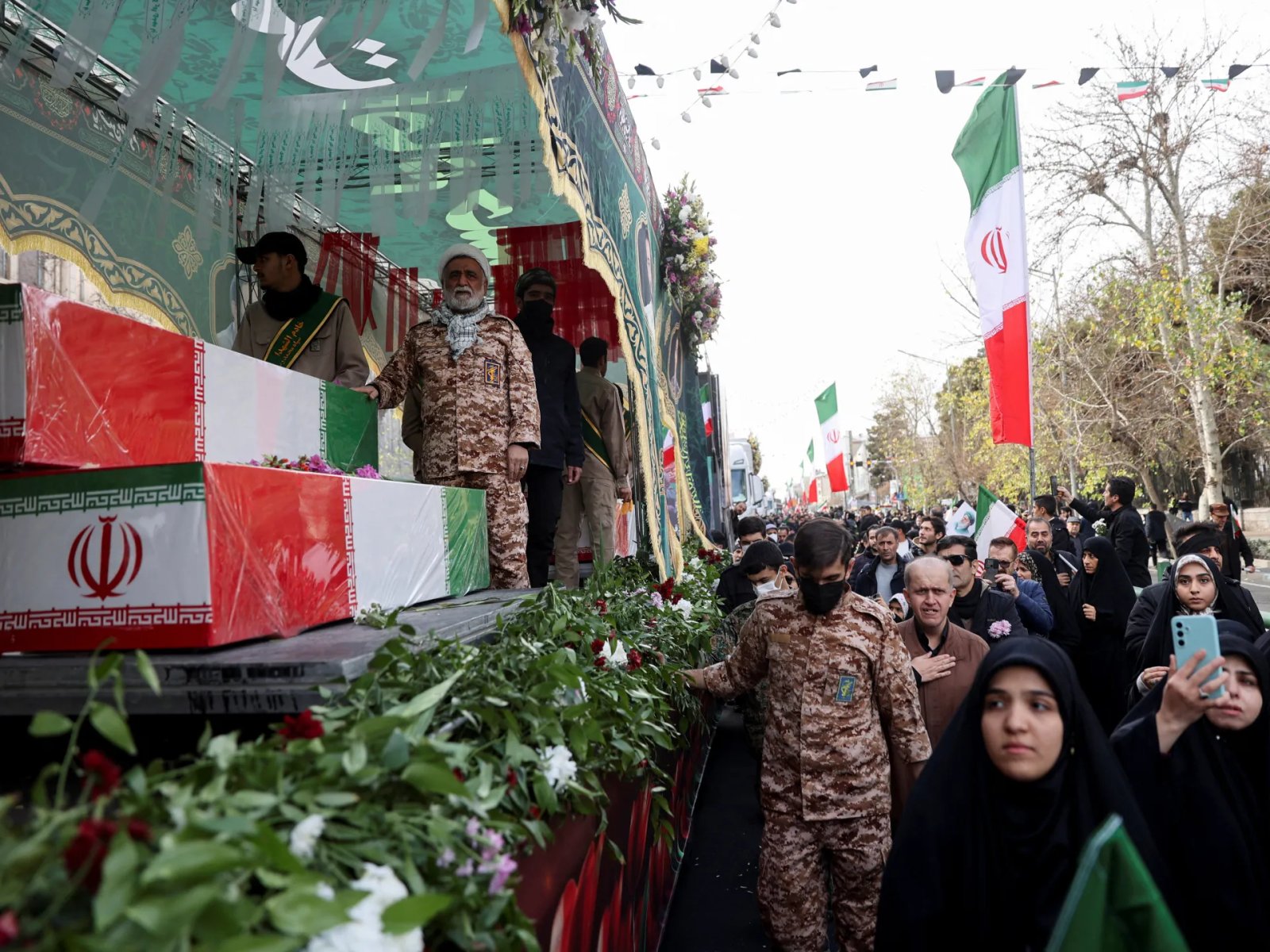
Despite Iran’s vulnerable position, any US strikes could risk triggering a protracted conflict, analysts say.
Washington, DC – Donald Trump says his goal in Iran is to “win”.
But the United States president has no easy path to victory against an ideological Iranian governing system fighting for survival, analysts say.
Iran is likely to meaningfully retaliate against any attack against its central government, unlike its largely symbolic response to the US bombing of the country’s nuclear facilities in June and the assassination of its top general Qassem Soleimani in 2020.
A decapitation strike to kill Supreme Leader Ali Khamenei and other top officials may fail to collapse the regime and could lead to further destabilisation, and a protracted US war could prove catastrophic and costly for Washington and the region.
“All the options are pretty terrible,” said Barbara Slavin, distinguished fellow at the Stimson Center think tank.
“It’s very hard to know what will take place if you do ‘A’ or ‘B’. What are the after-effects going to be? And particularly if the regime feels that its back is up against the wall, it could lash out in really horrific ways against American forces in the region, against allies.”
Since the start of the year, as a wave of antigovernment demonstrations sweep Iran, Trump has threatened to intervene militarily against the country if the authorities kill protesters.
“If Iran shots [sic] and violently kills peaceful protesters, which is their custom, the United States of America will come to their rescue. We are locked and loaded and ready to go,” Trump wrote in a social media post on January 2.
On Wednesday, Trump presented Tehran’s version of the events – that armed demonstrators were targeting security forces.
“They [Iranian officials] said people were shooting at them with guns, and they were shooting back,” Trump said. “And you know, it’s one of those things, but they told me that there will be no executions, and so I hope that’s true.”
Two days later, Trump conveyed his “respect” and gratitude to Iran for cancelling what he said were 800 executions scheduled for Thursday.
‘Sugar high from Venezuela’
Some reports also suggest that the protest movement appears to be receding for now, although it is difficult to verify the situation on the ground with Iranians unable to access the internet.
But experts warn the crisis is not over, and the situation could change quickly. Demonstrations may ignite again, and Trump has not taken the military option off the table.
He has bragged about the killing of ISIL (ISIS) leader Abu Bakr al-Baghdadi in 2019, the Soleimani assassination and the bombing of Iran’s nuclear facilities last year. Just this month, he ordered the abduction of Venezuelan President Nicolas Maduro.
But experts say Trump’s chances of a swift operational victory in Iran are slim.
“This is not Venezuela,” Slavin said of Iran.
“This is not one and done, and given all the other crises, many of them self-inflicted, that he is dealing with – Venezuela, this ridiculous effort to take over Greenland – does he really want a massive crisis in the Middle East after having campaigned against this sort of adventure?”
Only two months ago, the Trump administration released a National Security Strategy outlining a push to shift foreign policy resources away from the Middle East. It said that the past considerations that made the region so important to the US – namely, energy production and widespread conflict – “no longer hold”.
The document also asserted Trump’s commitment to non-interventionism.
“We seek good relations and peaceful commercial relations with the nations of the world without imposing on them democratic or other social change that differs widely from their traditions and histories,” it read.
However, given the Iranian government’s brutal crackdown on protests, Trump may have “cornered himself into being a humanitarian interventionist”, according to Trita Parsi, the executive vice president at the Quincy Institute, a think tank focused on diplomacy.
“He may be on a sugar high from Venezuela, but that’s not replicable in Iran in that same manner, and it would require tremendous amount of military force,” Parsi told media.

 United Arab Emirates Dirham Exchange Rate