
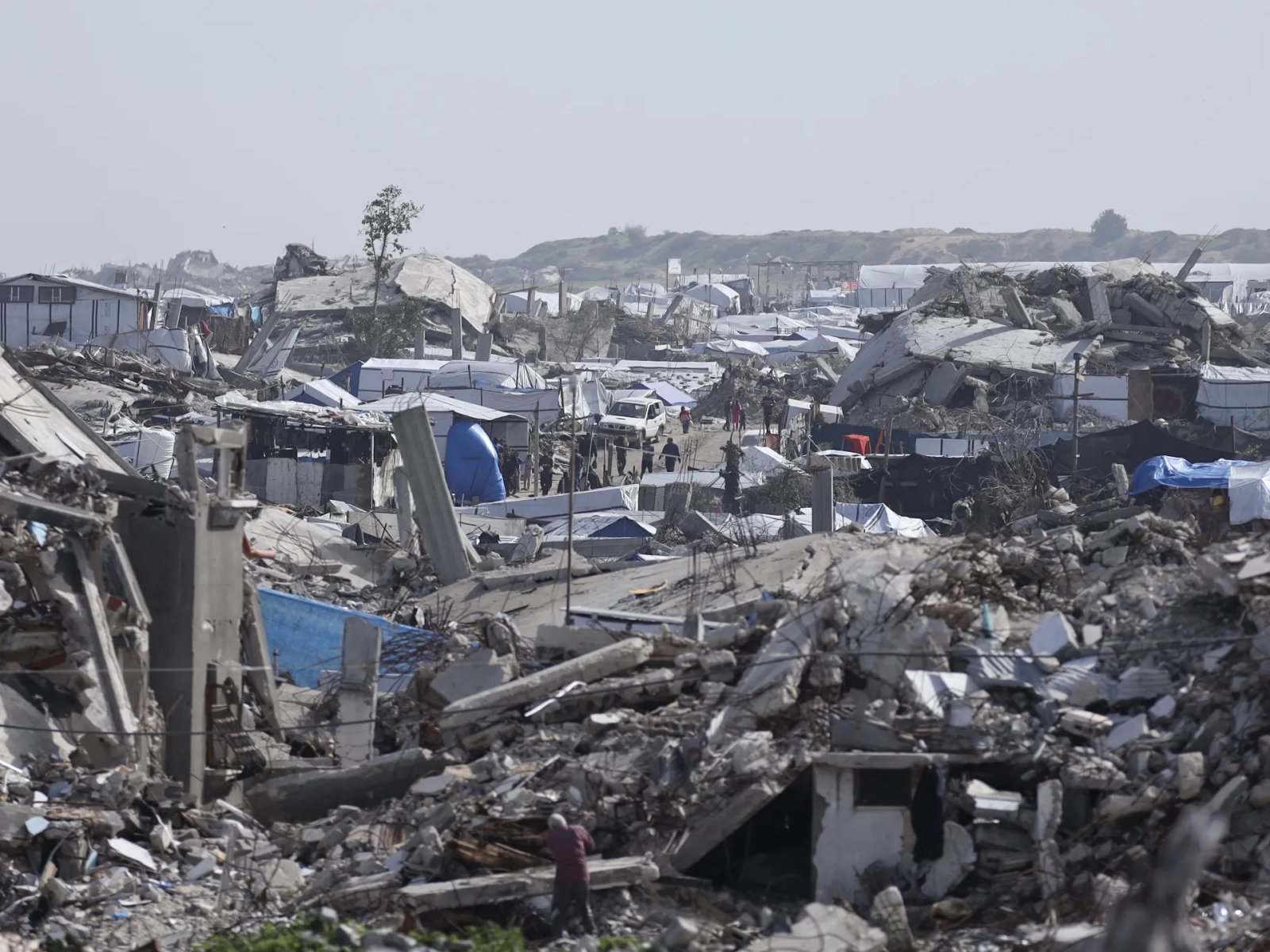
Retrieval of Gvili’s body could pave the way for next phase of the ceasefire, including reopening the Rafah crossing.
The Israeli military says the remains of Ran Gvili, the last Israeli captive in the Gaza Strip, have been retrieved, clearing the way for the next phase of a ceasefire deal agreed in October.
“Following the completion of the identification process by the National Centre of Forensic Medicine, in cooperation with the Israel Police and the Military Rabbinate, [military] representatives informed the family of the late Ran Gvili that his body has been returned for burial,” said army spokesman Avichay Adraee.
“Thus, all the hostages held in the Gaza Strip have been repatriated,” Adraee confirmed.
Gvili, an Israeli policeman, is thought to have been killed during the October 7, 2023 Hamas-led attacks. His return to Israel marks the end of Hamas’s obligation to return all 251 people, dead or alive, to Israel under the terms of the ceasefire deal.
Later on Monday, Central Gaza’s Al-Aqsa Martyrs hospital said it had received nine living Palestinian detainees released by Israel.
“Nine Palestinian detainees from Gaza arrived at the hospital a short while ago via Red Cross teams, after the occupation released them today,” the hospital said in a statement.
Following the retrieval of Gvili’s body, Hamas said in a statement that this “stresses” the group’s commitment to the first stage of the ceasefire agreement and said it has “fulfilled all its obligations in a clear and responsible manner”.
The announcement comes after Hamas’s military wing said it had given “all the details” to truce mediators on the possible location of the last captive’s body to be returned to Israel under the United States-brokered ceasefire.
Israeli Prime Minister Benjamin Netanyahu hailed the return of the last captive, calling it an “extraordinary achievement for the State of Israel”.
Reporting from Gaza City, media’s Hind Khoudary explained that the return of the final captive marked an “important moment for Palestinians”.
“There should be a lot changing on the ground – the Rafah crossing to open, the reconstruction material to enter the Gaza Strip, and also the withdrawal of the Israeli forces from the yellow line to allow Palestinians to go and be able to see their houses and see everything beyond that line,” Khoudary said.
“There have been a lot of promises from the first phase of the ceasefire, of course, which have not been fulfilled, including the agreement to allow 600 [aid] trucks per day to enter Gaza, whereas approximately 230 trucks have entered daily.”
Two weeks ago, US special envoy Steve Witkoff announced that the ceasefire had entered into the second stage of the agreement, which will focus on post-war governance of the besieged enclave, the demilitarisation of Hamas, and reconstruction.



 United Arab Emirates Dirham Exchange Rate