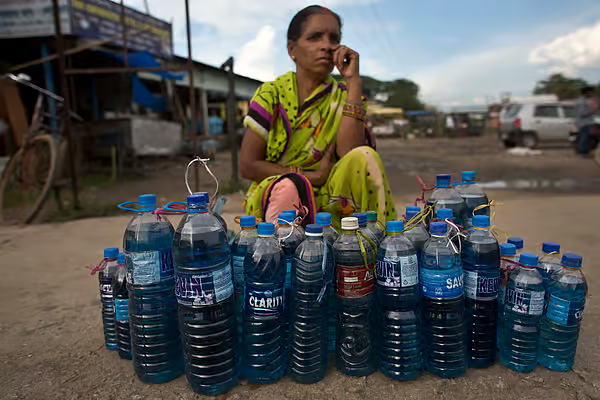
Government relaxes norms for 60 days to distribute ‘common man’s fuel’ across 21 states as LPG imports decline due to regional conflict.
NEW DELHI — In a significant policy shift prompted by the ongoing Middle East conflict, India has resumed distribution of kerosene at select petrol pumps across 21 states and union territories to address emerging fuel shortages.
The Ministry of Petroleum and Natural Gas has directed state-owned oil marketing companies to supply superior kerosene oil (SKO) through designated retail outlets for a limited period of 60 days. The fuel, often referred to in India as “the common man’s fuel,” will be made available to households for cooking and lighting purposes.
The decision marks a temporary reversal of the government’s earlier efforts to phase out kerosene in many regions. Officials attributed the move to a sharp decline in liquefied petroleum gas (LPG) imports following the US-Israel-Iran war, which has disrupted global energy supply chains.
Distribution and Logistics
Under the relaxed norms, each designated petrol pump can stock up to 5,000 litres of kerosene, enabling quicker distribution through existing retail networks. The special arrangement will remain in force for 60 days, according to a government spokesperson.
The move was coordinated by the informal group of ministers (IGoM), established by the central government to monitor the impact of the Middle East crisis on the supply of essential commodities.
Kerosene has traditionally been distributed through India’s public distribution system (PDS) to help economically vulnerable households access affordable fuel. The current initiative expands its availability through petrol pumps to reach more consumers swiftly.
Push for Piped Natural Gas Intensifies
While kerosene distribution is being expanded temporarily, the government is simultaneously accelerating efforts to shift urban consumers toward piped natural gas (PNG) to reduce dependence on LPG imports.
In many cities across India, long queues for LPG refills have been reported. To ease pressure on LPG supplies, authorities are encouraging households with access to PNG networks to surrender their LPG cylinders.
Last week, the government issued an order stipulating that LPG supply will be discontinued after three months for households that have PNG availability. The diverted LPG cylinders will be redirected to rural and remote areas where PNG infrastructure does not exist.
Public Response and Official Appeal
Neeraj Mittal, India’s Petroleum Secretary, posted on his ‘X’ account on Sunday:
“6000 PNG consumers surrendered their LPG till yesterday! A big thanks to them!! Join this strong bold group of #DoGood citizens who have come forward to give up LPG to help those to get LPG who don’t have PNG. Give up yours today.”
The government continues to promote the rapid expansion of natural gas pipelines, particularly in urban centers, as a long-term strategy to insulate domestic fuel supplies from global market volatility and geopolitical disruptions.







 United Arab Emirates Dirham Exchange Rate