
Wood Mackenzie warns that shipowner confidence, insurance access, and inbound vessel traffic—not just upstream capacity—will dictate the pace of recovery, with Iraq facing up to nine months to restore output.
DUBAI / LONDON – Up to 11 million barrels per day (bpd) of Middle Eastern oil production remains offline, and a rapid restart is unlikely until shipping logistics through the Strait of Hormuz are restored, according to a new analysis from Wood Mackenzie released Tuesday.
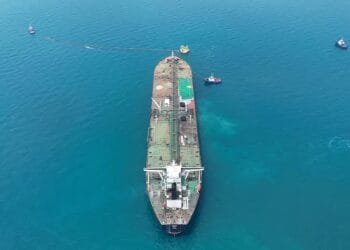
Even as a two-week ceasefire takes hold, industry focus has shifted from wellheads to waterways. The critical bottleneck is not reservoir damage but the lack of a “workable system” for maritime transit, including insurance cover, trade finance, and guaranteed safe passage for both laden and ballasting vessels.
“Ballasting vessels are unlikely to enter via the Strait of Hormuz any sooner than a ‘just in time’ logistics basis, at risk of becoming trapped if hostilities resume,” said Alan Gelder, senior vice-president for refining, chemicals and oil markets at Wood Mackenzie. He added that onshore storage drawdowns are themselves constrained by port loading capacity.
While outgoing tankers carrying crude have strong incentives to move quickly once security assurances emerge, inbound traffic poses a stiffer challenge. Any sustained recovery will require empty ships to re-enter the Gulf—a move operators will delay until risks of re-escalation are minimal.
Diverging National Recovery Paths
Once shipping constraints begin to ease, attention will shift to production capabilities, revealing stark differences between countries.
- Saudi Arabia & UAE: Storage capacity of roughly one month’s output offers more buffer for a managed restart.
- Iraq & Kuwait: Less than two weeks of storage means they will feel pressure sooner, but also face longer operational hurdles.
“More than half of most field’s previous supply levels could be restored before shipping constraints ease. Thereafter, different recovery profiles will emerge,” said Fraser McKay, head of upstream analysis at Wood Mackenzie. He warned that even under unconstrained conditions, Iraq could take six to nine months to return to prior output levels.
Operational Risks and a ‘Historic’ Test
Despite limited infrastructure damage in some countries, McKay cautioned that regulators pressuring operators to restart too aggressively could cause “more long-term damage to foundational assets.”
However, he noted an unexpected upside: the extended shut-ins amount to “the largest and longest build-up test in history,” which could improve reservoir knowledge and well deliverability in the long term.
LNG: Cargoes Waiting, But No Real Shift
On the gas side, a two-week ceasefire has so far changed little for LNG supply fundamentals, Wood Mackenzie said. Fourteen trapped laden LNG cargoes in the Gulf may now exit the Strait, providing temporary relief. However, a meaningful supply recovery depends on a restart of Qatar’s Ras Laffan complex—a move the consultancy says remains uncertain during a temporary truce.






 United Arab Emirates Dirham Exchange Rate