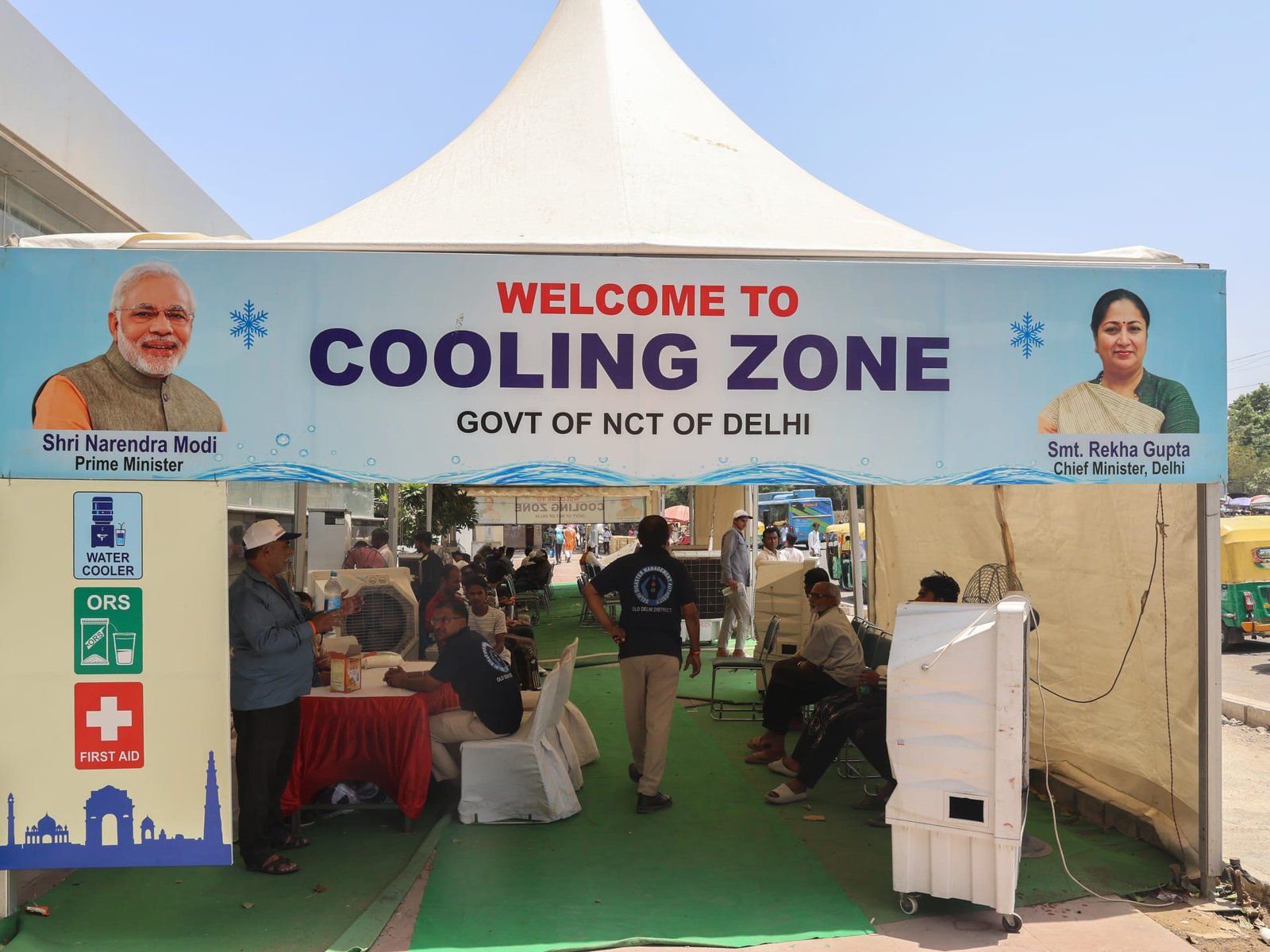
India is experiencing an extraordinary summer.
Across the country, temperatures have crossed 45 degrees Celsius (113 degrees Fahrenheit), inching towards 46, with Akola in Maharashtra’s Vidarbha region recording the country’s highest temperature of 46.9C on April 26. Census workers have died, as have voters who stepped out in the recently concluded West Bengal election. A man who boarded a bus to attend a wedding died before he reached his destination. On a single day in late April, all of the top 50 hottest cities in the world were located in India.
There is a violence to the light, the kind that makes you shield your eyes – even at 7am. With farmers unable to work outside, livestock under heat stress and crops failing, the United Nations is concerned that the heatwaves are pushing food supply “to the brink”. Even more alarming is that the extreme heat is causing not just heart attacks, but also kidney injury, affecting sleep quality and exacerbating numerous chronic conditions, including diabetes, respiratory illnesses and mental health conditions.
While the newspapers record a few deaths here and there, the majority of heat-related deaths go unrecorded in India. I know, from my decades as a health reporter, that those who die early in any catastrophe – like the HIV patients of the 1980s, or COVID-19 more recently – become numbers. Only after we have a mountain of bodies do we think to raise a flag and give it a name, perhaps even its own day.
India has reached that point.
In fact, the 16th Finance Commission has recommended that heatwaves be notified as national disasters, but getting funds out of this government to mitigate these deaths, or compensation for the families of victims, comes with red tape that can reduce hardened warriors to tears.
As the climate heats up, the rest of the world looks at green cover – trees, wetlands and biodiversity hotspots – as central to mitigating a warming planet. Not in India. Here, between the government, the courts and private developers, there is an orgy of tree-felling across the worst-affected cities. In Nashik, despite protests, heritage banyan trees that have stood for decades, if not centuries, are being cut down. In Pune, too, old trees are making way for a four-lane highway. In Bengaluru, trees are making way for a metro train and in Kashmir, which has never experienced such heat, mulberry, walnut and chinar trees have to go for wider roads and “smarter” cities.
Back when he came to power in 2014, Prime Minister Narendra Modi alarmed many Indian scientists and researchers by denying climate change. “Climate has not changed. We have changed. Our habits have changed,” he told students.
The heat pummelling India’s megacities is reinforcing longstanding inequalities of caste, class and gender in poor and marginalised communities. Our treeless streets are abandoned, save for the homeless and the street hawkers. The rich travel from their air-conditioned houses in their air-conditioned cars to their air-conditioned offices, malls and schools. The poor are being left to die in a country that keeps inventing new ways of neglecting its most vulnerable populations. Watching this heat, Harvard’s South Asia Institute released a white paper asking an innocuous question: how hot is too hot? Researchers say the human body can only handle so much heat before it can no longer cool itself, and that limit is below a wet-bulb temperature of 35C. Above this limit, even a young, healthy person resting in the shade with access to ample drinking water and skin fully coated in sweat would experience a continual rise in core temperature, leading to death from heatstroke within hours.







 United Arab Emirates Dirham Exchange Rate