

Climate-related challenges especially heatwaves, floods, and droughts are not new to Pakistan. The climate is a prolonged state of weather that prevails over a region. It is mainly triggered by the increased emission of chlorofluorocarbons that significantly influence the water cycle.
This shift is believed to be a result of climate change, which is causing temperatures to rise in Pakistan and altering weather patterns. Despite contributing less than one per cent of the world’s greenhouse gas emissions, Pakistan is one of the most severely impacted countries by extreme weather events resulting from climate change.

Lahore, the capital of Pakistan’s largest province Punjab, residents such as Javed Ali say the ongoing heatwave has felt “very severe, sudden and unexpected”.
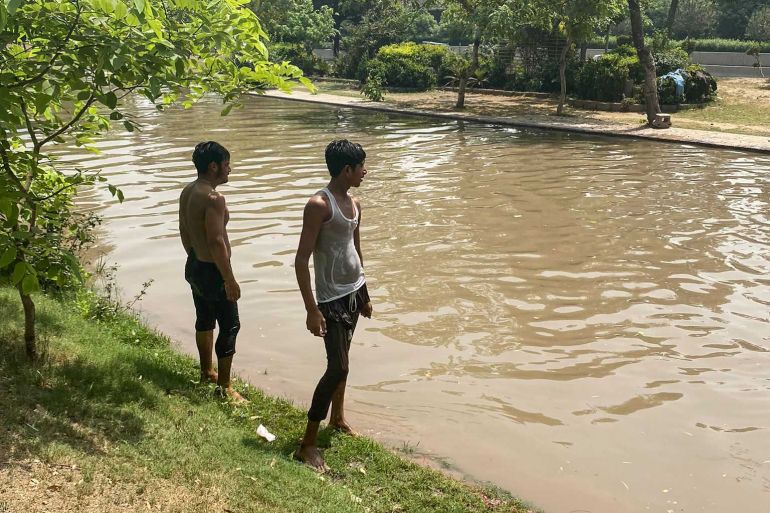
A tailor living in one of Lahore’s Katchi Abadis (shanty towns), Javed told DubaiNews.Tv that the 42 degree Celsius and above temperatures, combined with hours-long power breakdowns, and acute humidity have created an “unbearable” situation at home.
“We are eight people living in three rooms… The children get easily frustrated in this heat together with the load shedding [power outages]… Sometimes they can’t help but cry,” he said.
Since mid-June, South Asian nations have been experiencing an unpredictable heatwave that has seen some areas touch 50°C.
⚠️ Alert: With temperatures in Gilgit-Baltistan & Khyber Pakhtunkhwa expected to be 4-6 degrees higher than normal, the risk of flash floods and glacial lake outburst floods (GLOF) is on the rise. District administrations, local organizations, communities must remain vigilant and… pic.twitter.com/r97krmHVXZ
— SenatorSherryRehman (@sherryrehman) June 22, 2023
“This is a freak weather phenomenon in Pakistan,” he said.
The temperatures were “6-7° higher than normal at this time. What is happening most definitely is due to climate change.
Scientists have long warned the climate crisis will lead to more intense weather – including floods, droughts and heatwaves.
A UN agency reported that key indicators of climate change – including greenhouse concentrations and ocean heat – had been higher compared to previous years.
“The global energy system is broken and bringing us ever closer to climate catastrophe,” the World Meteorological Organization said.
5th most affected country
Pakistan is highly vulnerable to climate change impacts. The Global Climate Risk Index 2021 ranked Pakistan as one of the most vulnerable countries in the world to climate change and extreme weather events, despite being one of the lowest carbon emitters in the world.
According to the Global Climate Risk Index published by non-profit group Germanwatch, Pakistan is one of the most vulnerable nations in the world when it comes to the effects of climate change over the past two decades.
Between 2000 and 2019, the Germany-based organisation ranked Pakistan as the 8th most affected country. During this period, the sub-continent nation lost on average 500 lives annually as a result, or 10,000 over the course of the whole period, the group said.
One of the most alarming effects of the “torrid” heatwave is the accelerated melting of Pakistan’s glaciers in the north.
Pakistan has more than 7,000 glaciers – one of the highest numbers in the world – many of them in the Himalayan region.
Pakistan's climate change minister Sherry Rehman warns of flash floods and glacial lake outburst floods in northwestern regions of Khyber Pakhtunkhwa and Gilgit-Baltistan due to high temperatures https://t.co/NOjWYbY57q
— Arab News Pakistan (@arabnewspk) June 22, 2023
A University of Leeds study published two years back found the ice from glaciers in the Himalayas was melting “at least 10 times higher than the average rate over past centuries” a result of human-induced climate change.
Moreover, the researchers reported the Himalayas, which also covers other countries in South Asia such as Nepal and India, had lost 40 percent of their ice over several hundred years.
What Pakistan is experiencing is a perfect climate storm. It is very alarming and there is nothing that can done about this. The country cannot simply go out and turn off the greenhouse gases.
Effect on crops
Experts have warned the unexpected heatwave is also affecting the agriculture sector in the country.
Amanullah Khan, head of the environment and climate change unit at the UN Development Programme in Pakistan, told while the country’s crops are used to high temperatures, the issue was the heatwave arriving earlier than expected.
“It’s not as if the agriculture of this country has not seen temperatures of 41°C or 43°C – the problem is that crops need certain temperatures at a certain time of their growth,” he said from Islamabad.
Meanwhile, Pakistan’s mango harvest has also been affected, with some local experts claiming a drop of nearly 60 percent in production.
Action is most needed now @sherryrehman https://t.co/TBpfHiJMmq
— Darjat (@darjatmd) June 23, 2023
The patron-in-chief of the All Pakistan Fruit & Vegetable Exporters, Importers & Merchants Association Waheed Ahmed told his group had reduced its export target by 25,000 tonnes this season, a 20 percent drop.
Ahmed added similar shortfalls can be expected later this year in the “production of green vegetables, sugarcane and other crops”.
Furthermore, Ahmed said continuing water shortages were further deepening food security in the country.
Pakistan has been ranked among the top 23 countries in the world by the UN facing drought emergencies over the past two years.
The report published by the UN Convention to Combat Desertification said droughts – a result of low precipitation and exacerbated by higher than normal temperatures – were a major driver of “crop yield volatility”, leading to low yields and resulting in “substantial financial losses”.
‘No choice’
Javed the tailor said unlike more affluent households, he and his family had few financial resources to mitigate the effects of the heatwave, made worse by the ongoing power outages in the province and elsewhere.
“We have no money to buy an air-conditioner. We rely on fans and cheap coolers … but when there is no electricity for several hours, we have nothing to stay cool with. We just have to live with it,” he lamented.
A few days ago @ClimateChangePK had warned that Pakistan’s vulnerability is high due to high temps. Hassanabad bridge on the KKH collapsed due to GLOF from the melting Shisper glacier which caused erosion under pillars. Am told FWO will have a temporary bridge up in 48 hours. 1/2 pic.twitter.com/Sjl9QIMI0G
— SenatorSherryRehman (@sherryrehman) May 7, 2022
“We can’t afford a UPS [uninterruptible power supply] or generator as a backup when the load shedding starts.”
A climate study found in the 2010s exposure to heatwaves for the “poorest quarter of the world … was more than 40 greater than in the wealthiest quarter”, citing a lack of access to heat adaptation facilities such as air conditioning and the resources to run them.
“Adaptation measures, such as cooling centres … can lower a population’s heat exposure impact. However, a country’s ability to implement adaptation measures generally depends on its financial resources, governance, culture and knowledge. Poverty affects each,” the authors wrote for the media and research outlet The Conversation.
Nevertheless, for low-income labourers in Pakistan who work outdoors, the heatwave is a secondary concern.
“We have no choice but to continue working the same long hours no matter how hot it gets … to support our families,” Ali Kazim, a tea seller told, adding his regular 10-12-hour workdays remain unchanged.
Asad, a day labourer who makes between 1000-1,200 rupees a day told the government should ensure continuous employment for temporary workers like him.
 The father of three said he had not found a paid job for nine consecutive days between April and May, all the while sitting outside for eight or nine hours at a busy intersection in Lahore, hoping someone would hire him.
“The heat is bad but it will always be there… It can’t stop us from trying not to go hungry.”
Increased anthropogenic activities are affecting metrological conditions, which lead to climate related disasters. Globally, the frequency of recurrent flooding, heatwaves, and drought events have increased, ranking Pakistan as the 5th most vulnerable country of the world.
The major consequences of climate change in Pakistan include increase in temperature, spatial and temporal variability in precipitation, melting of glaciers, excessive erosion, decreased water storage ultimately leading towards water stress and food insecurity, degradation of biological diversity, ecosystem vulnerability, increased frequency of extreme events of floods and droughts, and seawater intrusion, etc.
Rise in Temperature
According to the International Panel on Climate Change (IPCC), Earth’s temperature has risen by about 1⁰C from pre-industrial level. With the business as usual scenario, this rise may reach up to 1.5⁰C during 2030-2050.
The rise in temperature influences the spatio-temporal distribution of air masses by changing regions of low-pressure and high-pressure systems around the globe. This shift results in seasonal variability and periods of extreme hot and cold days.
Resultantly, the duration of summer season has prolonged with temperatures exceeding 50⁰C during June 2017 and 2020 over Pakistan. The coastal city of Karachi has also witnessed one of the fatal impacts of seasonal variations in the form of heatwaves during 2015.
Surprisingly, the temperature of Karachi rose up to 43⁰C and approximately 1,200 people lost their lives due to the hot and humid weather. The rise in temperature created a domino effect that is influencing other weather phenomena, particularly precipitation trends.
Rise in Sea Level
Pakistan has also experienced a rise in sea level at a rate of about 1.1 mm per year, which is even higher than the global mean. The projected scenarios show that it will continue to rise during the 21st century. In 2019, the global mean sea level was 387.6 mm higher than the average level of 1993 whereas a rise of 6.1 mm has been observed from 2018 to 2019. Rise in sea level is most likely to affect the low-lying coastal areas in Southern Sindh and Balochistan with devastating impacts on the environment South of Karachi, Keti Bander and other parts of the Indus Delta.
Raise awareness and take actions to protect our planet from the devastating effects of desertification and drought. Together, we can make a difference! 🌵💧 #CombatDesertification #DroughtAwareness #ProtectOurPlanet @PakEPAIslamabad @andersen_inger @UNEP @WFP @sherryrehman pic.twitter.com/cRP5iLUA6w
— Institute of Urbanism (@int_urb) June 17, 2023
Studies indicate that a sea level rise of about 2 mm may submerge about 7,500 sq km of the Indus Delta. This rise will affect the coastal industry including power plants, refineries, ports, and tourism. Ultimately, the compound impact of this rise may aggravate seawater intrusion, causing not only loss of productive land but also leading towards increased salinity.
Glacial lake outburst floods and landsliding
In Pakistan, the Hindu Kush, Himalayas, and Karakoram glaciers are melting due to increased temperature. It is estimated that about 3,044 glacial lakes have developed in Gilgit-Baltistan and Khyber Pakhtunkhwa. These lakes increase vulnerability and may become a growing risk for the communities living downstream in the form of glacial lake outburst floods, which facilitate sudden flooding events causing devastating impacts on the socio-economic conditions.
Denmark helps with climate adaptation in Pakistan 🇩🇰🇵🇰
Climate change has major consequences for the locals in the Hindu Kush Mountains, where the country's many glaciers are melting.
Denmark is now increasing support through @AKF_Global in Pakistan. pic.twitter.com/yFqkaa5E2I
— Denmark MFA 🇩🇰 (@DanishMFA) June 20, 2023
During 2010, heavy rainfall triggered massive landslides, heavy rocks fell and blocked the flow of Hunza River for approximately five months. As a result, 20 people lost their lives, about 6,000 villagers were displaced and an area of about 19 km of the Karakoram highway was inundated. In the aftermath of this disaster, a 21 km long and 100 m deep lake known as Attabad Lake was formed.
Change in precipitation patterns
Another evident phenomenon is variability in annual precipitation, which has increased during the last 50 years all over the country. The inter-annual variability in rainfall has increased the reoccurrence frequency of flooding events and Pakistan is experiencing flooding approximately every 3-5 years.
The flood of 2010 was a climatic disaster as subtropical jet streams moved downwards to the Northern areas of Pakistan and created a blocking effect when it collided with Northward moving monsoon. It caused heavy rainfall in the Northern areas of the country during the months of July and August.
This intensive rainfall persisted for about 24 hours in Peshawar (274 mm), whereas rainfall of about 187 mm was recorded in April 2009. A vast area of Pakistan along the Indus River was affected during the 2010 floods with approximately 2,000 reported deaths.
Rich countries have finalized a much-delayed package to help developing nations deal with the challenges of climate change https://t.co/UoPDA4kUNC pic.twitter.com/hi1JrkAXue
— Reuters (@Reuters) June 23, 2023
Due to changing precipitation trends, about 30% less than normal rainfall was recorded during 2018, whereas 45% higher than normal rainfall was reported during winter in 2019. Similarly, in Mithi, Tharparkar, rainfall of 430 mm was recorded in August, 2020 against an annual average of 165 mm.
Urban Flooding
Sindh is the only province in Pakistan that has frequently faced all major types of floods, i.e., river, flash, urban, and coastal floods, during the last 25 years. The frequency of floods has been increasing over time, due to which Sindh suffers economic and life losses.
Sea level rise, land subsidence, coastal erosion, land degradation, and seawater intrusion are major natural and anthropogenic challenges to the deltaic region of Sindh.
The disturbance in monsoon pattern due to the changing climate has intensified urban flooding, which has become a recurring phenomenon since 2000 in large cities like Karachi, Lahore, and Rawalpindi.
During 2020, Pakistan suffered from heavy rains and flooding in the country, which caused damage to about 200,000 homes and had a life toll of around 400 people. The urban flooding in Karachi is a recent example where almost 590 mm rainfall was recorded in August, 2020 against an average of 68 mm. This, combined with urbanization, reduction in green belts and vegetative cover and illegal encroachments in natural drains contributed towards catastrophic urban floods.
Increase in cyclones
Prolonged hot days are responsible for increased ocean surface temperature, which aid in the generation of cyclones. During 1990-2010, tropical cyclones in the Indian Ocean occurred after every 4 to 5 years. However, the frequency of occurrence of cyclones has gradually increased; about two cyclones per year have been reported in 2019 with consequential losses.
"The pattern of a rapid onset of drought, considerable wildfire and then air quality impacts associated with it are all consistent with global warming," said Justin Mankin, a climate scientist at @dartmouth #climatechange https://t.co/uFvVw2YCGm
— Climate Reality (@ClimateReality) June 23, 2023
In 2007, the tropical cyclone called Yemyin killed about 529 people along the Sindh and Balochistan coastlines. In 2014, cyclone Nilofer resulted in heavy rains in Karachi, whereas, cyclone Tukte caused a massive dust storm along the coastal cities of Sindh followed by significant rainfall in May 2021.
Increase in crop water requirements
Climate change directly affects the water balance influencing the soil moisture retention, evapotranspiration, precipitation pattern and groundwater storage. Pakistan’s two third area lies in arid regions and rate of evapotranspiration is high. Elevated global temperature will increase evapotranspiration and the loss of water from plants and soil surface will increase aridity of the region.
Higher evapotranspiration will increase crop water requirements significantly. Scientific models for crop productivity are used by different researches to evaluate the impact of changing weather on crops. Agronomic crop yield is experiencing a 50% reduction globally.7
In summer, during Rabi season, when wheat crop is in the grain formation stage, increased evaporation intensifies water requirement and puts additional pressure on the available water resources to meet crop water requirements to get optimum yield. Consequently, early ripening of the crop, affecting both quality of the grain and overall yield has been observed.
During Kharif season, Southern part of the country experiences high temperatures. The region also receives some monsoon rainfall, which may help in reducing evapotranspiration. However, the current variability in rainfall pattern is highly influencing cotton yields. A decline of 9% globally and 5% in Pakistan’s production has been observed by crop phenologists.
Food insecurity and water stress
Temperature and precipitation variability are affecting the global and regional water balance. The spatial shift in precipitation has affected rainfed areas by reduced water availability during cropping season.
According to IPCC projections, agricultural productivity in Asia is declining substantially along with an increased occurrence of droughts and floods. Research studies have highlighted a significant correlation of temperature and crop yields; a fall of 6% in wheat productivity is observed for every 1⁰C increase in temperature. Due to decreased productivity and increasing population, the world is suffering from food shortage.
Warmer climate also increases water demands for human and animal consumption. Pakistan’s irrigation system depends on the glacial melt and rainfall in the country. For irrigation, major contribution is provided by river inflows.
Recurring floods have increased sedimentation with consequent reduction in the storage capacity of large reservoirs raising pressure on groundwater resources to meet supplementary crop water requirement. The current annual per capita water availability being below 1,000 m3 indicates water scarcity. This is an alarming situation leading towards food insecurity.
Threat to biodiversity and ecosystems
The climatic implications are also responsible for land degradation and habitat loss for wildlife around the globe and Pakistan is no exception. Studies indicate that turtles that visit beaches along the coast of Sindh and Balochistan to lay eggs are now rarely observed in the region due to anthropogenic impacts like pollution and degradation of habitat caused by climate change.
Similarly, persistent droughts in Thar have gravely endangered the livestock of the area. Thar, once home to an estimated 6 million livestock, is facing severe droughts brought about by the changing climate. Resultantly, herds of livestock have fallen prey to droughts and many more are awaiting a similar fate.
Mangroves play as a natural barrier between saline and fresh water but due to an increase in sea level, this natural barrier is under threat. The intrusion of saline water also disrupts the growth of plant species, which grow in mild saline water. The mangrove ecosystem is in danger, as loss of mangrove flora is no more host to the migratory birds and seagulls.
The loss of mangroves not only destroys the natural habitat of various species residing within the swamps, but also loss of plants and animals, which are the bread and butter for some communities. If the situation prevails, it will not only destroy the mangrove forest but also facilitate conversion of cultivable land into salt plains.
In a nutshell, climatic variability is a cyclic process, influenced by changes in the natural ecosystem induced by anthropogenic activities. Therefore, the important consideration is minimizing an overall degradation of the ecosystem. For this purpose, afforestation is the best solution for the restoration of the natural environment providing life sustainability on planet Earth. Pakistan is making tremendous efforts in this direction by undertaking mega afforestation projects.
Increase in epidemics
Climate change also has a significant impact on temperature related epidemics like dengue and malaria. The rising temperature has a direct relationship with the spread of various vector-based diseases like malaria and dengue. Moist and warm temperatures are host to mosquito breeding in the hilly areas of Islamabad and Potohar plains of Rawalpindi, where coupled with poor hygienic conditions, malaria and dengue cases increase from September to October.
Effect on the financial sector
Climate change has its adverse impacts on the financial sector. Being a cross-cutting theme, water is at the core of sustainable development for economic growth. The Global Climate Risk Index Report (2020) indicates that Pakistan has suffered an economic loss of about USD 3792.52 million due to over 150 extreme weather events during the last couple of decades.
Pakistan has been taking steps to address climate change, including adopting the Paris Agreement in 2016. However, more must be done to reduce greenhouse gas emissions and mitigate climate change impacts.
Climate change or climate variability is a reality now. It affects the whole ecosystem threatening the water, food and energy security. If not managed properly, it has and would have huge impacts on the country’s economy and well-being of the population.
Therefore, it is important that all stakeholders – from public to the policymakers – realize its severity and take actions accordingly. One of the greatest initiatives that can help reduce climate change impacts is the “Green and Clean Pakistan” where everybody can play his/her role to effectively minimize the adverse effects of climate change.






 United Arab Emirates Dirham Exchange Rate