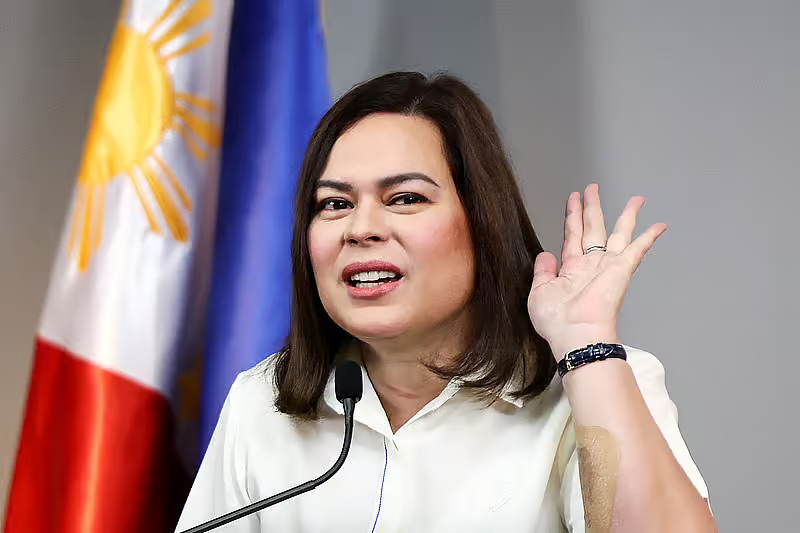

From the February vote in Bangladesh to the November US midterms, here is a calendar of key election dates.
More than 40 countries, representing a combined population of 1.6 billion people, will hold national-level elections in 2026.
These contests, including general, presidential, and parliamentary elections, will shape the governance for nearly one-fifth of the global population. The outcomes will influence domestic policies, economic strategies, and global alliances.
Below is a month-by-month look at the key elections to watch, along with their political consequences.
Bangladesh will hold its first national vote since a student-led uprising ended Sheikh Hasina’s 15-year rule in 2024. Voters will also decide on the “July Charter”, a reform plan limiting executive power, strengthening the judiciary, and insulating law enforcement from political interference.
Nepal’s upcoming elections are shaped by the September 2025 Gen Z-led protests that toppled Prime Minister KP Sharma Oli over corruption and economic frustration. Many of the protesters have been campaigning for voter registration, highlighting how Nepalese youth now have a real chance to turn their movement into political influence and help shape the country’s future.
Hungary’s 2026 election will shape both its domestic politics and international alliances. Prime Minister Viktor Orban, a close ally of Russia who has accused the EU of warmongering over the Russia-Ukraine war, faces his toughest challenge since his election in 2010 from rival Peter Magyar’s Tisza Party. The result will decide Hungary’s political balance and its stance between the EU and Russia, with wider implications for European stability and the war in Ukraine.
Colombians will vote for a new president as incumbent Gustavo Petro’s term will end and he cannot run for re-election. Ivan Cepeda of Petro’s Historic Pact faces centrist Sergio Fajardo and right-wing Abelardo de la Espriella. The election will determine whether Colombia can advance stalled FARC peace agreements, tackle corruption, manage rising violence, and navigate the regional challenges posed by neighbouring Venezuela, making it crucial for the country’s stability and its relationship with the United States.
Lebanon’s May election will represent the first major democratic test for the government of Prime Minister Nawaf Salam and President Joseph Aoun. Hezbollah’s role will be one of the major factors in Lebanon’s 2026 elections, as the vote will decide its political influence, impact the debate over disarmament, and shape the country’s sectarian balance amid economic turmoil.
All 435 House seats and 35 out of 100 Senate seats are up for grabs in the upcoming US midterms. These elections are pivotal, as they will determine control of Congress and have major implications for governance in the United States. The results will significantly influence the amount of power that Donald Trump can wield for the remainder of his term.



 United Arab Emirates Dirham Exchange Rate