
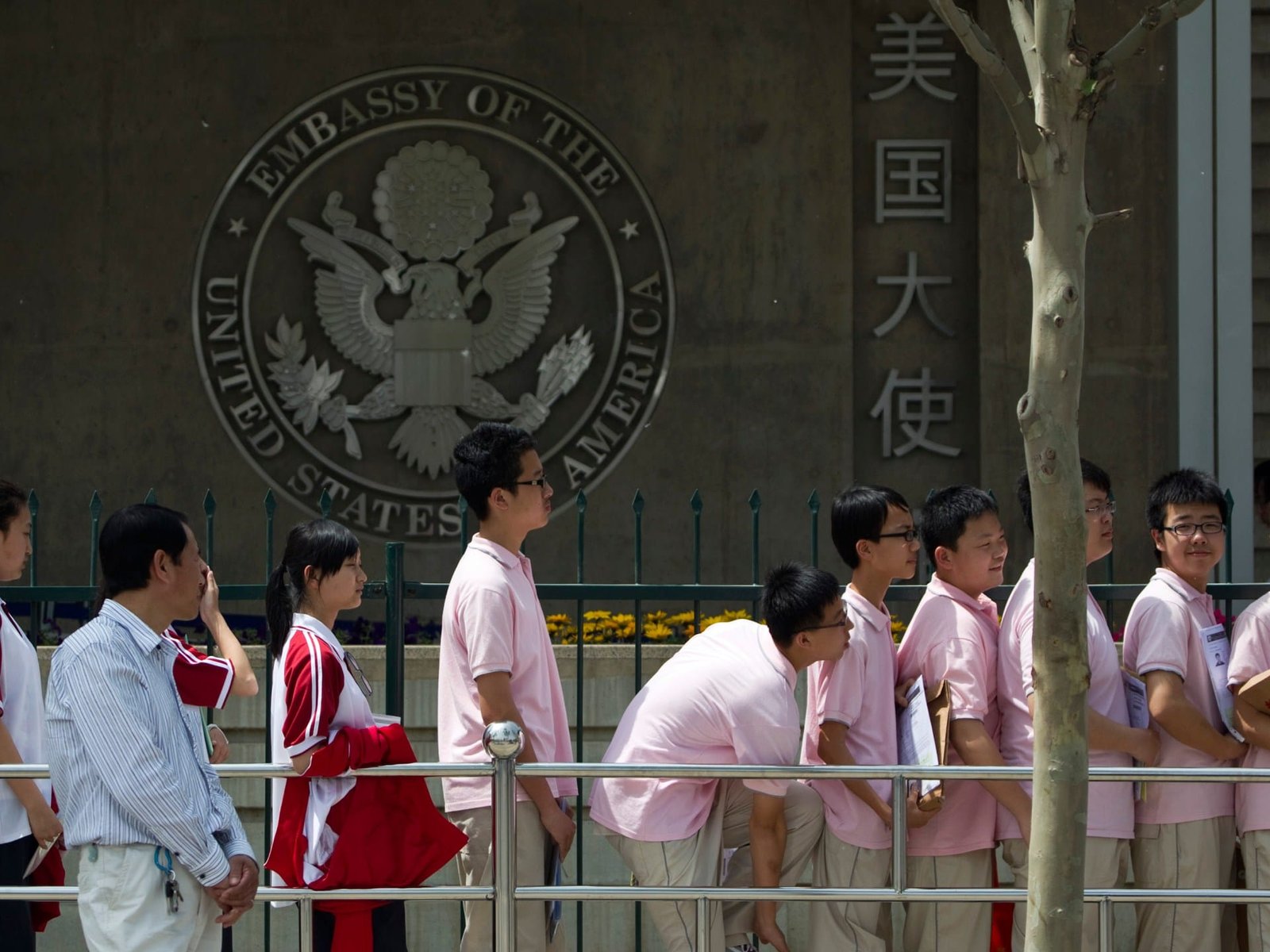
China’s Ministry of Foreign Affairs has protested a request from a US congressional panel this week for six universities in the United States to provide detailed information about Chinese students enrolled in advanced science and technology programmes.
The letters were sent on Thursday by John Moolenaar, the chair of the US House Select Committee on the Chinese Communist Party, who alleged that Beijing was embedding its students in top research programmes to gain access to sensitive technology.
In response, China’s Foreign Ministry spokesperson Mao Ning urged the US to “stop overstretching the concept of national security” and to “protect the legitimate rights and interests of Chinese students” in the country.
Mao told reporters that Chinese students make up about 25 percent of all foreign students in the US and contribute to its “economic prosperity and technological development”.
In recent years, US universities have widely welcomed Chinese students as a key funding source, as they often pay full international tuition.
However, the growing number of Chinese students has alarmed lawmakers like Moolenaar, who accused university administrators of jeopardising US research in exchange for higher tuition revenue.
Moolenaar stated in his letter that the student visa system had become a “Trojan Horse” for Beijing, “providing unrestricted access to our top research institutions and posing a direct threat to our national security”.
“The Chinese Communist Party has established a well-documented, systematic pipeline to embed researchers in leading US institutions, providing them direct exposure to sensitive technologies with dual-use military applications,” Moolenaar’s letter said.
Letters were sent to Carnegie Mellon University, Purdue University, Stanford University, the University of Illinois, the University of Maryland, and the University of Southern California. They included requests for information on funding sources and the type of research carried out by Chinese students.







 United Arab Emirates Dirham Exchange Rate