Jamaat-e-Islami alleges “inconsistencies and fabrications” in vote count as Tarique Rahman poised to become prime minister following the ouster of Sheikh Hasina.
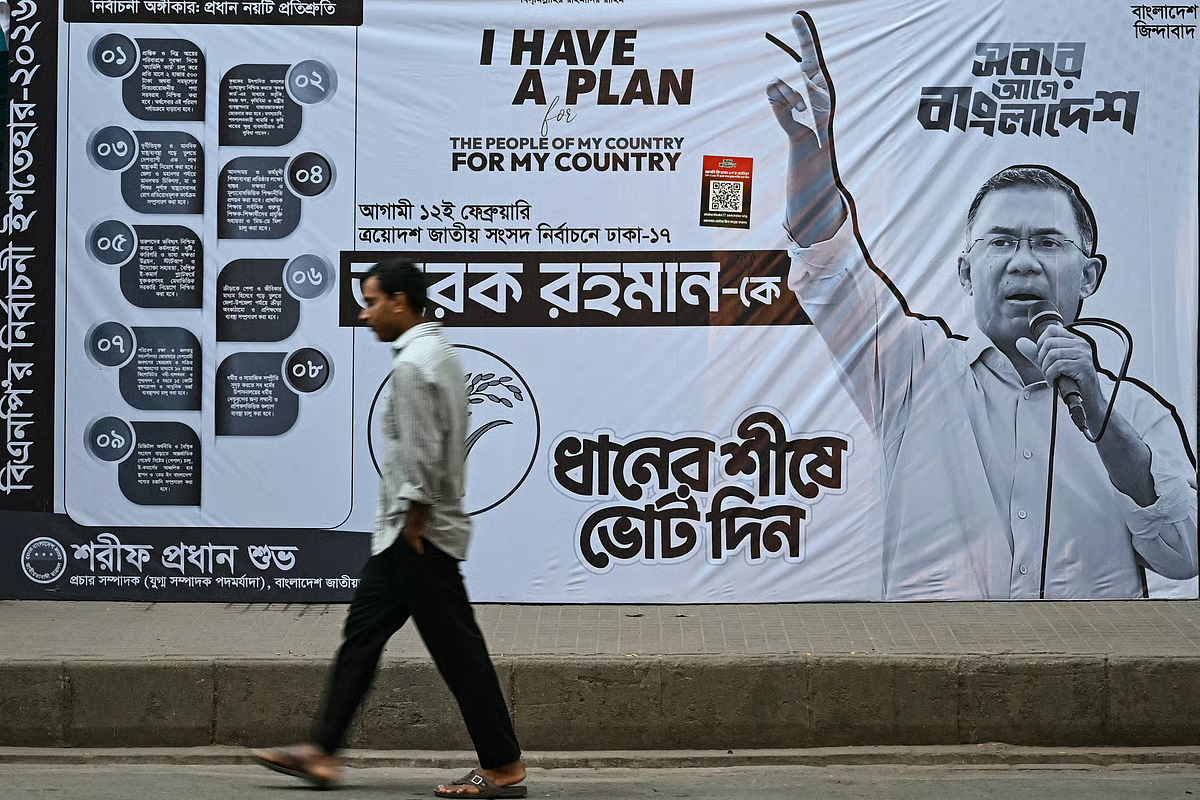
Dhaka, Bangladesh – The Bangladesh Nationalist Party (BNP) has claimed a resounding victory in the nation’s first general election since the 2024 political uprising, positioning leader Tarique Rahman to become the next prime minister. However, the vote was immediately contested by the main opposition coalition, which raised “serious questions” over the integrity of the process.
While official results are pending, local media projections early Friday showed the BNP sweeping well past the 150-seat majority mark, with some channels forecasting the party would secure over two-thirds of the 300 seats in parliament. Senior BNP leader Ruhul Kabir Rizvi hailed a “sweeping victory” in a party statement, calling for prayers of thanksgiving rather than street celebrations to maintain calm.
The statement urged supporters to offer special prayers at mosques across the country following Jumma prayers, adding, “There will be no victory rally despite the BNP’s sweeping victory.”
‘Inconsistencies and Fabrications’: Opposition Rejects Results
The claim was swiftly rejected by the chief rival, Jamaat-e-Islami, the country’s largest Islamist party which led a broader opposition coalition. The party expressed dissatisfaction with the result announcement process, citing “repeated inconsistencies and fabrications in unofficial result announcements.”
In a statement, the party said it had “serious questions about the integrity of the results process,” though it did not immediately provide specific evidence to back the allegations. Projections from Bangladeshi media, including Jamuna Television, suggested Jamaat-e-Islami had secured 74 seats—a significant increase from its past performance but far from the governing majority it had sought.
The Election Commission has indicated that final results for the 299 constituencies that voted will be released later on Friday.
International Reactions Pour In
Despite the domestic dispute, international reactions were swift. The United States embassy in Dhaka congratulated the BNP and Tarique Rahman on what it termed a “historic victory.” Neighbouring India, despite recent diplomatic strains with Bangladesh, also acknowledged Rahman’s “decisive win.” The Prime Minister of Pakistan further commended the Bangladeshi people for the “successful conduct of elections.”
A Landmark Vote After a Turbulent Year
The election marks a pivotal moment for the South Asian nation of 170 million. It is the first vote since the dramatic ouster of long-time autocratic leader Sheikh Hasina in August 2024, following a deadly uprising.
The BNP, which was crushed under 15 years of Hasina’s rule, entered the election confident of a return to power. “We are confident,” Tarique Rahman told AFP just days before the vote.
The election landscape was dramatically altered by the interim government, led by Nobel laureate Muhammad Yunus. His administration barred Hasina’s Awami League party from participating in the polls. Hasina, who is currently in hiding in India and was recently sentenced to death in absentia on crimes against humanity charges, decried the vote as an “illegal and unconstitutional election.”
A Vote for Change and a New Charter
For many voters, the election represents a break from the past. “Over the last 17 years, we have suffered a lot,” said Md Fazlur Rahman, 45, a BNP supporter celebrating outside party offices in Dhaka. “We will join the nation-building effort led by Tarique Rahman.”
Interim leader Muhammad Yunus, who is set to hand over power to the new government, has championed the election as the start of a new era. After casting his vote, the 85-year-old said the country had “ended the nightmare and begun a new dream.”
Yunus has overseen a broader push for democratic reform. Voters also participated in a concurrent referendum on a sweeping reform charter, which includes proposals for prime ministerial term limits, the creation of a new upper house of parliament, and greater judicial independence. Local television projections indicated the public had backed the charter.
The Election Commission reported that polling day was largely peaceful, with only “a few minor disruptions,” despite campaign clashes that had resulted in five deaths and over 600 injuries. Heavy security was deployed nationwide to ensure order.



 United Arab Emirates Dirham Exchange Rate