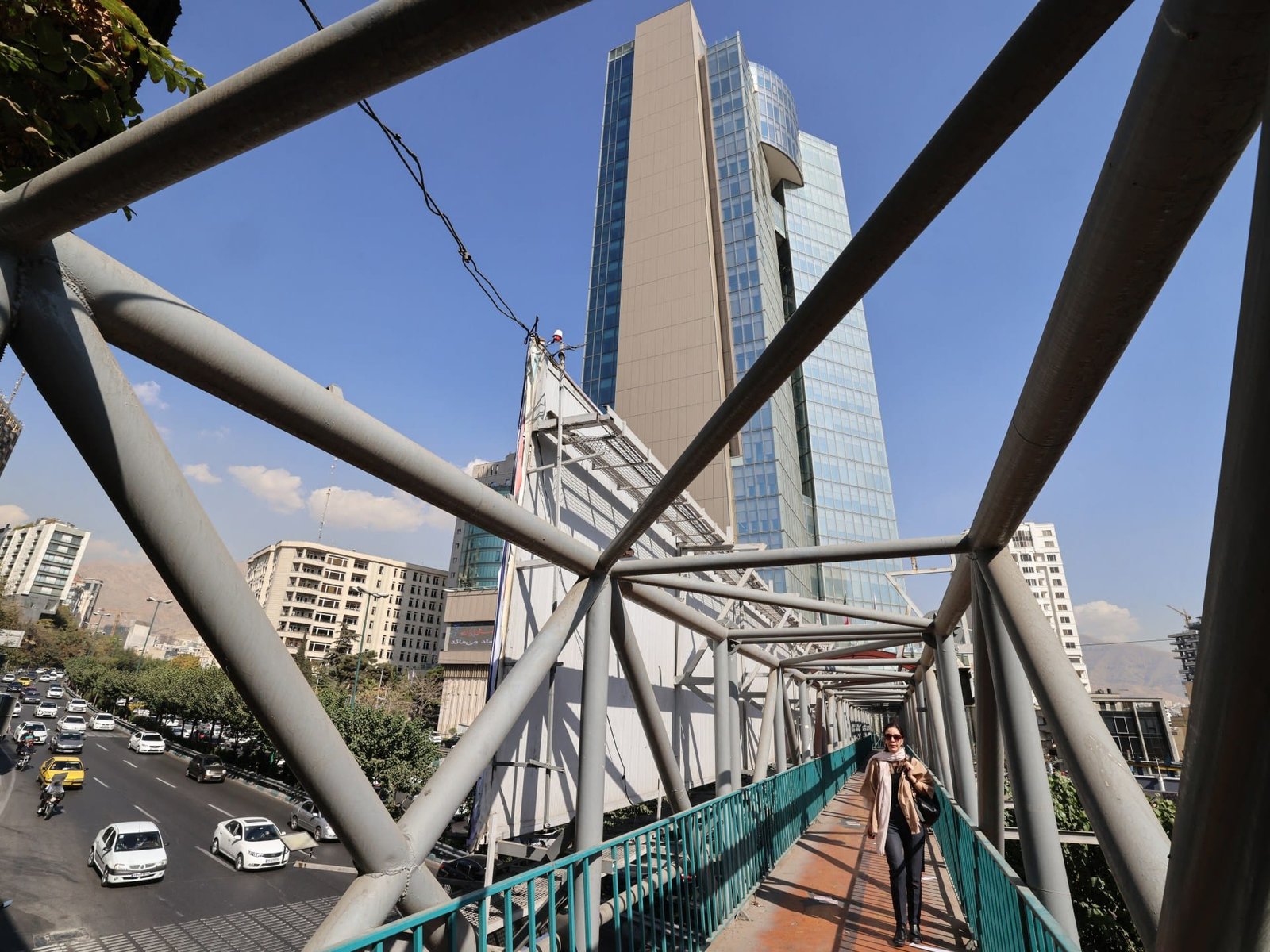
The bank built the largest mall in the world, but also racked up massive debt and gave loans to insiders.
Tehran, Iran – Authorities have merged one of Iran’s largest private lenders into the country’s biggest state-run bank in a move that highlights a deeply troubled economy and will further squeeze average citizens as pressure from the West grows.
The central bank on Thursday announced that Ayandeh Bank, privately owned by one of Iran’s wealthiest families, would be dissolved and merged with Bank Melli, the government-run national bank, and that Ayandeh branches across the country would be transformed into Bank Melli branches by Sunday.
Customers were told their accounts and deposits are safe, and all contracts remain under the same conditions. But after years of murky operations and central bank interventions, Ayandeh had racked up losses on a scale that impacted Iran’s macroeconomics, so its bailout will not leave Iranians unscathed.
Ayandeh began amid a crisis in the 2010s caused by corruption and lack of regulatory supervision over the ailing banking system, experts told media, at a time when Iran was reeling from United Nations sanctions over its nuclear programme.
That was when hundreds of unlicensed financial institutions linked with parastatal, military, or religious foundations mushroomed across the country.
They offered exorbitant interest rates to attract cash away from the banks, and did not repay the deposits in many instances, leaving thousands of investors unable to withdraw their deposits for years.
Much of the skyrocketing debt accrued by the institutions had to be recuperated by printing money, which meant rising inflation and increased costs of living for average Iranians.
Ayandeh was established in 2013 via the merger of Tat Bank with two state-linked financial entities, the Salehin Credit Institution and Aatee Credit Institution.
Ali Ansari, the 63-year-old business tycoon whose family is believed to be among the wealthiest in Iran, was the founder of both Ayandeh and Tat, and owned a majority of the shares in both financial institutions along with family members and close associates.
Ansari has been behind gigantic real estate projects, owns ventures in steel, telecommunications and hospitality, and sat on the board of Tehran’s Esteghlal football club, among other business and influence-growing activities.
The bank has been the subject of state attention for years.
How did we get here?
Two years ago, as Ayandeh racked up losses and more money had to be printed, the central bank revoked shareholder voting rights on more than 60 percent of the company’s stock and gave it to the Ministry of Economic Affairs and Finance.
But that did not help, and the bank kept borrowing from the central bank and the government to stay afloat.
Up to 1.3 quadrillion rials ($1.21bn) was given to a small number of individuals and firms directly linked with Ayandeh and its internal projects, according to the central bank. Authorities have refused to reveal the identities of the people and entities who took the money.
Iranians online have also been widely reacting to news of Ayandeh’s bankruptcy. Private sector businessman Pedram Soltani was among those who called for accountability.
Translation: Publish the list of overdue and doubtful-to-return loans and toxic assets of Ayandeh Bank! People must know whose costs have been imposed on their pockets.
Most of the loans paid by Ayandeh have been overdue for a year or longer and are considered unlikely to be recovered.
Bijan Khajehpour, an economist and a managing partner at Eurasian Nexus Partners consulting firm, pointed out that all Iranian banks have a large volume of non-performing loans (NPL) in their books.
“These NPLs are a consequence of loans having been extended to customers without the due process of assessing their collateral based on corrupt transactions between networks of power,” he told media.
“It says a lot about the extent of corruption and how political patronage undermines business activities.”
Ayandeh was singlehandedly responsible for an incredible 42 percent of all overdrafts made by banks from the central bank, and 41 percent of all capital imbalance in the beleaguered Iranian banking sector, according to the central bank.
It had a capital adequacy ratio (CAR) of minus 600 percent, whereas a bank must have a bare minimum ratio of 8 percent under Basel II international standards that are also accepted by Iran.
Its elimination raises the average CAR of Iran’s banking industry from 1.36 percent to about 5 percent.





 United Arab Emirates Dirham Exchange Rate