
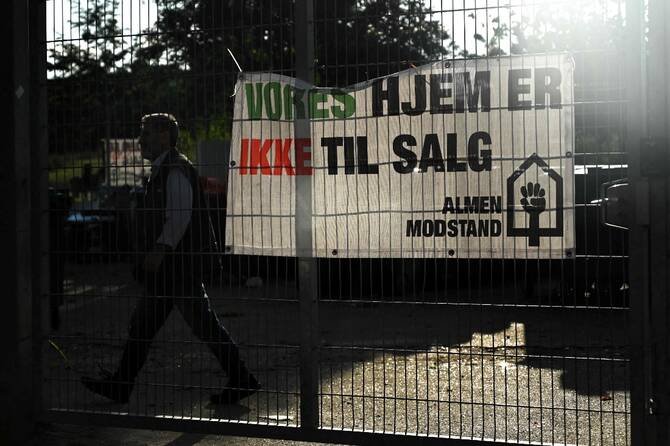
Residents of a Copenhagen estate await a landmark EU ruling on whether Denmark’s “ghetto” redevelopment policy illegally targets “non-Western” communities.
COPENHAGEN — The European Court of Justice is set to rule Thursday on whether a controversial Danish housing law unlawfully discriminates against residents based on their ethnic background. The legislation mandates the redevelopment of neighborhoods officially classified as “ghettos”—defined as social housing estates where more than half of residents are “non-Western immigrants and their descendants.”
Under the policy, such areas must reduce social housing proportions and rent at least 60% of units at market rates by 2030 to alter their demographic makeup. Danish authorities argue the measure fights segregation and “parallel societies,” but residents from Copenhagen’s Mjolnerparken estate have brought a lawsuit claiming it constitutes direct discrimination.
“Using our ethnicity to decide where we can live is discriminatory and illegal,” said Muhammad Aslam, head of the estate’s tenants’ association. Residents are optimistic after a preliminary opinion from the court’s advocate general in February labeled the policy “direct discrimination.”
The case, filed in 2020, highlights a wider national policy affecting an estimated 11,000 people who may be forced to relocate by the end of the decade. At Mjolnerparken, renovations tied to the law have displaced families for over three years, with many apartments converted to market-rate rentals.
Lamies Nassri of the Center for Muslims’ Rights in Denmark warned that an unfavorable ruling could encourage further discriminatory laws, particularly affecting Muslim communities. The final decision could also influence ongoing legal proceedings within Denmark regarding the policy’s fairness and legality.







 United Arab Emirates Dirham Exchange Rate