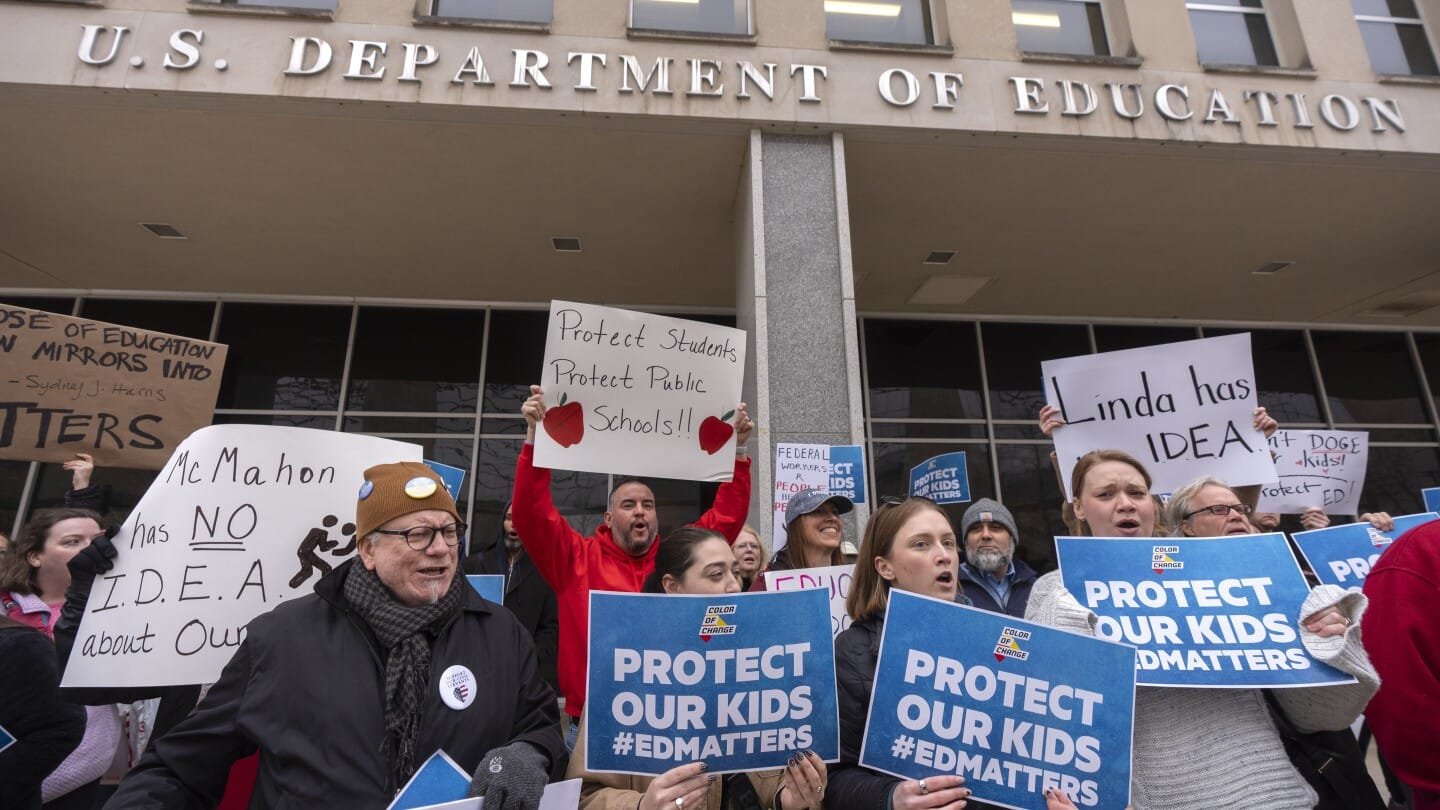
WASHINGTON (news agencies) — For parents of kids with disabilities, advocating for their child can be complicated, time-consuming — and expensive.
Changes at the Education Department are likely to make the process even more difficult, advocates for kids with disabilities say.
When a parent believes their child is not receiving proper services or school accommodations for a disability, they can seek remedies from their district. They can file complaints with their state, arguing the child’s rights have been taken away without due process of law, or even pursue litigation in state or federal courts.
Those processes often involve multiple sessions with hearing officers who are not required to be experts in disability law. Legal fees can cost tens of thousands of dollars for a single case. Legal aid and other advocacy organizations that can provide free assistance often have more demand for their services than they can meet.
But filing a complaint with the Education Department has long been an option for families who can’t afford a lawyer. They begin by filling out the Office for Civil Rights’ online form, documenting the alleged instances of discrimination. From there, the agency’s staff is supposed to investigate the complaint, often interviewing school district employees and examining district policies for broader possible violations.
“It’s known and has the weight of the federal government behind it,” said Dan Stewart, managing attorney for education and employment at the National Disability Rights Network. “The process, the complaint portal, as well as the processing manual are all in public, and it does not require or typically involve lawyers.”
That option seems increasingly out of reach, advocates say.
Under President Donald Trump, the Education Department’s staff has been cut approximately in half — including in the Office for Civil Rights, whose attorneys are charged with investigating complaints of discrimination against kids with disabilities. The staff has been directed to prioritize antisemitism cases. More than 20,000 pending cases — including those related to kids with disabilities, historically the largest share of the office’s work — largely sat idle for weeks after Trump took office. A freeze on processing the cases was lifted early this month, but advocates question whether the department can make progress on them with a smaller staff.
“The reduction in force is simply an evisceration of the Office for Civil Rights’ investigatory authority and responsibility,” Stewart said. “There’s no way that I can see that OCR can keep up with the backlog or with the incoming complaints.”







 United Arab Emirates Dirham Exchange Rate