
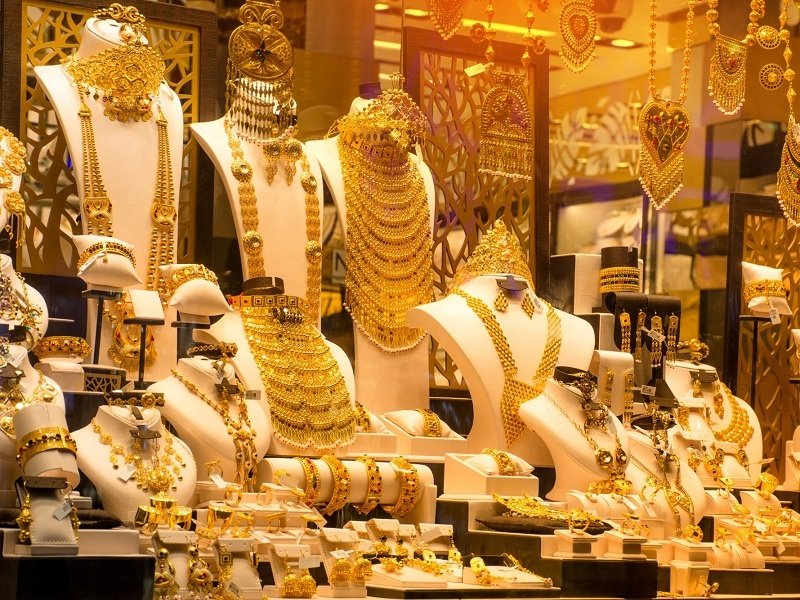
Lower duties, transparent pricing, and negotiable making charges give Dubai an edge; but recent Indian tax revisions are narrowing the gap.
SHARJAH – For millions of Indian expatriates and tourists visiting the UAE, shopping for gold jewellery is often high on the agenda. But with fluctuating global prices, taxes, and making charges, the perennial question remains: Is it cheaper to buy gold in Dubai or in India?
Industry experts suggest that while prices in both markets are increasingly comparable, the UAE—particularly Dubai—continues to offer a cost advantage driven by lower duties, transparent pricing, and competitive retail dynamics.
The Dubai Advantage
Karim F. Merchant, Group CEO and Managing Director of Pure Gold, explained that customers often find better overall value in Dubai, especially for high-purity gold.
“Pricing in Dubai is aligned with international rates, and indirect taxes are relatively lower. While India has strong domestic demand for gold, pricing can be higher due to layered taxes and import duties. Making charges are also generally more competitive in Dubai,” Merchant said.
Chirag Vora, Managing Director of Bafleh Jewellers, noted that Dubai’s position as a global gold trading hub is built on transparent pricing and low taxation.
“The UAE levies a 5 per cent VAT, while India applies import duty along with GST, which increases the overall landed cost of gold. These structural differences often make the base gold rate in Dubai more competitive,” Vora said.
However, he emphasized that the final retail price of jewellery depends on several factors beyond the daily gold rate, including design complexity, brand positioning, craftsmanship, and making charges.
India Closing the Gap
Recent policy changes in India are, however, narrowing the gap. The latest Union Budget revised customs rules for non-resident Indians (NRIs), allowing them to carry gold jewellery under a weight-based rather than value-based allowance. This move is expected to simplify compliance for expatriates.
Arun Narayanan, Global CEO of the Jewellery Division at Titan Company Limited, believes that gold jewellery prices are now almost at par in Dubai and India, following India’s revision of customs duty and the signing of the Comprehensive Economic Partnership Agreement (CEPA) with the UAE.
Cost Comparison: A 5-Gram Bangle
To put things in perspective, here’s a snapshot of current pricing:
- In Dubai: With 22K gold priced at Dh245–255 per gram and design-specific making charges, a simple 5-gram bangle typically retails for around Dh1,300–1,450, inclusive of 5 per cent VAT and moderate making charges.
- In India: With 22K gold ranging between Rs6,200–6,500 per gram and additional duty costs, a comparable 5-gram bangle retails for approximately Rs33,000–36,000 (Dh1,333–1,454), including GST and making charges.
Key Factors Influencing Gold Prices
- Import Duties: India imposes import duties on gold, directly increasing retail prices, whereas the UAE does not levy similar duties.
- VAT/GST: The UAE applies 5 per cent VAT, while India levies 3 per cent GST in addition to customs duties.
- Gold Rate Benchmarking: Dubai’s gold prices are closely linked to international spot rates and updated multiple times daily, ensuring transparency.
- Making Charges: These vary by design complexity in both markets, but competitive retail dynamics in Dubai often keep margins efficient.
- Regulatory Changes: India’s revised NRI rules in Budget 2026 may influence purchasing decisions, especially for expatriates balancing price advantages with compliance considerations.
Verdict
While absolute price differences fluctuate with global gold movements and currency exchange rates, Dubai continues to offer a pricing advantage driven by lower duties, high market liquidity, and strong regulatory transparency. However, with India’s recent tax revisions and trade agreements, the gap is slowly closing—making the choice increasingly dependent on design preference, convenience, and individual buying power.







 United Arab Emirates Dirham Exchange Rate