
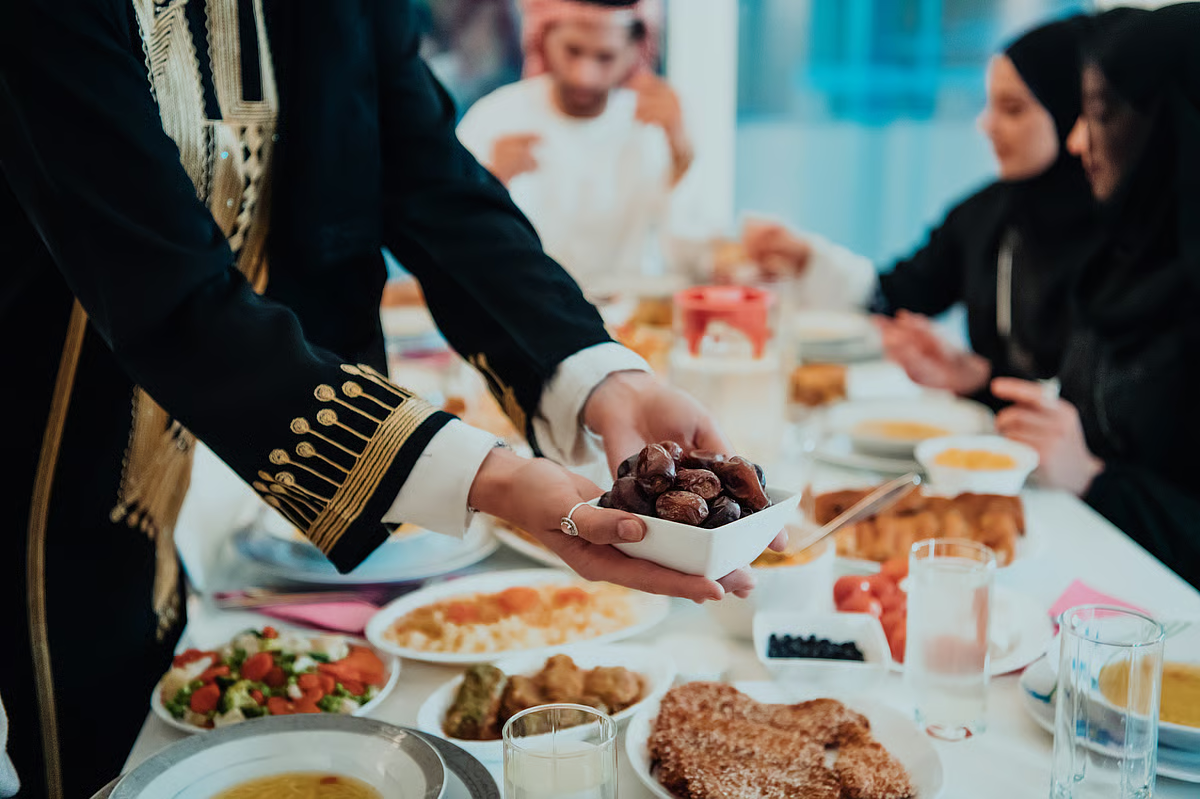
From grocery bills doubling to a post-midnight shopping surge, new data reveals the intense financial focus of the holy month.
eezes restaurant activity into a short, intense evening window,” explains Gadzhibala Pirmagomedov from Syrve. The nature of dining out also splits dramatically: early evening sees diners “trade up” for lavish group iftars at premium venues, while later in the night, they “trade down” for quick bites, coffees, and desserts.
This creates a dual market. Premium restaurants leverage curated iftar buffets to maximize table turnover, while coffee shops and dessert spots see a second wave of customers after 8 pm. Robert Kochiniyan of FORTIS Digital Solutions notes that average bills rise around 20 per cent due to sharing platters, even if foot traffic doesn’t increase. “It’s not necessarily more frequent visits, but higher per-visit spend,” he says.
The Night-Time Economy Booms
As the Ipsos ‘2026 Ramadan Handbook UAE Edition’ highlights, spending extends far beyond food. Fashion, electronics, and gifts see meaningful lifts, driven by promotions and the approach of Eid.
The timing of this spending is shifting dramatically. According to Visa, the night-time economy between 10 pm and 4 am more than doubles in parts of the region. In the UAE, the share of transactions during these late hours climbed nearly 11 percentage points, with the bulk of spending happening between 11 pm and 3 am.
This nocturnal activity is fuelled by digital platforms. Data from Tamara’s Ramadan 2026 Playbook reveals that 61 per cent of consumers in the UAE and Saudi Arabia are shopping directly from Instagram and TikTok during the month. “Consumption of content online and offline is highest during this period,” notes Saad Masri from Ipsos, “and as such, brands utilise the month to reach out to consumers.”
A Deliberate Splurge
Despite the increased spending, it is far from frivolous. Ipsos data shows that 68 per cent of people make a conscious effort to repurpose leftovers, and more than half engage in financial planning, saving in advance to prepare for the higher expenses. The spending is deliberate and focused, concentrated into a few short weeks of intense social and family connection.
With the IMF upgrading the UAE’s 2026 GDP growth forecast to 5 per cent, this consumer confidence is expected to remain strong, ensuring that the annual “gold rush at sundown” continues to reshape the nation’s retail and dining landscape for years to come.





 United Arab Emirates Dirham Exchange Rate