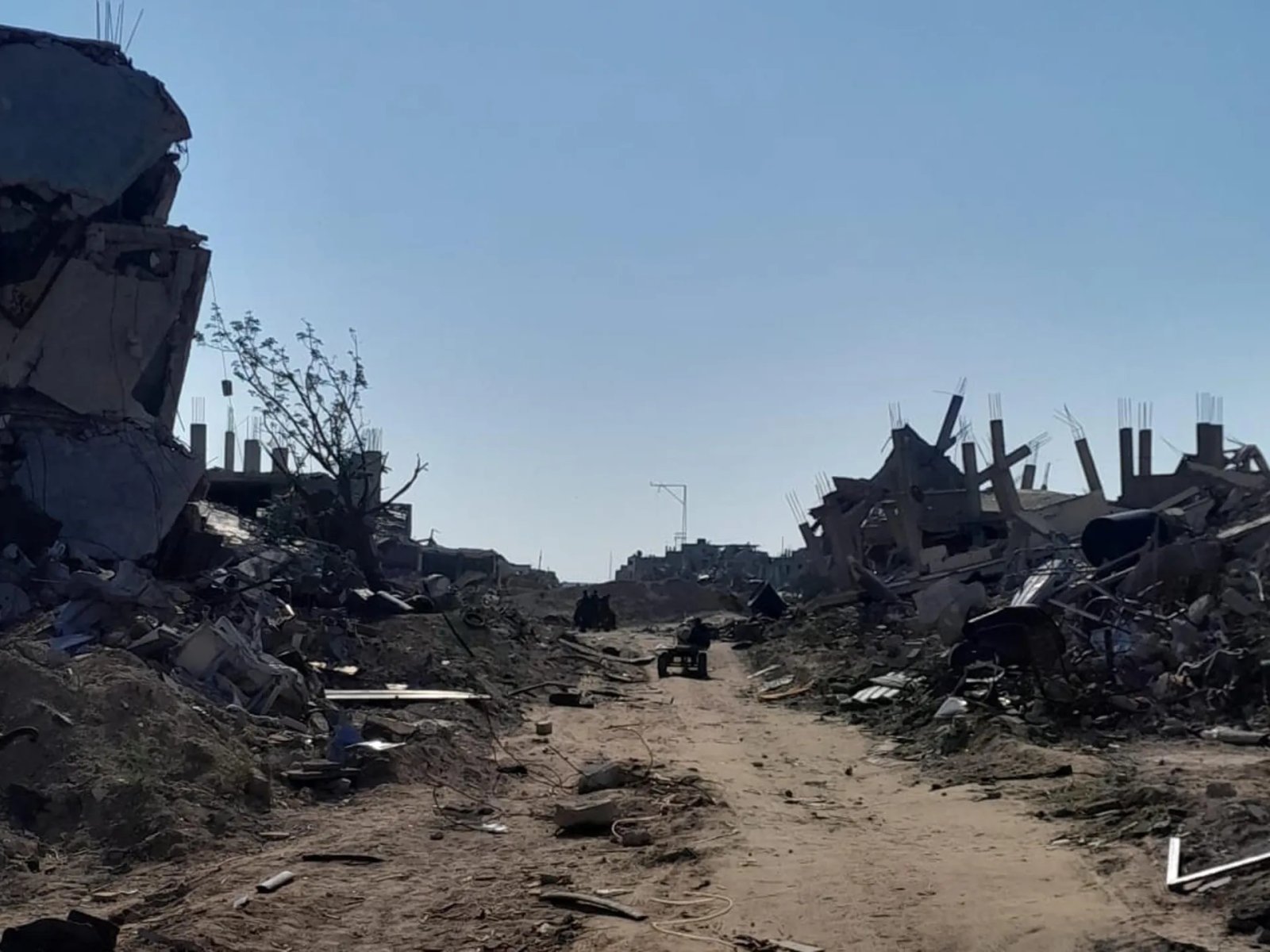
It is Land Day today in Palestine, a day when we commemorate our special bond with the Palestinian land. And I cannot help but think about my grandfather, his dispossession, and the repetition of that trauma in my own life.
My grandfather, Hamdan, was 12 years old when Zionist forces began the campaign of ethnic cleansing that we now call the Nakba. He lived with his family in the village of al-Faluja. They were peasants who got by working their land, raising farm animals, and selling their seasonal crops at local markets.
Starting in early 1948, al-Faluja came under attack from Zionist militias. It was a strategic target due to its location at the centre of a network of roads leading north to Jerusalem and Jaffa and south to Gaza. As the brutal Zionist assaults intensified, my grandfather fled with his family to nearby villages.
They did not take anything with them, thinking they would return soon. The only thing they carried was the key to the door of their home. An Egyptian brigade held on to al-Faluja, besieged by Zionist forces well into 1949. The armistice between Egypt and the newly established Israel forced them to abandon their positions.
The Green Line was drawn, leaving 78 percent of historic Palestine in Zionist control and cutting off my grandfather from his ancestral village for the rest of his life.
It is in the nature of colonisers to fear anything that reminds them of the land’s rightful owners, because it exposes the fact that they have taken what does not belong to them. Israeli militias therefore set out to destroy what remained of al-Faluja, along with other Palestinian villages, and in the 1950s established several settlements on its land, including Kiryat Gat, Shahar and Nir Hen.
In Gaza, my grandfather’s family struggled to build a new life. Although the idea of return never left their imagination, the harsh reality forced them to adapt. They settled in an area east of Khan Younis, where they planted olive and citrus trees and built a home.
My grandfather made it a point to teach his children and grandchildren about agriculture. But he did not just tell us how to plant and grow; he taught us how to root ourselves in a land that is our historical right. He always told us that if it was taken from us by force, it would not be returned as a gift. It would come at a heavy price, because Israel knows it has taken something it has no right to, and will therefore respond with brutality when we demand it back.
I was just eight years old when I got a taste of what my grandfather had lived through. During the 2008-09 Israeli war on Gaza, I was displaced with my family for the first time.



 United Arab Emirates Dirham Exchange Rate