
The US is considering military action to seize Greenland, in a move that could cause divisions within the NATO alliance.
The Trump administration has once again threatened to take control of Greenland either by acquiring it or through the use of military force to “deter our adversaries in the Arctic region.”
Greenland, which is a semi-autonomous territory of Denmark, already hosts the Pituffik Space Base, which the US operates in coordination with Danish authorities. Both the US and Denmark are founding members of NATO, the most powerful military alliance.
European and Canadian leaders have jumped to support Denmark and Greenland, saying they are working on a plan in the event the United States follows through with its threats.
Analysts have said that any attempt by the US to seize Greenland would be an unprecedented move in NATO’s history and raise serious questions about the survival of the alliance and the limits of Article 5, which was designed to defend against an external aggressor.
Collective defence is NATO’s governing principle, where Article 5 of the North Atlantic Treaty states that an armed attack against one NATO member is considered an attack against all.
This has been a binding pledge since 1949, when the alliance came together and one that has forged solidarity between North America and Europe.
Because Article 5 requires unanimous agreement from all members to be invoked, a conflict between two members would lead to an impasse, as the alliance cannot vote to go to war against itself.
1958–1976 – The UK and Iceland fishing dispute
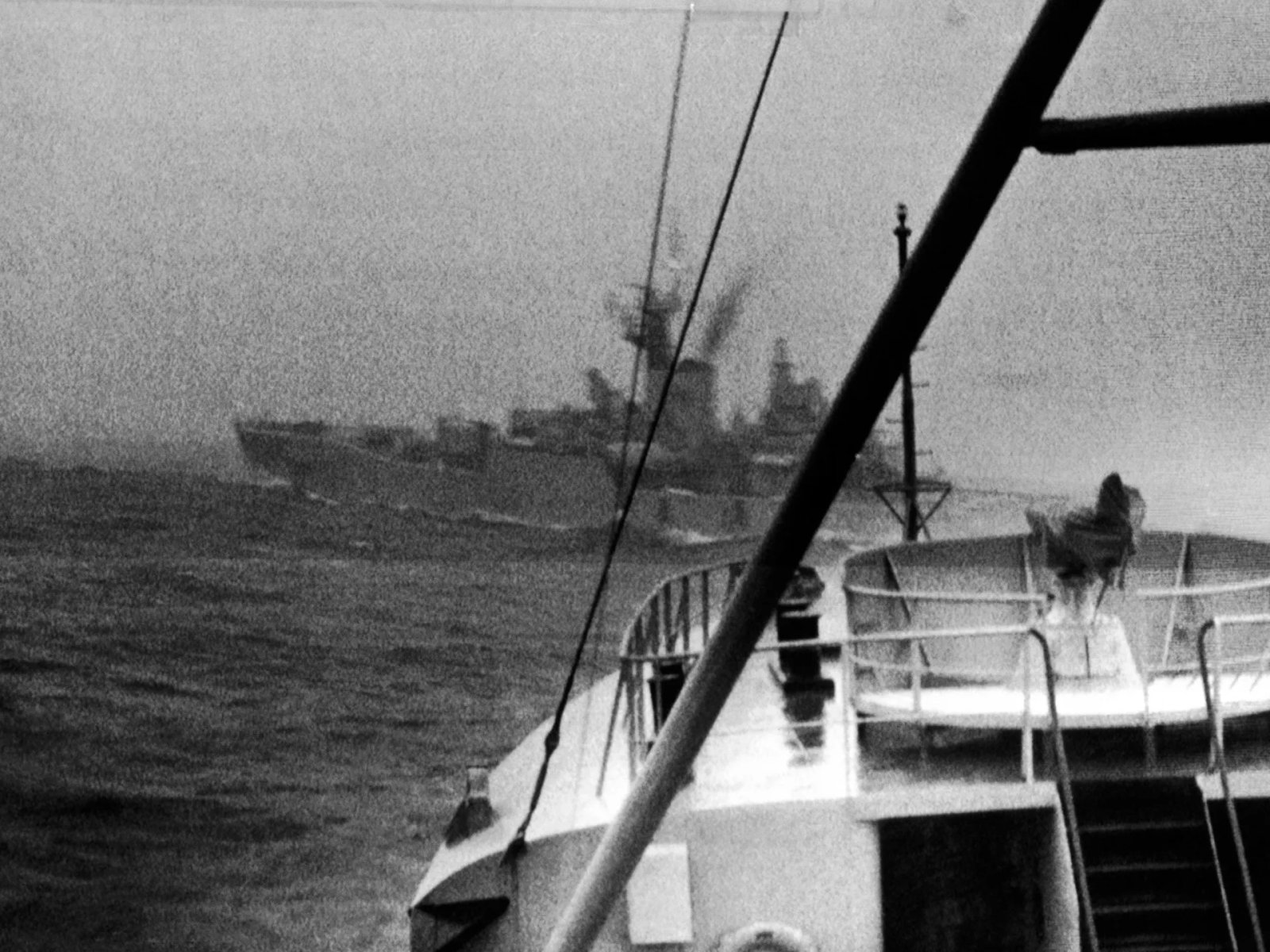
The Cod Wars (1958–1976) were a series of escalating disputes between the UK and Iceland over North Atlantic fishing rights.
While the conflict never became a full-scale confrontation, it did involve a series of naval confrontations, including the ramming of ships and diplomatic friction between the two NATO members.
Fearing the loss of the Keflavik airbase in Iceland, which was essential for monitoring Soviet submarines in the northern Atlantic Ocean, NATO and the US pressured the UK to concede. The dispute ended in 1976 with a key diplomatic win for Iceland, establishing the 200-mile (322km) limit that remains the global standard today.
1974 – Greece and Turkiye over Cyprus
What happens if one NATO member attacks another?
The 1974 Turkish invasion of Cyprus is the closest NATO has come to its members engaging in full-scale war. Following a Greek-sponsored coup in Cyprus, Turkiye launched a military intervention that nearly sparked a direct conflict between the two NATO members.
In protest of NATO’s perceived failure to restrain Turkiye, Greece withdrew from the alliance’s military structure from 1974 until 1980.
In 1995, Canada and Spain came close to a naval conflict during the “Turbot War”. Canada had imposed restrictions to protect fish stocks, including a species of fish named turbot, leading to accusations that EU boats were overfishing just outside Canada’s exclusive economic zone.
Tensions escalated when Canadian Coast Guard vessels fired warning shots over a Spanish trawler and arrested its crew. Europe threatened sanctions, but the UK vetoed them, siding with Canada alongside Ireland. In response, Spain deployed naval patrols, and Canada authorised its navy to fire on trespassing vessels, bringing NATO members dangerously close to conflict.
The crisis ended following EU mediation, resulting in Canada withdrawing its enforcement actions and the establishment of a joint regulatory framework.
NATO has also faced internal divisions over when and how to engage militarily, with some members often wanting to avoid direct military action.
1956 – France, UK and US over the Suez Crisis
During the 1956 Suez Crisis, France and the UK formed a secret alliance with Israel to invade Egypt following Egyptian President Gamal Abdel Nasser’s nationalisation of the Suez Canal.
This operation caused a severe crisis within NATO, as the United States, fearing Soviet intervention and the alienation of the Arab world, strongly opposed the military action. Despite the lack of agreement, France and the UK went ahead with operations anyway.
The conflict was ultimately resolved by the UN’s first-ever armed peacekeeping mission, the United Nations Emergency Force (UNEF), which established the blueprint for future UN peacekeeping operations.
1960s-1970s – US and European allies over Vietnam War
The Vietnam War saw a significant disagreement between NATO members over US military interventions, where Washington viewed Vietnam as a key front in the Cold War, but key European allies, such as France and the UK, opposed direct military involvement.
France openly condemned the war and ended up leaving NATO’s military command in 1966 to avoid being dragged into future US conflicts. France eventually rejoined the military structure 43 years later in 2009.







 United Arab Emirates Dirham Exchange Rate