No country formally recognises the Taliban. But the group’s recent diplomatic overdrive shows many want it as a partner.
For a country whose government is not recognised by any nation, Afghanistan’s acting Foreign Minister Amir Khan Muttaqi has had an unusually busy calendar in recent weeks.
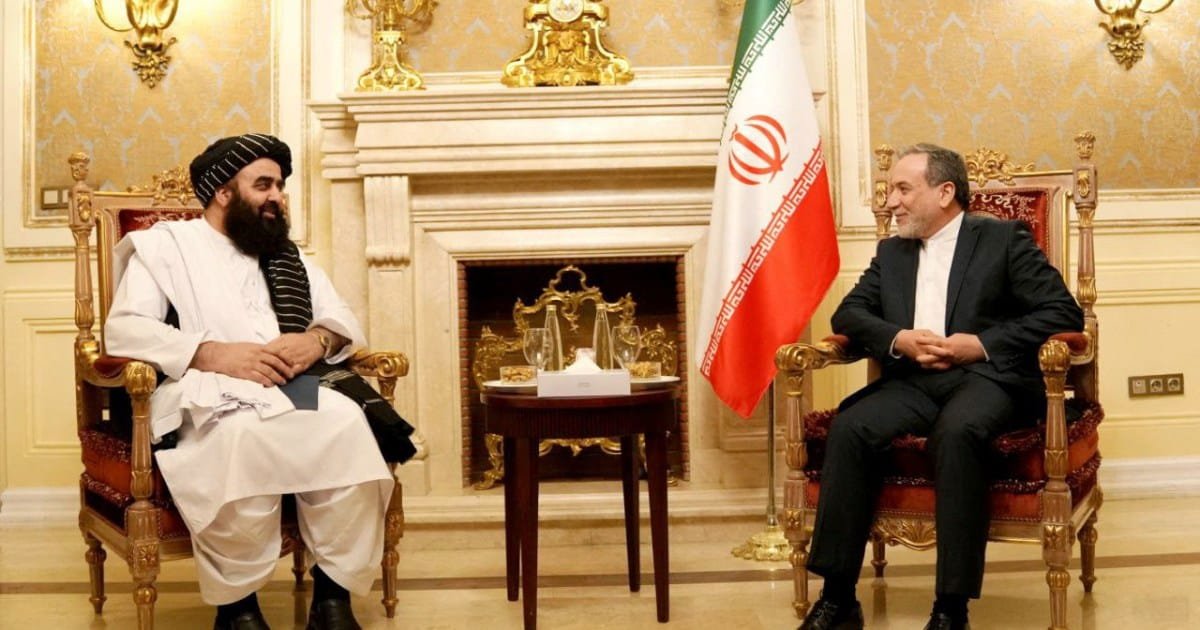
He has hosted his counterpart from Pakistan, spoken on the phone with India’s foreign minister, and jetted to Iran and China. In Beijing, he also met the Pakistani foreign minister again. On Wednesday, he joined trilateral talks with delegations from Pakistan and China.
This, even though the ruling Taliban have historically had tense relations with most of these countries, and currently have taut ties with Pakistan, a one-time ally with whom trust is at an all-time low.
While neither the United Nations nor any of its member states formally recognise the Taliban, analysts say that this diplomatic overdrive suggests that the movement is far from a pariah on the global stage.
So why are multiple countries in Afghanistan’s neighbourhood queueing up to engage diplomatically with the Taliban, while avoiding formal recognition?
We unpack the Taliban’s latest high-level regional engagements and look at why India, Pakistan and Iran are all trying to befriend Afghanistan’s rulers, four years after they marched on Kabul and grabbed power.
A timeline of Afghanistan’s recent diplomatic engagements:
Head of the Taliban’s political office in Doha, Qatar, Suhail Shaheen said the group is a “reality of today’s Afghanistan” as it “controls all territory and borders of the country”.
“Our region has its own interests and goals that we should adhere to.”
It’s an unlikely partnership. During the Taliban’s initial rule between 1996 and 2001, the Indian government refused to engage with the Afghan group and did not recognise their rule, which at the time was only recognised by Pakistan, the United Arab Emirates and Saudi Arabia.
India, which had supported the earlier Soviet-backed government of Mohammad Najibullah, shut down its embassy in Kabul once the Taliban came to power: It viewed the Taliban as a proxy of Pakistan’s intelligence agencies, which had supported the mujahideen against Moscow.
Instead, New Delhi supported the anti-Taliban opposition group, the Northern Alliance.
Following the United States-led ousting of the Taliban in 2001, India reopened its Kabul embassy and became a significant development partner for Afghanistan, investing more than $3bn in infrastructure, health, education and water projects, according to its Ministry of External Affairs.
Who did Muttaqi meet or speak to in recent weeks?
But its embassy and consulates came under repeated, deadly attacks from the Taliban and its allies, including the Haqqani group.
After the Taliban’s return to power in August 2021, New Delhi evacuated its embassy and once again refused to recognise the group. However, unlike during the Taliban’s first stint in power, India built diplomatic contacts with the group – first behind closed doors, then, increasingly, publicly.
Then, last January, Indian Foreign Secretary Vikram Misri and Muttaqi both flew to Dubai for a meeting – the highest-level face-to-face interaction between New Delhi and the Taliban to date.
Kabir Taneja, a deputy director at the New Delhi-based Observer Research Foundation, says not dealing with “whatever political reality sets in in Kabul was never an option” for India.
“No one is pleased per se that the reality is the Taliban,” Taneja told media. However, while India’s “decades-long” efforts to foster goodwill with the Afghan people have faced challenges since the Taliban takeover, they have not been entirely undone.
“Even the Taliban’s ideological stronghold, the Darul Uloom Deoband seminary, is in India,” he added. “These are ties with the country and its actors that cannot be vanquished, and have to be dealt with realistically and practically,” he added.
One of the Taliban’s foremost backers between 1996 and 2021, Pakistan has seen its relationship with the group plummet in recent years.
Since the Taliban’s takeover in 2021, Pakistan has seen a surge in violent attacks, which Islamabad attributes to armed groups, such as the Tehreek-e-Taliban Pakistan (TTP). Pakistan insists that the TTP operates from Afghan territory and blames the ruling Taliban for allowing them sanctuary – a claim the Taliban government denies.
Emerging in 2007 amid the US-led so-called “war on terror”, the Pakistan Taliban has long challenged Islamabad’s authority through a violent rebellion. Though distinct from the Afghan Taliban, the two are seen as ideologically aligned.
Dar’s visit to Kabul and subsequent communication with Muttaqi represent a “tactical, ad hoc thaw” rather than a substantial shift in Pakistan-Afghanistan relations, says Rabia Akhtar, director at the Centre for Security, Strategy and Policy Research at the University of Lahore.
During the recent India-Pakistan crisis, Islamabad grew increasingly concerned about the possibility of Afghanistan allowing its territory to be used by New Delhi against Pakistan, she suggested. “This has increased Islamabad’s urgency to secure its western border,” Akhtar told media.
Meanwhile, Pakistan’s decision earlier this year to expel Afghan refugees – including many who have spent most of their lives in Pakistan – and frequent border closures disrupting trade are also sources of tension in the relationship.




 United Arab Emirates Dirham Exchange Rate