Spike in targeted violence, political uncertainty, and a resurgent Islamist movement stoke fear and impunity, with regional tensions escalating.
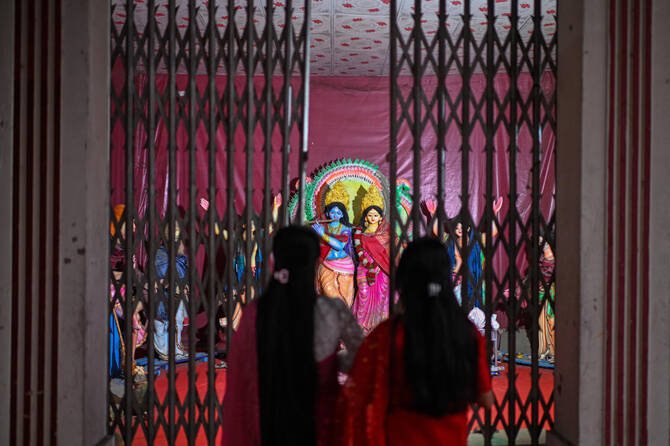
DHAKA,– Bangladesh’s Hindu minority is enduring a surge of violent attacks, looting of temples, and widespread intimidation as the nation approaches a pivotal national election on February 12, raising fears of an “existential crisis” for the community.
The atmosphere of dread crystallized in December with the brutal killing of Dipu Chandra Das, a 27-year-old Hindu garment worker. Accused by Muslim colleagues of blasphemy, Das was beaten, hanged from a tree, and set ablaze by a mob—a scene recorded and circulated widely, sparking protests but deepening a pervasive sense of vulnerability.
Human rights groups attribute the violence to a toxic mix of rising political polarization, the reemergence of Islamist groups long suppressed, and a growing culture of impunity under the interim government of Nobel laureate Muhammad Yunus. The Bangladesh Hindu Buddhist Christian Unity Council has documented over 2,000 incidents of communal violence since the ouster of former Prime Minister Sheikh Hasina in August 2024, including at least 61 killings and 95 attacks on places of worship.
“No one feels safe anymore,” said Ranjan Karmaker, a Dhaka-based Hindu rights activist. “The individuals involved in this violence are not being brought under the law… It creates the impression that the violence will continue.”
Political Shifts and Symbolic Gestures
The violence unfolds as Jamaat-e-Islami, the country’s largest Islamist party, seeks to reclaim political influence after years of crackdowns under Hasina. While the party has made symbolic overtures—including nominating a Hindu candidate—analysts warn these are superficial.
“A systematic pattern of attacks is taking place in rural areas to inject more fear among the minorities before the vote,” said political analyst Altaf Parvez, noting it will likely suppress minority voter turnout.
The Yunus administration has consistently denied failing to protect minorities, insisting most incidents are not religiously motivated. When contacted for comment, an official from Yunus’s press team declined to address the specific allegations.
Regional Fallout and Families’ Plea
The crisis has severely strained relations with neighboring India, where Prime Minister Narendra Modi’s government has accused Bangladesh of downplaying a “disturbing pattern” of attacks. Diplomatic and cultural ties have frayed, with visa services suspended and a sporting boycott.
For victims’ families, the geopolitical tensions are distant compared to their immediate grief and demand for justice. “They beat him, hung him from a tree, and burned him. I demand justice,” said Shefali Rani Das, mother of the slain garment worker, whose death has left his family destitute.
As the election nears, community leaders warn that without decisive action to ensure security and accountability, the violence threatens not just the safety of millions but the fragile social fabric of the nation itself.



 United Arab Emirates Dirham Exchange Rate