Skardu, Pakistan – When Wasiyat Khan was woken up by a loud explosion in the middle of the night, he thought “the mountains had burst” and a landslide was on its way.
Accompanied by his family, Wasiyat, a shepherd from Roshan valley of Ghizer, in northern Pakistan’s mountainous Gilgit-Baltistan region, had taken his livestock to elevated land for grazing on a sojourn during the warmer months.
Soon enough, as the family sought immediate safety, he realised the explosion was the sound of a glacier bursting. As their temporary accommodation was being swept away by the floodwaters, Wasiyat thought of the villages which lay in the water’s path.
At more than 3,000 metres in the darkness of the night, outside help was impossible to get. He immediately jumped across boulders and reached a designated spot where he could get mobile phone signals and alerted the villagers, who numbered about 300.
“Within 30 minutes, we got a call back saying the villagers had evacuated safely and no lives were lost,” Wasiyat told local media. “While they were safe, we were left with nothing, not even a matchstick to keep us warm near the glaciers. It was very cold and we were suffering.
“When we were rescued hours later and taken back to the village, we found out that all our houses and land were covered by mud, but no lives were lost.”
The glacial lake outburst flood (GLOF) is a common occurrence in northern Pakistan, home to an estimated 13,000 glaciers. As global warming worsens, the effect of more glaciers melting is “likely to be significant” this year, Pakistan’s disaster management authority, NDMA, had said in March.
In its latest assessment, the NDMA says snowfall across Pakistan in the coming months is projected to be less than average, particularly in areas like Gilgit-Baltistan, reducing overall snow accumulation. A reduced snow cover, it fears, would accelerate glacier retreat by exposing ice earlier in the season, making high-altitude regions more vulnerable to GLOFs.
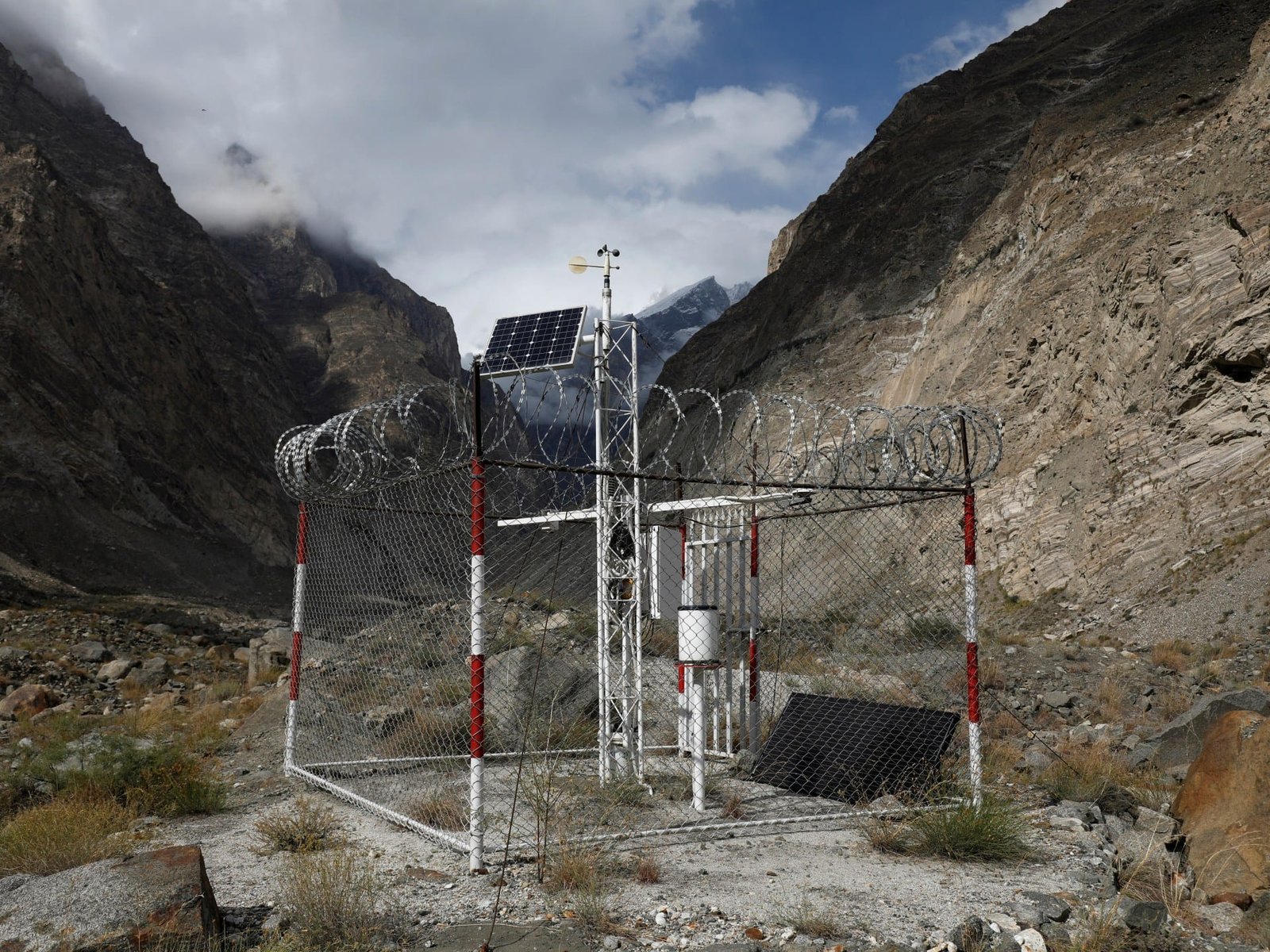
To prevent such occurrences, the government mainly relies on its early warning systems (EWS), which help in reducing loss of life and injury, economic losses, protecting critical infrastructure, and enhancing climate resilience.





 United Arab Emirates Dirham Exchange Rate