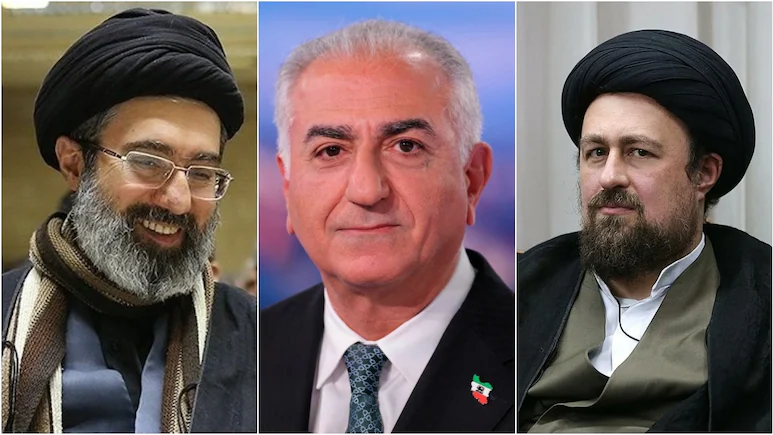
The process of appointing Iran’s supreme leader is rooted in a distinct constitutional system overseen by the influential clerical body known as the Assembly of Experts.
Who elects the supreme leader?
The responsibility lies with the 88-member Assembly of Experts, a council of senior Islamic scholars elected by the public every eight years.
Despite being publicly elected, all candidates must first pass through a rigorous vetting process conducted by the Guardian Council, which reviews nominees for both religious credentials and ideological alignment with the Islamic Republic.
When does the succession process begin?
The Assembly of Experts convenes only when the position of supreme leader becomes vacant—whether due to death, resignation, or incapacitation.
These sessions are held behind closed doors, and the internal deliberations remain strictly confidential.
How is the new leader chosen?
In selecting a successor, members of the Assembly evaluate candidates according to several constitutional criteria, including:
- Profound expertise in Islamic jurisprudence
- Strong political judgment and administrative competence
- Firm commitment to the ideological foundations of the Islamic Republic
- Capacity to provide both religious and political leadership
Although the constitution permits the formation of a leadership council, Iran has historically chosen to appoint a single supreme leader.
What is the voting procedure?
Once discussions conclude, the assembly holds a formal vote.
A simple majority is sufficient to determine the next supreme leader.
In exceptional circumstances, a temporary leadership council may be appointed until a permanent choice is made.
Historical precedents
Since the 1979 Islamic Revolution, Iran has had two supreme leaders:
- Ayatollah Ruhollah Khomeini (1979–1989) — the founder of the Islamic Republic
- Ayatollah Ali Khamenei (1989–2026) — who led the nation for nearly four decades
Following Ayatollah Khomeini’s death in 1989, the Assembly of Experts moved swiftly to elect Ali Khamenei after intensive internal consultations.
Why this succession matters now
This leadership transition comes at a moment of extraordinary geopolitical tension, with Iran embroiled in an escalating conflict involving the United States and Israel.
The decision made by the Assembly of Experts will not only shape Iran’s domestic political trajectory but will also influence its stance toward the West, its regional alliances, and the country’s long-term strategic direction.
Timeline of Past Supreme Leader Elections in Iran
1979 – Establishment of the Islamic Republic
- Following the Iranian Revolution, the newly formed Islamic Republic creates the position of Supreme Leader, placing ultimate political and religious authority in the hands of a single figure.
June 1979 – Appointment of Ayatollah Ruhollah Khomeini
- Ayatollah Ruhollah Khomeini, leader of the revolution, is formally declared the first Supreme Leader of Iran.
- His authority is enshrined in the newly drafted constitution, which grants him sweeping powers over the state and military.
June 3–4, 1989 – Succession After Khomeini’s Death
- Ayatollah Khomeini dies on June 3, 1989, triggering the first leadership transition.
- The Assembly of Experts convenes urgently in Tehran.
- After intense internal debate, the assembly elects Ayatollah Ali Khamenei, then serving as president, as the second Supreme Leader.
- This rapid succession marks one of the most consequential decisions in the Islamic Republic’s history and ensures continuity during a politically sensitive moment.
1989–2026 – Khamenei’s Four-Decade Tenure
- Ayatollah Ali Khamenei leads Iran for nearly 37 years, overseeing major political, economic, and geopolitical transformations.
- His era is marked by:
- Expansion of the Revolutionary Guard’s influence
- Consolidation of conservative power networks
- A long-standing confrontational posture toward the United States and Israel
- Development of Iran’s missile and nuclear programs
2026 – Current Succession Process
- With the death of Ayatollah Ali Khamenei in 2026, the Assembly of Experts again assumes responsibility for selecting the next Supreme Leader.
- Deliberations are ongoing, with Mojtaba Khamenei viewed widely as the leading candidate.





 United Arab Emirates Dirham Exchange Rate