
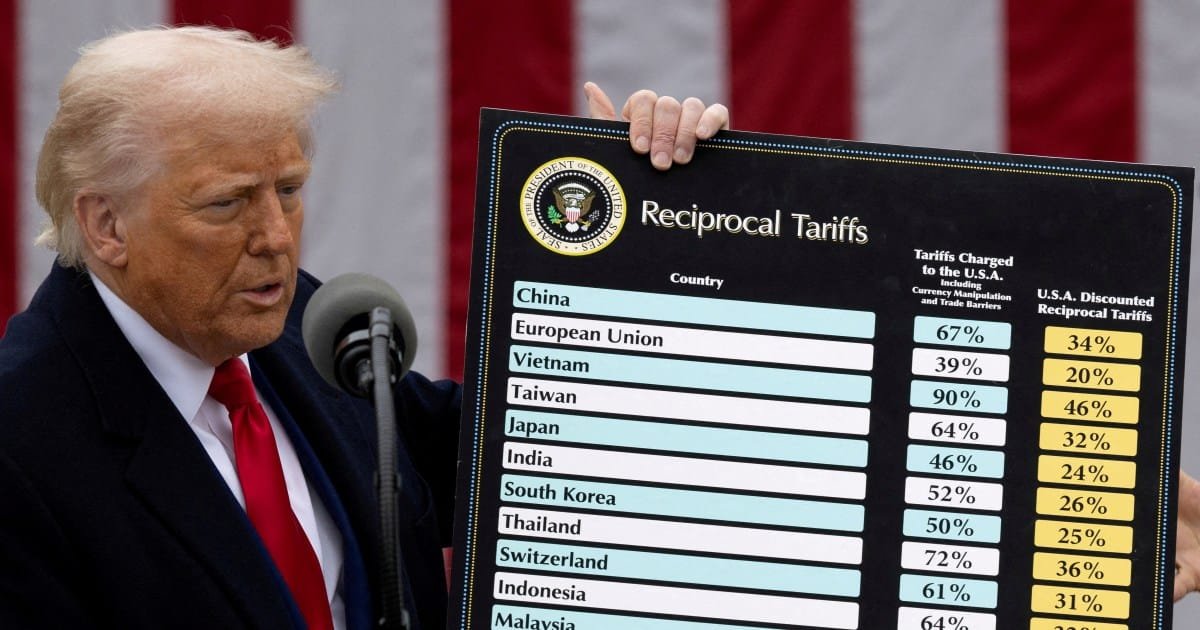
Taipei, Taiwan – When United States President Donald Trump began his first term in 2017, he set about implementing the most hawkish economic policy toward China in decades.
In the first 100 days of his second term, Trump has taken Washington’s confrontation with Beijing to greater heights still, laying out a staunchly protectionist trade agenda that has led to a de facto trade embargo between the world’s two largest economies.
US tariffs on most Chinese goods have risen to 145 percent, with the rate rising to 245 percent on some items, while loopholes that previously allowed Chinese exporters to evade pre-existing tariffs have been closed.
China has imposed tariffs of 125 percent on most US goods in response, in addition to other retaliatory measures such as export controls on critical minerals and tighter limits on the number of Hollywood films shown in Chinese cinemas.
Trump’s trade war picks up from where he left off in his first administration, shaped by a longstanding belief that China and other countries have taken advantage of their trade relationship with the US.
“It’s more or less a continuation in terms of goals and direction, maybe with more force, more determination. He has been treating China as an enemy and not as a friend,” Zhiwu Chen, a finance professor at the University of Hong Kong, told media.
The US trade deficit in goods and services reached $918.4bn in 2024, with the deficit in goods hitting a record $1.2 trillion, according to the Bureau of Economic Analysis.
In Trump’s worldview, China, the US’s third-largest trade partner after Mexico and Canada, is among the worst exploiters.
“Trump believes that China has gotten a free ride during the era of globalisation and exploited the US consumer,” Dennis Wilder, a former White House official and senior fellow at Georgetown University’s Initiative for US-China Dialogue on Global Issues, told media.





 United Arab Emirates Dirham Exchange Rate