
The people of Gaza have kept alive their love for football amid displacement, destruction and communications blackouts.
Deir el-Balah, Gaza – For Hamza El Outy, a Real Madrid fan, Champions League football nights have always been special.
The 20-year-old medical student grew up following the Spanish club as they reigned over European football in the past decade, winning it five times to extend their record to 14 titles.
In November, El Outy and his family moved further west towards the coastline in the war-torn Gaza Strip after miraculously surviving an Israeli rocket attack next to their house in Deir el-Balah, which was largely designated as a safe area in the initial weeks of the war.
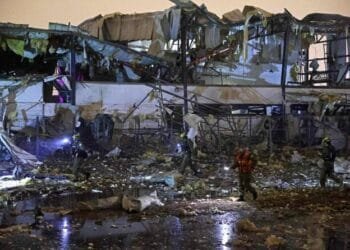
The date palm-lined city has become a site of relentless air strikes. The attacks, mainly targeting the western part of the city, have caused a great deal of damage and destruction to multiple homes as well as public facilities.
“My house is a pile of rubble, where all my football memories lay buried,” El Outy says, holding back his tears.
“When I had a home, I would always prepare for the late [Champions League] games with a can of soft drink, crisps and popcorn,” El Outy tells media.
The Madridista – as Real Madrid fans are known – still finds a way to follow his favourite team’s exploits in the Spanish La Liga and the Champions League.
When the 14-time Champions League winners take on RB Leipzig to book a place in the tournament’s quarterfinals on Wednesday night, El Outy may not be able to follow the game live but he hopes to catch up later on.
On March 7, it will be five months since Israel launched its war on Gaza, following the Hamas attack on southern Israel.
More than 31,000 Palestinians, including at least 12,300 children, have been killed in Gaza since October 7. More than 8,000 remain missing, many trapped under the rubble of destruction caused by Israeli air and land attacks, according to the Palestinian Ministry of Health.
More than half of Gaza’s homes – 360,000 residential units – have been destroyed or damaged, according to the latest data from the UN’s Office for the Coordination of Humanitarian Affairs (OCHA), the World Health Organization (WHO) and the Palestinian government.
According to OCHA, Israeli forces have carried out “significant destruction” of residential blocks across Gaza.
The streets, which were once filled with laughter and revelry, now paint a traumatic picture: women wail over the bodies of their dead children, men search for people buried under the rubble and children desperately look for food.
When football was synonymous with life
Despite the challenging circumstances, football fans in Gaza carry a love for the game in their hearts.
It brings them rare joy and momentary distraction from the bombings and loss of precious lives.
The 15-year-old from Deir el-Balah is a proud owner of an Al Nassr replica shirt that bears the name of Cristiano Ronaldo – her favourite player.
“The last time I saw an Al Nassr game was on February 1, against Inter Miami, when Talisca scored a wonderful hat-trick” she exclaims. Abu-Nemer had barely watched a few minutes of the game on a phone before the internet was cut off.
“[When] we don’t have an internet connection, we rely on the radio for updates and that’s how I heard about Palestine’s performance at the Asian Cup in Qatar.”
Palestine reached the tournament’s round-of-16 stage for the first time in their history, sending waves of joy through the Gaza Strip and occupied West Bank.
Players hailing from Gaza broke down on the pitch as their run ended in a loss against Qatar, but they won over tens of thousands of fans in the host country and back home in Palestine.
“No one expected Palestine to go past the first round – we are all so proud of these players,” Abu-Nemer, the young fan, says proudly.
In Gaza, football has always been synonymous with life.
Before October 7, football would be at the heart of every conversation among friends – young or old – all around the enclave.
Cafes dotted along the shores of the Mediterranean Sea that forms Gaza’s coastline would make special arrangements to screen games and hundreds of fans would gather around to watch and cheer. Most of these cafes – Ranoosh, Al-Waha and Flamingo – have been destroyed in the war.
Young aspiring footballers would try to imitate their favourite players’ acrobatic celebrations after scoring a goal in a game of street football.
The biggest games in club football, such as the El Clasico (Real Madrid vs Barcelona) or English derbies, and the FIFA World Cup, would empty streets as everyone would be glued to their TV screens.


 United Arab Emirates Dirham Exchange Rate