Revolutionary Guards issue new navigational instructions as two-week truce temporarily reopens strait carrying one-fifth of world’s oil.
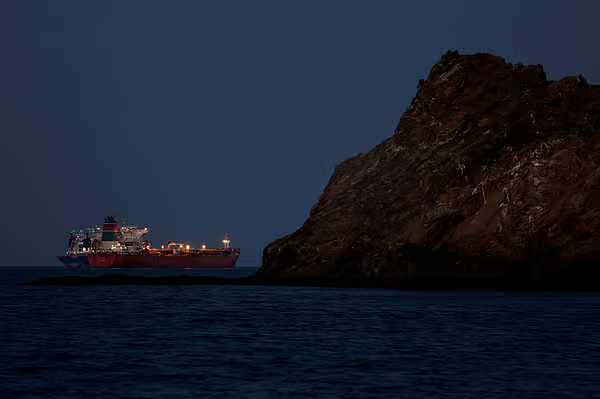
TEHRAN/WASHINGTON – Iran announced alternative routes through the Strait of Hormuz on Thursday, warning ships to avoid the main waterway due to the risk of sea mines, even as a fragile two-week ceasefire temporarily reopened the vital oil chokepoint.
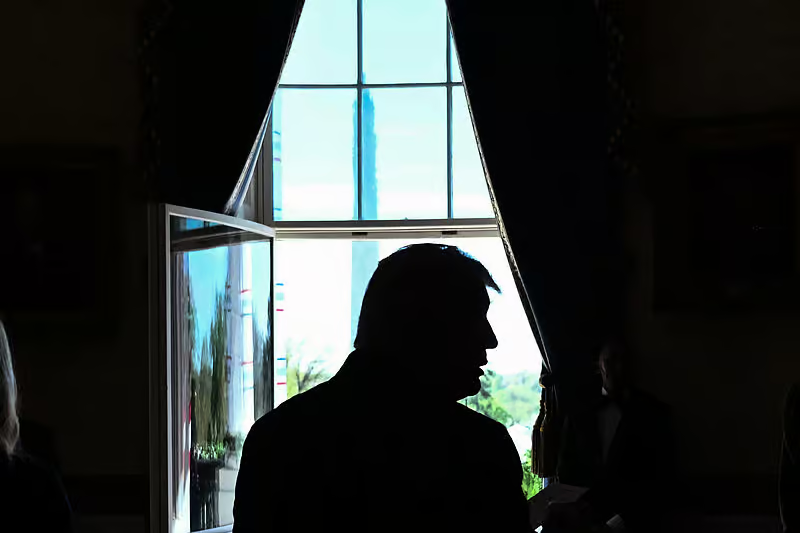
The Strait, through which roughly one-fifth of the world’s petroleum passes, had been effectively blocked by Tehran since early March, sending global energy prices soaring. The US and Iran agreed to a two-week truce overnight Tuesday, coming less than an hour before President Donald Trump’s deadline for Tehran to strike a deal or face military obliteration.
But the navigational risks have not disappeared. In a statement quoted by local media, Iran’s Revolutionary Guards notified all ships intending to transit the strait that they should take alternative routes “in order to comply with the principles of maritime safety and to be protected from possible collisions with sea mines.”
The statement provided specific instructions for an alternative entry and exit route through the strategic waterway.
Fragile truce, persistent hazards
While Tehran has agreed to temporarily reopen the strait as part of the ceasefire agreement, the Guards’ announcement underscores how far the region remains from normalised shipping operations. The presence of sea mines – whether newly laid or left over from recent hostilities – presents a tangible threat to tankers and cargo vessels.
The alternative routes are likely to slow transit times and increase costs for shippers, even as global energy markets remain on edge. Insurers and shipowners, already wary after weeks of heightened tension, will need to assess whether the new navigational instructions offer sufficient safety guarantees.
A narrow window of calm
The two-week truce, brokered amid intense diplomatic pressure, has paused but not resolved the underlying confrontation. Trump had vowed to bomb Iran back to the “stone age” if it did not bow to demands to reopen the strait. Tehran’s effective blockade since early March had already demonstrated its ability to strangle one of the world’s most critical energy arteries.
For now, oil flows have resumed – but through alternative, untested corridors. Whether the truce holds long enough to allow full logistical normalisation remains an open question, with Iran warning it could torpedo the agreement if Israel does not halt its attacks on Lebanon.
Global markets watch closely
Energy traders, shipping companies, and global powers will be scrutinising the coming days for any signs of renewed friction. The reopening of the strait – even partially and with caveats – has provided some relief to oil prices, but the underlying volatility remains.
As one industry source put it: an alternative route is not the same as a safe one. And with two weeks on the clock, the clock is ticking.
 United Arab Emirates Dirham Exchange Rate