It seems that extending chivalry to a machine does nobody any favours
If you are amongst those who pepper your liaisons with ChatGPT with a ‘please’ and ‘thank you’, you are advised to cease and desist immediately. Your good manners, whilst looking commendable on paper (or screen) are exacerbating climate change in the same way as, say, leaving the AC on all night. Or taking an hour-long lava-hot shower twice a day for the rest of the year.
At least that is what we are meant to glean from OpenAI CEO Sam Altman’s exchange on X earlier this week. In response to a query posed by someone who wanted to know how much computing power it takes to compensate for superfluous words of politeness on ChatGPT, Altman did not have an exact amount at his behest, but he did hypothesise that it totalled comfortably up to “tens of millions of dollars”. As a caveat, he added that it may be “money well spent”, because, “you never know”.
Price tag of politeness
Before those of us with an active imagination fully immerse ourselves into picturing the dystopian robot future (more on this momentarily) that Altman’s “you never know” hints at, we must concede that whilst his figure “tens of millions of dollars” does not quite ring with preciseness, it does have an air of some truth surrounding it. According to a Goldman Sachs report on data centre power consumption, a Google search uses 0.3 watt-hours of electricity; by contrast, one ChatGPT search uses 2.9 watt-hours.

As anyone with a decrepit laptop that heats up like a furnace will be able to surmise, cooling off all these power-guzzling data centres requires millions (billions?) of gallons of water. In other words, your long showers and daily gardening are not the only things spiking global water usage. What does all this mean in real terms? As a Washington Post report illustrates, if one out of 10 working Americans uses ChatGPT once a week for a year – equating to 52 queries multiplied by 17 million – the power needed would be comparable to the electricity consumed by every household in Washington DC for 20 days.
Now you, dear reader, may not be one of these 10 working Americans, but we can probably conclude from this that the insistence of good manners programmed into you from childhood (would your mother have deemed a grunt as an acceptable response for anything?) is probably adding to the workload of an electrical substation somewhere. Good manners, it transpires, come with a price tag.
Other side of the coin
Is it a price worth paying, though? Kurtis Beavers from Microsoft (that other stalwart of high technology) has told Futurism magazine, “proper etiquette helps generate respective, collaborative outputs.”
Well, humanity is a sucker for a respective, collaborative AI output. For example, thanks to ChatGPT, we can let a computer efficiently plan our day without giving it an extra second’s thought. And whilst very few of us ache to read a novel crafted by AI, it is certainly capable of writing a polite email to a line manager where we really want to say “You are an idiot” without using the word “idiot” or any of its synonyms. Additionally, if you enjoy professional basketball, you will be pleased to know that even here, high tech has broken ground. As an AFP report demonstrates, using AI, a top basketball team found the right defensive strategy that made the difference in winning the NBA championship.
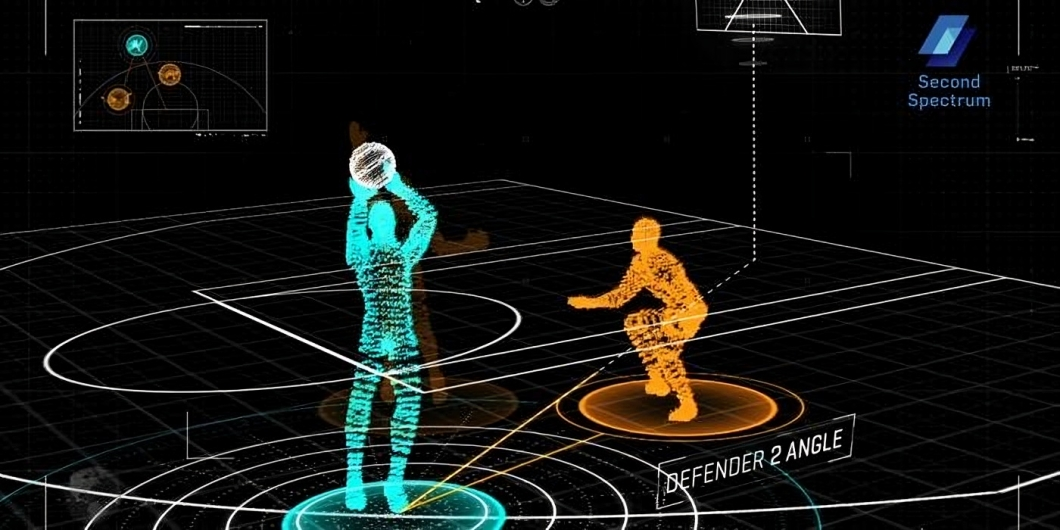
“Cameras track 29 points for each player so you know not just where they are, but you know where their elbow is, and you know where their knee is,” said Ben Alamar, a sports analytics writer and consultant.
Knowing where everyone’s knees and elbows are is a key component to basketball greatness – although of course, whilst for now, AI has only been assisting teams that are already used to winning, the true mark of its capabilities will become apparent when it brings victory to habitual losers and underdogs. Does incorporating good manners into these input commands help in any way? Perhaps not – but in the event of that robot uprising (“you never know”), maybe we should err on the side of caution and appease the machines that carry out such important brainwork.
Robot uprising





 United Arab Emirates Dirham Exchange Rate