

Israel’s regional manoeuvres could further destabilise the Eastern Mediterranean and widen tensions with Turkiye.
Two meetings, held almost simultaneously towards the end of December, offered a stark illustration of the competing strategic visions now shaping the Eastern Mediterranean and the Levant.
In Damascus, Turkiye’s foreign, defence and intelligence chiefs met Syrian officials on December 22 as Ankara continued to prioritise the consolidation of state authority and stabilisation after the fall of Bashar al-Assad’s government in Syria.
On the same day, Israel hosted Greece and Cyprus for the latest iteration of their trilateral framework. Two days before that meeting, Israel launched another air attack on Syria – one of more than 600 strikes in 2025 – a reminder to Ankara and Damascus that Israel is willing to disrupt Syria’s recovery from war.
While officially framed around energy cooperation and regional connectivity, the trilateral agenda between Israel, Greece and Cyprus has steadily expanded to encompass security coordination and military alignment, signalling a shift from economic competition to strategic containment.
For Cem Gurdeniz, a retired admiral and one of the architects of Turkiye’s “Blue Homeland” maritime doctrine that calls for Ankara to safeguard its interests across the surrounding seas – the Aegean, Eastern Mediterranean and the Black Sea – the meeting was an attempt “to exclude and encircle Turkiye”.
Gurdeniz describes Israel’s approach as an indirect containment strategy aimed not at confrontation but at altering Ankara’s behaviour. “The objective is not war, but behavioural change – narrowing Turkiye’s strategic space to induce withdrawal without conflict,” he told media, warning against treating the standoff as routine energy competition.
For Israel, the trilateral framework reflects unease with Turkiye’s approach in Syria, which prioritises territorial integrity and the restoration of central authority – an outcome that runs counter to Israel’s preference for a fragmented regional security landscape.
Greece and Cyprus, meanwhile, view the partnership as a means to advance maritime boundary claims and energy corridors that would marginalise Turkiye’s role in the Eastern Mediterranean.
The decision to hold the trilateral meeting in Israel was not incidental. It reflected the shrinking diplomatic space available to the Israeli leadership as the genocidal war on Gaza deepens Israel’s international isolation.
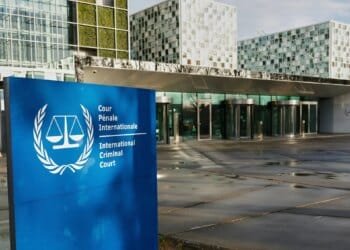
With Prime Minister Benjamin Netanyahu facing an arrest warrant from the International Criminal Court (ICC) for war crimes and crimes against humanity, his ability to travel abroad has become increasingly constrained, particularly to countries that are signatories to the court, such as Greece and Cyprus.
The Greek government, while not rejecting the ICC’s warrant for Netanyahu – which also includes one for Israel’s former defence minister, Yoav Gallant – has said that “these decisions do not help”. Cyprus has also noted that the ICC warrants are binding. Neither has publicly said that they will not execute the warrants.
Hosting the Greek and Cypriot leaders in Israel was therefore not simply a logistical choice, but a symptom of how legal and diplomatic pressures are reshaping Israel’s outlook and pushing it towards security-centric alliances.
At the same time, the meeting served to recast Turkiye as a regional problem through coded Ottoman references and narratives of expansionist ambition, aimed at eroding Ankara’s interests in the Eastern Mediterranean.
Israel’s gambit
Standing alongside Greek Prime Minister Kyriakos Mitsotakis and Cypriot President Nikos Christodoulides, Netanyahu – a longtime advocate of a Greater Israel – warned that “those who fantasise they can re-establish their empires and their dominion over our lands” should “forget it”, a remark widely interpreted as a reference to Turkiye.
As a peninsular state, Turkiye has more than 8,300km (5,100 miles) of coastline. Greece argues its Aegean islands, many of which lie just off the Turkish coast, generate their own exclusive economic zones (EEZ), extending maritime claims up to 200 nautical miles (about 370km).
In the Eastern Mediterranean, these regional wedge issues have given Israel an opportunity to insert itself and further inflame tensions.
Greece, in particular, has sought to leverage Israel’s close ties with Washington to secure diplomatic backing in longstanding maritime boundary disputes.
“Greece seeks to involve the US through Israel in order to gain diplomatic backing for resolving Eastern Mediterranean maritime boundary issues,” said Senel. Those disputes – involving gas exploration rights also claimed by Turkiye – have long fuelled regional tensions and now form part of a broader effort to constrain Ankara’s strategic room for manoeuvre.
While no formal collective defence agreement has been signed, high-level cooperation among the three states is moving beyond ad hoc coordination towards a more institutionalised security framework. The inclusion of the United States as a “like-minded partner” under a so-called 3+1 format, Senel noted, “clearly conveys a strategic message directed at Turkiye”.
Although the trilateral mechanism stops short of a formal military alliance, its trajectory points towards deeper security and defence cooperation, reinforcing Ankara’s perception of an emerging containment axis in the eastern Mediterranean.
Relations between Greece, Cyprus and Israel have not been hindered by Israel’s genocidal war on Gaza, which began in October 2023.
Unlike several other European Union states that have described Israel’s campaign in Gaza as genocide or ethnic cleansing and called for sanctions over violations of international law, Greece and Cyprus have remained largely silent while expanding cooperation with Israel.
“In the current context, where the Greek Cypriots will assume the presidency of the Council of the EU, and at a time when the EU is ignoring Turkiye’s geostrategic position and importance, finding diplomatic pathways to alleviate the tensions is a hard task,” said Zeynep Alemdar, foreign policy programme director at the Centre for Economics and Foreign Policy Studies in Istanbul.
“EU officials do not understand the mutual benefits of including Turkiye in the energy and defence calculations of the region,” Alemdar told media.
In December, Greek parliamentarians approved the purchase of 36 PULS rocket artillery systems from Israel for approximately $760m.



 United Arab Emirates Dirham Exchange Rate