

Many across the world are rounding on Israel’s war on Gaza, with states in the ‘Global South’ leading the way.
International public opinion continues to turn against Israel for its war on Gaza, with more governments slowly beginning to reflect those voices and increase their own condemnation of the country.
In the last few weeks, Israeli government ministers have been sanctioned by several Western countries, with the United Kingdom, France and Canada issuing a joint statement condemning the “intolerable” level of “human suffering” in Gaza.
Earlier this week, a number of countries from the Global South, “The Hague Group”, collectively agreed on a number of measures that they say will “restrain Israel’s assault on the Occupied Palestinian Territories”.
Across the world, and in increasing numbers, the public, politicians and, following an Israeli strike on a Catholic church in Gaza, religious leaders are speaking out against Israel’s killings in Gaza.
So, are world powers getting any closer to putting enough pressure on Israel for it to stop?
Here’s what we know.
According to its website, the Hague Group is a global bloc of states committed to “coordinated legal and diplomatic measures” in defence of international law and solidarity with the people of Palestine.
Made up of eight nations; South Africa, Bolivia, Colombia, Cuba, Honduras, Malaysia, Namibia and Senegal, the group has set itself the mission of upholding international law, and safeguarding the principles set out in the Charter of the United Nations, principally “the responsibility of all nations to uphold the inalienable rights, including the right to self-determination, that it enshrines for all peoples”.
Earlier this week, the Hague Group hosted a meeting of some 30 nations, including China, Spain and Qatar, in the Colombian capital of Bogota. Also attending the meeting was UN Special Rapporteur Francesca Albanese, who characterised the meeting as “the most significant political development in the past 20 months”.
Albanese was recently sanctioned by the United States for her criticism of its ally, Israel.
At the end of the two-day meeting, 12 of the countries in attendance agreed to six measures to limit Israel’s actions in Gaza. Included in those measures were blocks on supplying arms to Israel, a ban on ships transporting weapons and a review of public contracts for any possible links to companies benefiting from Israel’s occupation of Palestine.
More and more.
On Wednesday, Slovenia barred far-right National Security Minister Itamar Ben-Gvir and ultranationalist Finance Minister Bezalel Smotrich from entering its territory after the wider European Union failed to agree on measures to address charges of widespread human rights abuses against Israel.
Slovenia’s ban on the two government ministers builds upon earlier sanctions imposed upon Smotrich and Ben-Gvir in June by Australia, Canada, New Zealand, UK and Norway over their “incitement to violence”. The two men have been among the most vocal Israeli ministers in rejecting any compromise in negotiations with Palestinians, and pushing for the Jewish settlement of Gaza, as well as the increased building of illegal settlements in the occupied West Bank.
In May, the UK, France, and Canada issued a joint statement describing Israel’s escalation of its campaign against Gaza as “wholly disproportionate” and promising “concrete actions” against Israel if it did not halt its offensive.
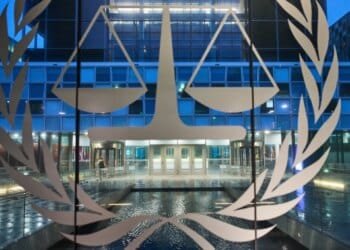
South Africa first launched a case for genocide against Israel at the International Court of Justice in late December 2023, and has since been supported by other countries, including Colombia, Chile, Spain, Ireland, and Turkiye.
In January of 2024, the ICJ issued its provisional ruling, finding what it termed a “plausible” case for genocide and instructing Israel to undertake emergency measures, including the provision of the aid that its government has effectively blocked since March of this year.
Israel’s bombing on Thursday of the Holy Family Church in Gaza City, killing three people, drew a rare rebuke from Israel’s most stalwart ally, the United States.
Following what was reported to be an “angry” phone call from US President Trump after the bombing, Israeli Prime Minister Benjamin Netanyahu’s office issued a statement expressing its “deep regret” over the attack.
To date, Israel has killed more than 58,000 people in Gaza, the majority women and children.
Mass public protests against Israel’s war on Gaza have continued around the world throughout its duration.
And there are clear signs of growing anger over the brutality of the war and the toll it is taking on Palestinians in Gaza.
In Western Europe, a survey carried out by the polling company YouGov in June found that net favourability towards Israel had reached its lowest ebb since tracking began.
A similar poll produced by CNN this week found similar results among the American public, with only 23 percent of respondents agreeing Israel’s actions in Gaza were fully justified, down from 50 percent in October 2023.
Public anger has also found voice at high-profile public events, including music festivals such as Germany’s Fusion Festival, Poland’s Open’er Festival and the UK’s Glastonbury festival, where both artists and their supporters used their platforms to denounce the war on Gaza.
Protests against the war remain small but are growing, with organisations, such as Standing Together, bringing together Israeli and Palestinian activists to protest the war.





 United Arab Emirates Dirham Exchange Rate