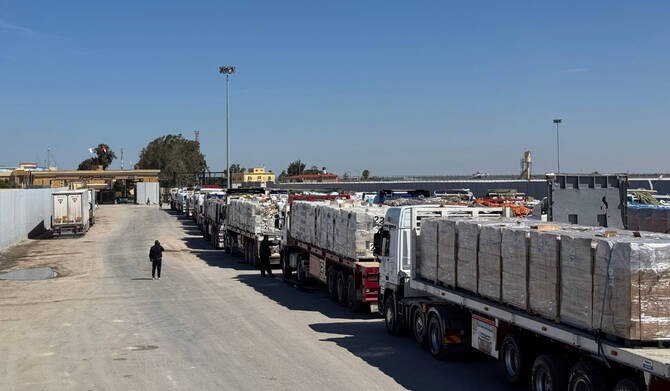
Gaza-Egypt border to open for pedestrians only, with Israeli security checks, as part of new U.S.-backed humanitarian framework.
JERUSALEM: Israel agreed on Monday to a “limited reopening” of the Rafah border crossing between Gaza and Egypt, marking a cautious step in the implementation of a U.S.-backed diplomatic plan aimed at addressing the protracted humanitarian situation in the region.
Prime Minister Benjamin Netanyahu’s office announced the decision following talks with American envoys in Jerusalem, framing it as part of what it called “President Trump’s 20-point plan” for the area.
In a statement posted on X, the Prime Minister’s Office said: “Israel has agreed to a limited reopening of the Rafah Crossing for pedestrian passage only, subject to a full Israeli inspection mechanism.” The move is expected to allow restricted civilian movement under tight Israeli oversight, though details on operational timelines and eligibility criteria were not immediately disclosed.
The Rafah crossing has long served as a critical — and often volatile — transit point for people and goods into and out of the Gaza Strip. Its closure in recent months has intensified hardships for Palestinians in the coastal enclave.
Monday’s announcement signals a calibrated shift in border policy, reflecting both international pressure to ease civilian suffering and Israel’s insistence on maintaining security control. U.S. involvement, under the newly referenced Trump framework, appears aimed at balancing humanitarian access with Israeli security demands.
Regional observers will be watching closely to see whether the limited pedestrian access leads to broader openings or remains a tightly controlled exception. No further points of the reported 20-point plan were immediately detailed by Israeli officials.





 United Arab Emirates Dirham Exchange Rate