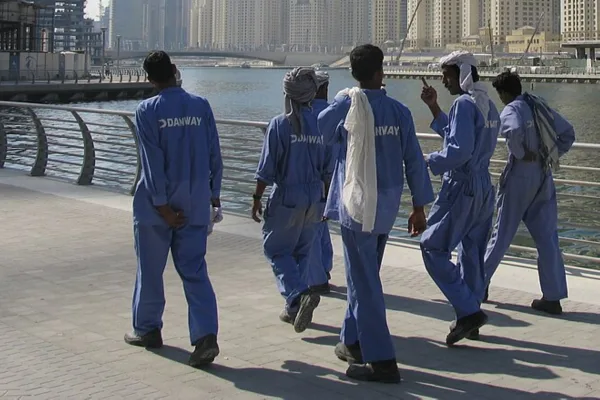
This midday break initiative, or Occupational Heat Stress Prevention Policy, has been running for the past 21 years during the country’s peak summer heat
The UAE’s three-month midday break or ban on outdoor work concludes today (September 15), with a 99 per cent compliance rate among government and private companies, the Ministry of Human Resources and Emiratisation (MoHRE) has announced.
The UAE enforced a ban on outdoor work under direct sunlight from 12.30pm to 3pm daily for three months starting on June 15 this year. This midday break initiative or Occupational Heat Stress Prevention Policy, has been running for the past 21 years during the country’s peak summer heat.
Inspections were conducted at various work and construction sites. Companies were also required to provide shaded areas for workers during the midday work break. They were also told to provide appropriate cooling solutions, ensure sufficient drinking water, and hydration supplements (such as electrolytes or similar products approved for use by local authorities in the UAE), in addition to first aid equipment at work sites.
“Implementing the Occupational Heat Stress Prevention Policy for the 21st consecutive year asserts the UAE’s well-established humanitarian commitment in the labour market, which includes a range of labour protection policies within an integrated ecosystem designed to provide a safe work environment,” noted Mohsin Ali Al Nassi, Assistant Undersecretary for Inspection & Compliance at MoHRE.
According to MoHRE, the campaign “recorded a whopping 99 per cent compliance rate among companies that adhered to the daily ban on working under direct sunlight and in open spaces throughout the duration of the campaign.”
“This has become an established practice and top priority among companies operating in the UAE, in line with their dedication to providing protections for workers according to the highest occupational health and safety standards and requirements,” he added.
As part of this year’s campaign, more than 10,000 air-conditioned rest stations were also provided for delivery service workers across the UAE. These were equipped with various amenities designed to ensure their rest and comfort.
Several initiatives were likewise launched to provide refreshments and meals for workers. Medical examinations were also provided for workers across the country.
“(These) aligned with best practices and occupational health and safety requirements, enabling it to protect workers from injuries and hazards that may result from working in high temperatures during the summer months,” MoHRE added.






 United Arab Emirates Dirham Exchange Rate