As Iran faces one of the most turbulent periods in its modern history amid the escalating conflict with the United States and Israel, growing attention is shifting toward a critical question: who will succeed the late Supreme Leader Ayatollah Ali Khamenei?
With the country’s leadership in flux at a time of intense military and political pressure, the outcome of this succession will profoundly influence Iran’s future trajectory and its relations with the wider world.
Succession Speculation Intensifies
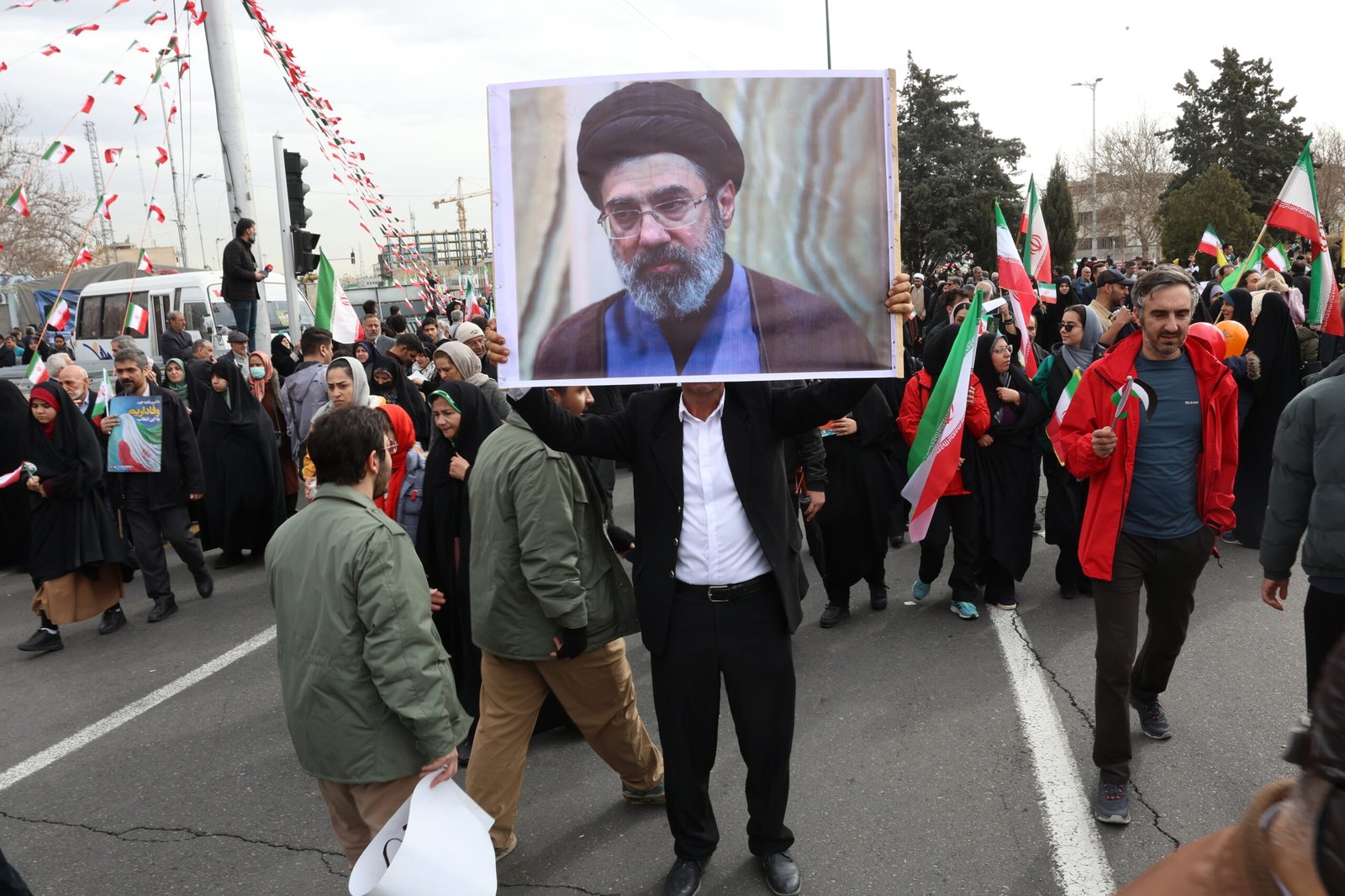
Among the various figures being discussed, Mojtaba Khamenei, the influential second son of the late Supreme Leader, is widely viewed as the frontrunner. His potential rise to the highest position in the Islamic Republic has sparked widespread debate, both within Iran and abroad.
Although no formal announcement has been made, senior clerics and political insiders indicate that a decision may be imminent. Funeral rites for Ayatollah Khamenei are nearing completion, and high-level consultations within Iran’s religious establishment are reportedly underway.
Role of the Assembly of Experts
Under Iran’s constitution, the responsibility for selecting the next supreme leader lies with the Assembly of Experts, an 88‑member body of senior clerics elected by the public every eight years.
The assembly convenes behind closed doors to deliberate, evaluate candidates, and vote on the successor. Eligible candidates must hold senior religious credentials and be regarded as capable of guiding both the nation and the Islamic Republic’s ideological framework.
The selection process traditionally involves extensive discussions among senior clerics, the Islamic Revolutionary Guard Corps (IRGC), and influential political networks.
Although the deliberations are confidential, reports suggest the assembly is assessing a shortlist of six candidates—with Mojtaba Khamenei seen as the leading choice.
Ayatollah Seyed Ahmad Khatami, a member of the assembly, recently stated that the body is “close to selecting a leader,” though he did not specify when the final decision will be made.
Mojtaba Khamenei’s Rise to Influence
Born in 1969, Mojtaba Khamenei studied Islamic theology after finishing secondary school and briefly took part in the Iran-Iraq war during his youth.
Despite maintaining a low public profile for decades, his influence gradually expanded through the late 1990s and early 2000s as conservative factions sought to consolidate power following several electoral setbacks.
Over the years, he forged strong connections with key security and political institutions—most notably the IRGC, which plays a central role in Iran’s political and military apparatus.
His elevation to the rank of ayatollah in 2022 intensified speculation that he was being prepared for succession.
Observers say Mojtaba has played an integral role in several critical areas of governance, including oversight of state media, internal security networks, and financial foundations linked to the supreme leader’s office. His close political allies reportedly include IRGC commander Ahmad Vahidi and parliamentary speaker Mohammad Bagher Ghalibaf.
A Firm Signal to the West
Should Mojtaba Khamenei assume the role of supreme leader, analysts believe it would indicate a continuation—rather than a departure—from Iran’s current ideological and geopolitical stance.
He is widely viewed as a staunch hardliner with firmly anti-Western views and strong support for maintaining Iran’s existing revolutionary framework.
The possibility of his appointment has already drawn criticism from Washington. US Secretary of State Marco Rubio has described Iran’s leadership as dominated by “religious fanatics,” while President Donald Trump has warned that a successor who mirrors the late leader’s ideology represents the “worst-case scenario” for the United States.
Inside Iran, the idea of a hereditary-style transition has stirred discomfort among reformists. Former prime minister Mir Hossein Mousavi has previously rejected speculation about Mojtaba’s succession, calling it a “conspiracy” contrary to the principles of the 1979 revolution.
However, supporters of the ruling establishment argue that the Assembly of Experts will ultimately choose the most qualified religious authority—regardless of personal ties to the late leader.
A Leadership Change During Wartime
The succession process is unfolding at a moment of extreme volatility.
Iran is facing heavy military pressure as US and Israeli forces continue widespread strikes against its military infrastructure, while Tehran has responded with missile and drone attacks across the region.
The choice of a new supreme leader will shape Iran’s strategy in the coming months—determining whether the Islamic Republic doubles down on confrontation or seeks avenues for diplomatic engagement.
For now, the nation—and the world—awaits the Assembly of Experts’ decision, which will determine who becomes Iran’s most powerful political and religious authority, entrusted with guiding the country through one of the most consequential crises in its history.



 United Arab Emirates Dirham Exchange Rate