Islamabad, Pakistan – Seated next to British Prime Minister Keir Starmer during a visit to the United Kingdom in September, United States President Donald Trump made clear he was eyeing a plot of land his country’s military once controlled nearly 8,000km (4,970 miles) away: Bagram airbase in Afghanistan.
“We gave it to [the Taliban] for nothing. We want that base back,” he said. Two days later, this time opting to express his views on social media, Trump wrote: “If Afghanistan doesn’t give Bagram air base back to those that built it, the United States of America, bad things are going to happen!”
The Taliban, predictably, bristled at the demand and stressed that under “no circumstances” will Afghans hand over the base to any third country.
On Tuesday, the Taliban, who have ruled Afghanistan since their takeover of Kabul in August 2021, won a remarkable show of support for their opposition to any US military return to the country, from a broad swath of neighbours who otherwise rarely see eye-to-eye geopolitically.
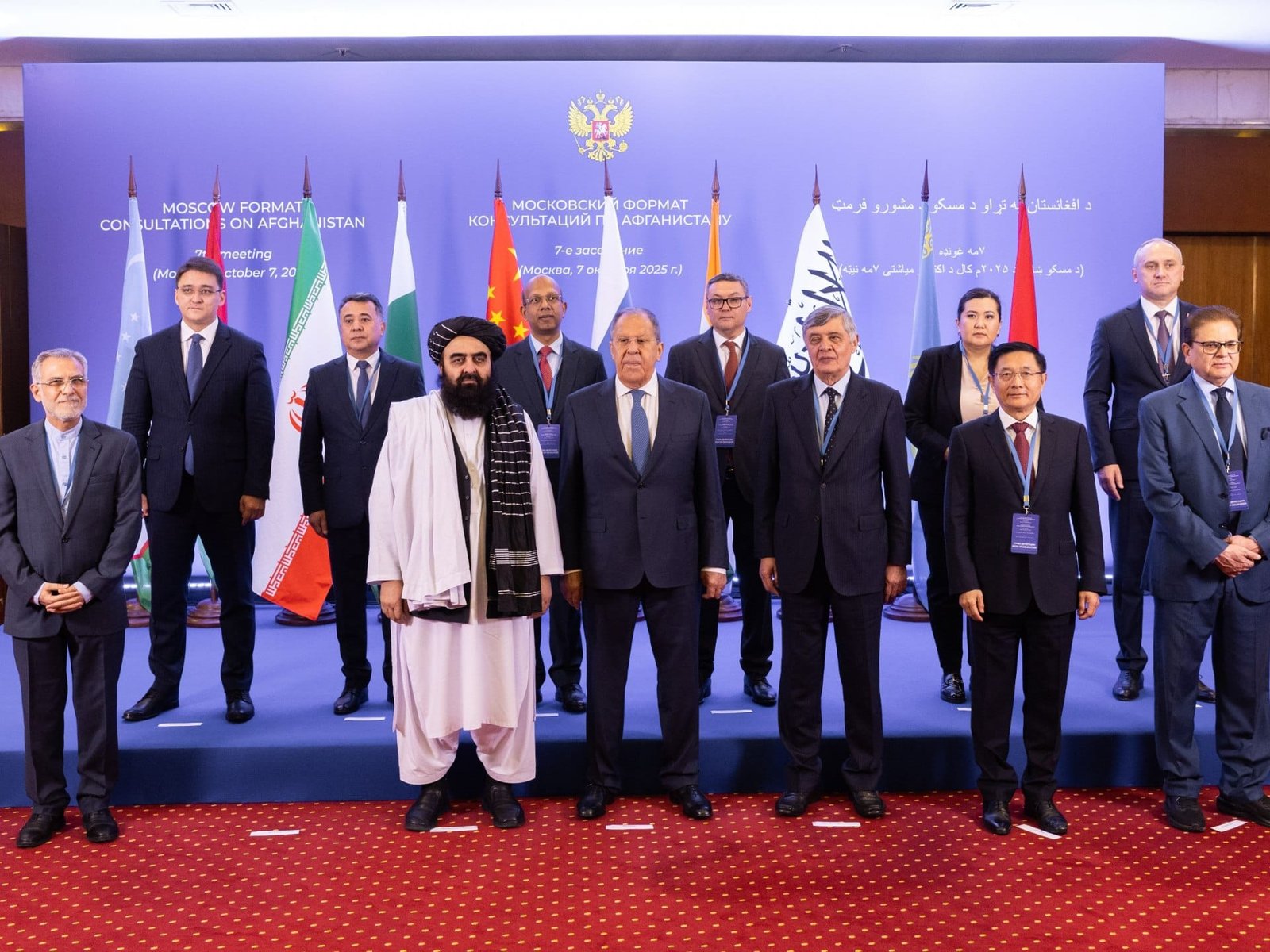
At a meeting in Moscow, officials from Russia, India, Pakistan, China, Iran, Kazakhstan, Tajikistan, Uzbekistan and Kyrgyzstan joined their Taliban counterparts in coming down hard on any attempt to set up foreign military bases in Afghanistan. They did not name the US, but the target was clear, say experts.
“They called unacceptable the attempts by countries to deploy their military infrastructure in Afghanistan and neighbouring states, since this does not serve the interests of regional peace and stability,” said the joint statement (PDF) published by the Russian Ministry of Foreign Affairs on October 7 at the conclusion of the seventh edition of what are known as the Moscow Format Consultations between Afghanistan’s neighbours.
Pakistan, China, Russia and Iran had opposed “the reestablishment of military bases” in a similar declaration last month on the sidelines of the United Nations General Assembly. But the Moscow communique brought together a much wider range of nations – some with competing interests – on a single page.
India and Pakistan have long vied for influence over Afghanistan. India also worries about China’s growing investments in that country. Iran has often viewed any Pakistani presence in Afghanistan with suspicion. Kazakhstan, Kyrgyzstan, Tajikistan and Uzbekistan have long feared violence in Afghanistan spilling over into their territory. And in recent years, Pakistan has had tense relations with the Taliban – a group that it supported and sheltered for decades previously.
The confluence of these countries, despite these differences, into a unanimous position to keep the US out of the region reflects a shared regional view that Afghan affairs are a “regional responsibility”, not a matter to be externally managed, said Taimur Khan, a researcher at the Institute of Strategic Studies Islamabad (ISSI).





 United Arab Emirates Dirham Exchange Rate