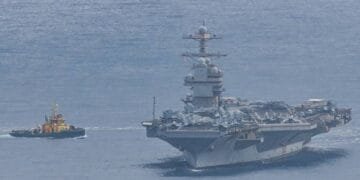
Crude markets remain volatile as the IEA mulls a record intervention to counter supply fears stemming from the escalating US-Israel-Iran conflict.
TOKYO/SINGAPORE – Oil prices continued their downward trajectory on Wednesday, pressured by reports that the International Energy Agency (IEA) is preparing to orchestrate the largest emergency stockpile release in its history. The proposed intervention is aimed at cushioning the global market from potential supply disruptions linked to the escalating conflict between the US, Israel, and Iran.
Market Moves:
- Brent Crude futures fell 88 cents (1%) to $86.92 per barrel.
- US West Texas Intermediate (WTI) dropped 35 cents (0.4%) to $83.10 per barrel.
The decline extends Tuesday’s dramatic sell-off, where both benchmarks plunged more than 11%—the steepest daily drop since 2022. This sharp correction follows a dizzying rally earlier in the week that saw WTI surge above $119 a barrel on Monday, its highest level since June 2022.
IEA Weighs Record Intervention
According to a report in the Wall Street Journal citing officials familiar with the matter, the proposed drawdown from IEA member countries would exceed the 180 million barrels released in two coordinated tranches during 2022, following Russia’s full-scale invasion of Ukraine.
Goldman Sachs analysts noted that a stockpile release of this magnitude could theoretically offset approximately 12 days of disrupted supply, based on their estimate of a 15.4 million barrel-per-day disruption to Gulf exports.
Despite the bearish sentiment from the potential reserve release, supply-side risks remain acutely elevated.
Conflict Escalates, Threatening Critical Chokepoint
The military situation in the Middle East intensified on Tuesday. The Pentagon confirmed that the US and Israel conducted what it described as the most intense airstrikes of the conflict so far against Iranian targets. In a parallel operation, the US Central Command stated it had “eliminated” 16 Iranian mine-laying vessels near the strategic Strait of Hormuz.
US President Donald Trump reiterated his warning that any mines laid in the strait must be removed immediately, reiterating the US military’s readiness to escort tankers. However, Reuters reports that the US Navy has, for now, denied requests from the shipping industry for military escorts, citing the current risk of attacks as too high.
Further tightening physical supply, a source confirmed that Abu Dhabi’s state oil giant, ADNOC, has shut its Ruwais refinery following a fire sparked by a drone strike on the complex.
Global Response and Market Outlook
The G7 group of nations has convened online to deliberate on the emergency stockpile release, a move that would aim to “soften the market blow.” French President Emmanuel Macron is scheduled to host a video call with other G7 leaders on Wednesday to specifically address the conflict’s impact on energy security.
While the prospect of an IEA intervention has cooled prices, analysts remain divided on the market’s immediate future.
- Scepticism on Logistics: Philip Jones-Lux, senior analyst at Sparta Commodities, cast doubt on the plan’s efficacy, noting in a client briefing that “no release has yet been formally announced… the core issue is not the size of reserves, it is the achievable draw rates.”
- Supply Deficit Remains: Energy consultancy Wood Mackenzie warned that the conflict is currently removing an estimated 15 million barrels per day of Gulf oil and products from the market, a scenario that could potentially propel crude prices to $150 per barrel.
- Volatility to Persist: Analysts at UOB noted that while prices are normalizing after Monday’s spike, “markets are expected to keep their focus on developments in the Middle East.” Morgan Stanley echoed this, stating, “Even a quick resolution probably implies weeks of disruption for energy markets yet.”
Saudi Arabia Ramps Up Red Sea Flows
In a bid to mitigate the supply crunch, data shows Saudi Arabia is increasing exports via its Red Sea port of Yanbu. However, the volumes remain far below what is needed to fully compensate for the drop in traffic through the Strait of Hormuz, as neighboring producers like Iraq, Kuwait, and the UAE have already curtailed output.
API Data Shows Stock Draws
Adding a layer of support, market sources cited American Petroleum Institute (API) figures on Tuesday, reporting a draw in US crude, gasoline, and distillate stocks last week, indicating firm demand.






 United Arab Emirates Dirham Exchange Rate