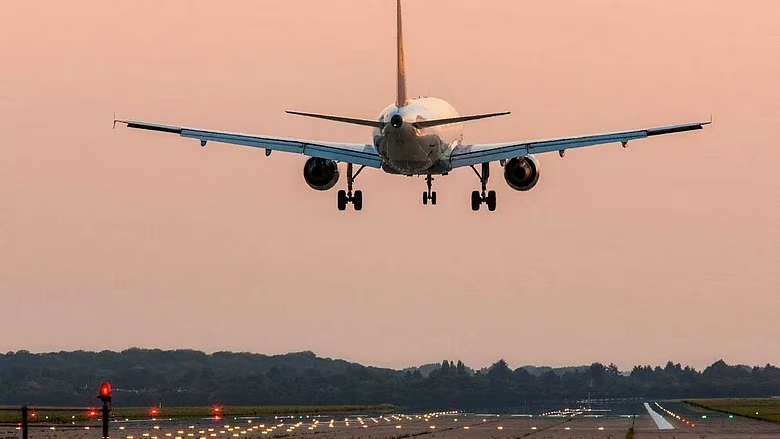
The ban, now extended until March 23, continues to force Indian carriers on costly detours, with losses estimated at $1 billion annually.
ISLAMABAD – The protracted closure of airspace between Pakistan and India is set to enter its 11th month, with Pakistan issuing a new notice to airmen (NOTAM) on Thursday, extending the ban on Indian aircraft until March 23. Observers anticipate that India will once again reciprocate the measure.
The tit-for-tat closure, which began in April 2025 following the Pahalgam terror attack, has severely disrupted flight operations and inflicted significant financial damage, primarily on Indian carriers.
According to aviation industry estimates, Indian airlines are incurring losses of nearly $1 billion (Dh3.67 billion) annually. This financial strain is due to extended flight paths, increased fuel consumption, and operational inefficiencies caused by the prolonged detours around Pakistani airspace.
The cycle began on April 24, 2025, when Pakistan closed its airspace to Indian carriers. India retaliated days later by barring Pakistani aircraft from its skies. The reciprocal bans have remained in place ever since.
Impact on Indian Carriers
The closure has disrupted nearly 800 flights (both departures and arrivals) operated by Indian airlines. The most affected routes are those flying from Delhi and other northern Indian airports to destinations in the Gulf, the Middle East, Europe, and eastern North America. These flights are forced to take longer, southern routes, burning extra fuel and extending flight times.
Conversely, Pakistan International Airlines (PIA) has remained relatively insulated from the financial fallout, as the airline operates few flights over Indian airspace to destinations in the East.
According to the Pakistan Civil Aviation Authority, the NOTAM applies to both of the country’s flight information regions—Karachi and Lahore—effectively closing all of its airspace to Indian traffic.
A History of Disruption
This is not the first time political tensions have led to prolonged airspace closures in the region. In 2019, following the Pulwama terror attack and subsequent military escalation, Pakistan closed its airspace for nearly five months, affecting over 400 flights daily. Indian government data from that period revealed that domestic airlines suffered a financial cost of nearly $64.3 million during that shutdown alone.
The current extension suggests that the barriers to restoring normal overflight rights remain deeply entrenched, with no immediate resolution in sight.







 United Arab Emirates Dirham Exchange Rate