
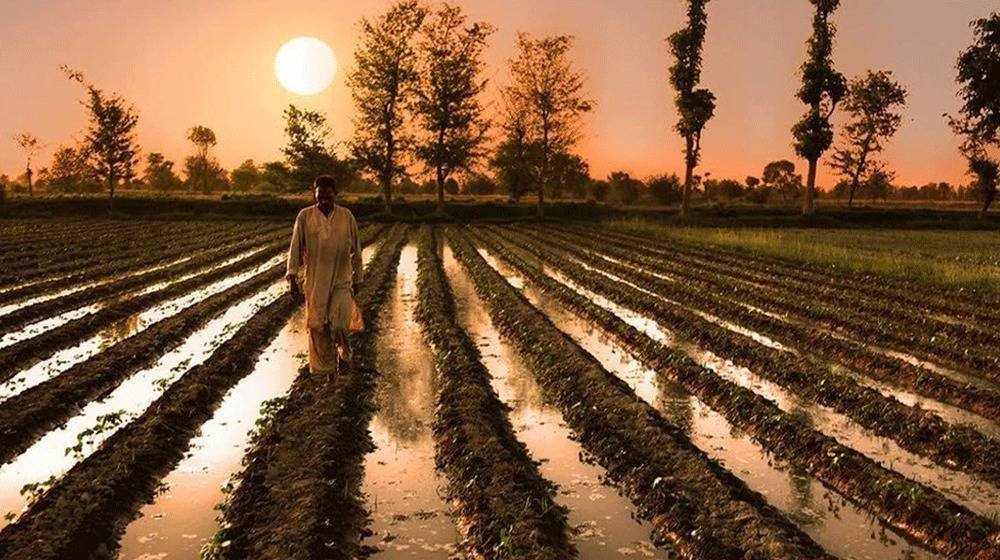
By leveraging artificial intelligence, geospatial data, and real-time mobile platforms, even small-scale farmers can now access timely, customized, and scientifically informed advice for better yields, optimized input usage, and climate resilience.
By Ghulam Haider
Agriculture has been recognized as the backbone of Pakistan’s economy, employing nearly 38% of the labour force and contributing more than 20% to the GDP. However, despite its significance, the sector has long remained stagnant, plagued by outdated practices, low productivity, inefficient input use, and vulnerability to climate shocks. Most critically, smallholder farmers — who constitute over 85% of Pakistan’s farming population — have often remained outside the reach of modern agricultural advancements.
But today, Pakistan stands on the cusp of an agricultural transformation driven by digitization. Agritech — the application of technology to farming — is beginning to penetrate even the most remote rural landscapes. This has been mainly possible due to a synergistic convergence of government-led initiatives, private startups, AI innovations, satellite technology, and mobile applications.
The traditional farming paradigm in Pakistan is under immense pressure. With a rapidly growing population, diminishing arable land, and increasingly erratic weather patterns due to climate changes, the need to increase per hectare productivity has never been more urgent. Conventional extension services are stretched thin; input supply chains are fragmented; and farmers often make critical decisions based on guesswork rather than data.
Digitization offers a fundamental shift: transforming agriculture from intuition-based to data-driven. By leveraging artificial intelligence, geospatial data, and real-time mobile platforms, even small-scale farmers can now access timely, customized, and scientifically informed advice for better yields, optimized input usage, and climate resilience.
The Government of Pakistan has increasingly recognized the transformative potential of digital agriculture and has embarked on multiple initiatives to catalyze innovation.
In 2020, the Ministry of National Food Security and Research launched the Digital Agriculture Ecosystem under the Prime Minister’s Agriculture Emergency Programme. This ambitious platform aims to integrate ICT tools across the agricultural value chain — from seed selection and soil analysis to pest control and market access.
The Punjab Agriculture Department has developed “Zarai Taraqiati Bank’s Kisaan App” and “Zarai Baithak” to disseminate timely information to farmers regarding weather updates, market prices, subsidies, and crop calendars. Complementing this, the Punjab Information Technology Board (PITB) has also digitized land records and is piloting AI-enabled crop monitoring tools for disease and pest identification using drone and satellite imagery.
Further, the National Agriculture Emergency Projects have been rolled out to modernize irrigation systems, support precision agriculture, and subsidize smart inputs through digital voucher systems. These efforts signify a decisive policy shift — away from blanket subsidies and toward targeted, tech-enabled support systems.
While the government has laid the foundation, it is Pakistan’s vibrant startup ecosystem that is injecting dynamism and innovation into the agritech revolution. Emerging entrepreneurs, often backed by international donors, venture capital, and accelerator programmes, are deploying cutting-edge technologies to solve real-world problems for farmers.
Startups like BaKhabar Kissan provide location-specific advisory services via mobile phones, covering weather forecasts, crop health alerts, and market rates. Their voice-based information system is particularly valuable in overcoming literacy barriers among small farmers.
Ricult, a US-Pakistani startup, offers end-to-end solutions that use machine learning algorithms to assess soil fertility, predict crop yields, and provide credit scores for farmers, thus helping them access finance from partner institutions.
Tazah Technologies and Agrilift have emerged as digital marketplaces, directly linking farmers with buyers and reducing post-harvest losses. These platforms use AI to forecast demand, monitor supply chains, and ensure fair pricing — eliminating middlemen and empowering growers.
Crop2X, another standout startup, employs IoT sensors, drones, and satellite data to monitor crop health in real time. Through partnerships with telecom companies and agricultural input providers, Crop2X delivers precision farming insights to thousands of smallholders at a fraction of traditional costs.
Among the most groundbreaking shifts in Pakistan’s digital agriculture is the intelligent management of inputs — seeds, fertilizers, pesticides, and water — through AI and satellite imagery.
High-resolution remote sensing data, once the domain of advanced research institutions, is now being harnessed to map soil types, detect nutrient deficiencies, and identify water stress zones. For example, SUPARCO (Space and Upper Atmosphere Research Commission) provides satellite-based crop monitoring services to provincial governments, allowing early detection of droughts, floods, or pest infestations.
Startups like Farmdar analyze satellite imagery and AI-driven models to recommend precise sowing times, optimal fertilizer doses, and early warnings for disease outbreaks. This leads to more efficient resource use, reducing both costs and environmental impact.
AI-powered soil testing kits — like those being introduced by Pak Agri Market and university spin-offs — offer farmers a mobile solution to test pH levels, salinity, and nutrient balance. Combined with data analytics, these tools guide customized fertilizer application, boosting yields and preventing soil degradation.
With over 190 million mobile phone users and widespread 3G/4G penetration, mobile platforms are the most powerful tool for bridging the urban-rural digital divide. Several apps and SMS-based services have been launched to empower small farmers with on-demand agronomic support.
For instance, Sajji Hub, a platform operating in Balochistan and South Punjab, sends localized SMS alerts in regional languages about pest outbreaks, rainfall patterns, and input availability.
Likewise, e-Sewa and Khushaal Watan apps integrate government extension services with private advice, enabling farmers to contact agronomists, book farm machinery, and apply for subsidies.
Voice-based helplines are also proving effective. Services like Khushaal Zamindar use interactive voice response (IVR) systems to deliver curated advice to illiterate farmers — a simple, scalable solution with profound impact.
Despite promising gains, Pakistan’s digital agriculture landscape still faces multiple challenges. Digital literacy remains low in rural areas, particularly among women farmers. Affordability of smartphones and data packages can limit uptake while connectivity gaps persist in remote regions. Trust deficit between farmers and new tech providers can hinder adoption and fragmented land holdings make precision farming economically less viable unless aggregated at scale. Moreover, the lack of integration between platforms, inconsistent data standards, and the absence of a national digital agriculture policy remain institutional bottlenecks.
To ensure agritech solutions reach and benefit Pakistan’s small farmers equitably, encouragement of collaboration between startups, telecom operators, government agencies, and farmer cooperatives is a must to scale solutions and share infrastructure. Training of village-based digital facilitators who can serve as intermediaries may be launched, helping farmers interpret data and adopt new practices.
Establishment of a central digital agriculture authority will help oversee data quality, privacy, and interoperability while launch of gender-inclusive programs is a must to ensuring women farmers receive tailored digital content and access to mobile tools. Similarly, supporting incubators and university research labs focused on region-specific agritech solutions, especially in marginalized provinces, can go a long way in helping farmers. The government can offer tax relief, seed grants, and subsidized devices to enable smallholders to adopt digital tools at low cost.
The digitization of agriculture is not a luxury for Pakistan — it is a necessity. As the country grapples with climate volatility, food insecurity, and resource scarcity, empowering its millions of small farmers with the tools of the digital age is the surest path to sustainable, inclusive growth.
The good news is that the seeds of this transformation have already been planted. With the right mix of policy support, innovation, and on-ground facilitation, Pakistan can turn its fields into digital powerhouses — and its smallholder farmers into tech-savvy custodians of the country’s food future.







 United Arab Emirates Dirham Exchange Rate