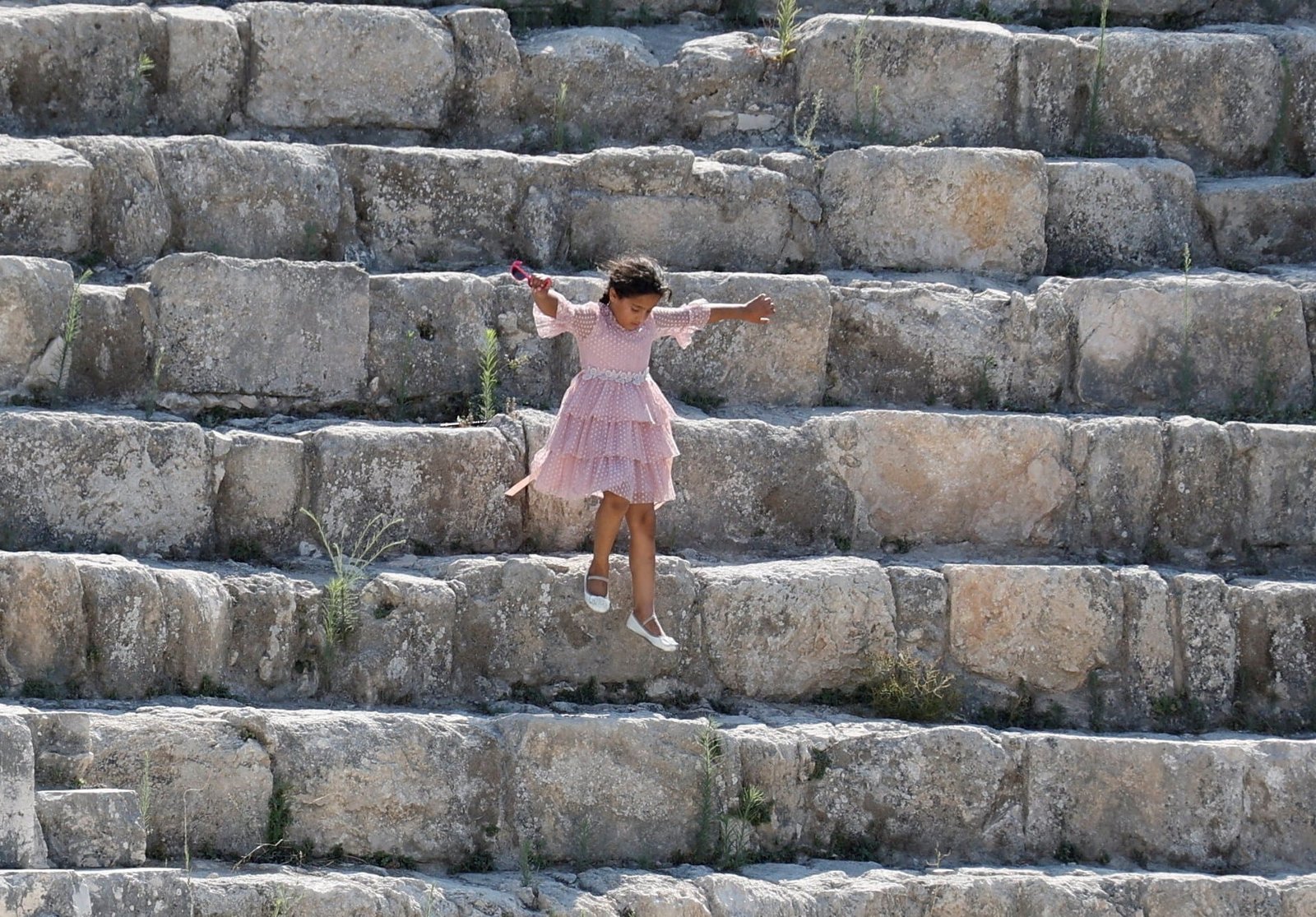
For Israel, the park in Sebastia will be a link to their heritage. Palestinians see an attempt to force them out.
Sebastia, occupied West Bank – Israel calls it an archaeological project to highlight Jewish heritage and create a new Israeli national park. Palestinians see it as further evidence of Israel’s plans to annex an ancient town and erase Palestinian history in an area that tells the 5,000-year-old shared story of the peoples who have lived in this land.
Far-right, pro-settler Israeli government ministers were in Sebastia on May 12 as part of a delegation to mark the looming seizure of the town’s archaeological park, one of the largest and most important of 6,000 sites in the West Bank.
Ultranationalist Israeli Minister of Heritage Amichai Eliyahu, himself a resident of an illegal West Bank settlement, hailed the beginning of Israeli excavation at the site and the coming creation of “Samaria National Park”, which will focus on the area’s Jewish history.
Palestinians say that will come along with an attempt to paint over their ties to the land. The Palestinian Ministry of Tourism and Antiquities called the excavations “preparation for Sebastia’s annexation and isolation from its surroundings”.
Israeli politicians refer to Sebastia as Samaria, or Shomron in Hebrew, and say it was the capital of the Biblical Kingdom of Israel nearly three millennia ago.
But the archaeological site includes the ruins of a Byzantine basilica, a Roman forum and amphitheatre, and the Crusader-era Church of St John, which was rebuilt into a mosque – and is believed to be the site of the tomb of John the Baptist, known in the Quran as Prophet Yahya.
Sebastia’s archaeological park, once a tourism hotspot and still a pilgrimage site for Christians, is being considered for inclusion on UNESCO’s world heritage list, subject to an application being finalised by Palestinian officials.
Sebastia mayor Mohammed Azim and town residents have long been warning of Israel’s intention to “Judaise” Sebastia and turn it into an Israeli-only tourism site.
“The military is aiming to make life unbearable for the residents here, so they eventually surrender to reality and leave – just like those who have been displaced in Jenin and Tulkarem,” Azim said, referring to the more than 40,000 Palestinians displaced by Israeli military operations in the occupied West Bank this year.
“Now, soldiers enter the village daily – and with the clear intention of killing,” Azim added. “We will resist construction – peacefully, of course. The landowners will not give up their land.”
The mayor called for condemnation of intensifying military violence in the village and the targeting of children, notably the army’s fatal shooting of 14-year-old Ahmad Jazar in January.
For its part, the Israeli state argues that the village of Sebastia will not be affected by the archaeological work, as it lies outside the boundaries of the proposed national park.
But Sebastia Archaeological Museum curator and lifelong resident, Walaa Ghazzal, says the plans are an escalation in Israel’s plans to eventually expel residents and business owners and prevent Palestinians from accessing the town, its ruins, and the sprawling hills and olive fields around it.
‘River of blood’
Ghazzal told media that “residents are afraid of the future”, especially those near the ruins.
“The situation is very dangerous,” she said. “Soon, they will prevent us from going to the archaeological site.
Eliyahu was joined in Sebastia by Minister of Environmental Protection Idit Silman and Yossi Dagan, chairman of the Shomron Regional Council, which controls 35 illegal West Bank settlements.
Silman has hailed the scheme and told Israeli media, “historical justice is being done”, accusing Palestinians of attempting to “erase” Jewish heritage.
The Israeli government has long been clear that Sebastia, which most historians agree was the capital of the Kingdom of Israel for less than 200 years, will be taken over and transformed into the centrepiece of Israeli tourism in the West Bank.
In May 2023, the Israeli government approved a 30 million shekel (more than $8m) scheme to restore the park and establish a tourism centre, new access roads, and an expanded military presence. The four million shekel ($1.2m) regeneration of a disused Hijaz railway station about two miles from Sebastia, last operational in the final years of the Ottoman Empire, has also been announced.
“The archeological excavations are designed to expose the antiquities of the site and make the ancient city accessible throughout all its periods: from the beginning of the settlement in the 8th century BCE during the ancient Kingdom of Israel, through the Hellenistic city, the magnificent Roman city built by King Herod [called “Sebastos” after Emperor Augustus], to the Byzantine period when a church was built at the site,” said the office of Israeli Minister of Heritage Eliyahu.
Ghazzal said Sebastia’s ruins exhibit a “distinct local culture” in a geographic region which has “always been known as Palestine”. She said the remains emphasise the religious and cultural importance of the town to conquering empires, and its multifaith inhabitants’ peaceful coexistence for centuries.
In the Palestinian submission to UNESCO, it is noted that the present town of Sebastia still preserves “the ancient name [and] is located on the eastern part of the Roman city, indicating a strong element of cultural continuity”.
But for those focused on the planned Israeli national park, it’s only Jewish history that matters.
Responding to a query from media, Eliyahu’s office said that Sebastia was “first and foremost a Jewish heritage site, where archaeological remains from the Kingdom of Israel period were found”.




 United Arab Emirates Dirham Exchange Rate