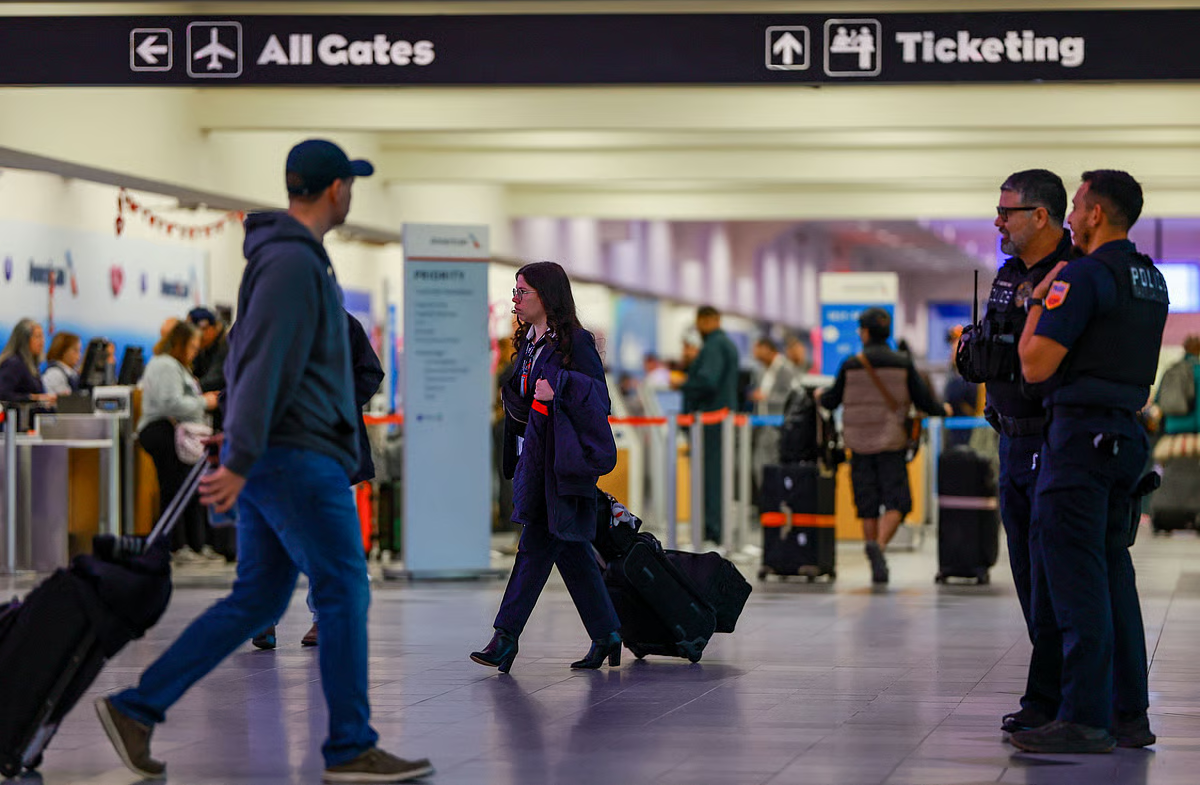
With airspace restricted amid regional tensions, ground convoys through Oman and Saudi Arabia emerge as vital lifelines for residents seeking return
When regional tensions escalate and airspace closes, getting home becomes a test of patience, planning, and ground-level coordination. For several UAE residents caught abroad during the recent flare-up in hostilities, the journey back has shifted from boarding a plane to navigating land corridors through neighbouring countries.
Among them is Iman El Khatib, a Greek-Lebanese Dubai resident who travelled to Beirut for what was meant to be a four-day visit to surprise her three-year-old nephew for his birthday. She booked her flight the night before and departed on February 24, expecting to return on February 28.
That was the day UAE airspace closed.
“What was supposed to be a quick family visit suddenly turned into an unexpected and uncertain stay,” El Khatib said. While some airlines have gradually resumed operations, Beirut remains offline for routes to Dubai, leaving her searching for alternatives.
From Information to Evacuation
Security and assistance organisations report a surge in enquiries from companies and individuals since the regional escalation began. Gillan McNay, Security Director for Assistance in the Middle East at International SOS, said most early requests focus on verification rather than immediate evacuation.
“People want confirmation of what is happening in specific locations, whether they should remain in place, and what options exist if conditions change,” McNay explained.
Once organisations gather clarity, client requests typically evolve into contingency planning—identifying safe havens, confirming travel documentation, and preparing relocation strategies.
The Road Home: Oman and Saudi Arabia as Transit Hubs
With air travel restricted, ground movements have become the primary method of evacuation across the Gulf. Rafal Hyps, Chief Executive of Sicuro Group, said requests for “departure assistance” have risen sharply.
Evacuation flows are increasingly directed toward Oman and Saudi Arabia, where travellers can access functioning international airports. Cities including Muscat, Riyadh, and Dammam have seen growing demand for flights, hotels, and transport services as relocation efforts pass through these hubs.
“We are primarily assisting travellers caught in the region during the disruption, as well as corporate personnel on assignment or in transit,” Hyps said.
The Dubai-to-Muscat route via the Hatta border crossing has emerged as one of the most commonly used corridors. From Oman, travellers can connect to onward commercial flights.
The Logistics of Getting Out
Relocation operations are often complex, particularly when families are involved. Planning typically includes:
- Arranging ground transport and coordinating border crossings
- Securing accommodation at transit hubs
- Organising onward flights once travellers reach operational airports
- Providing clear instructions and real-time updates
For those unable to relocate immediately, security advisers recommend remaining safely in place while monitoring the situation until a viable travel window opens.
El Khatib said she is now trying to secure a seat on a possible evacuation flight with Middle East Airlines while monitoring updates from other airlines, hoping new routes reopen.
“My only focus right now is finding my way back to Dubai,” she said. “It’s in moments like these that you realise how much the UAE means to the people who live there.”





 United Arab Emirates Dirham Exchange Rate